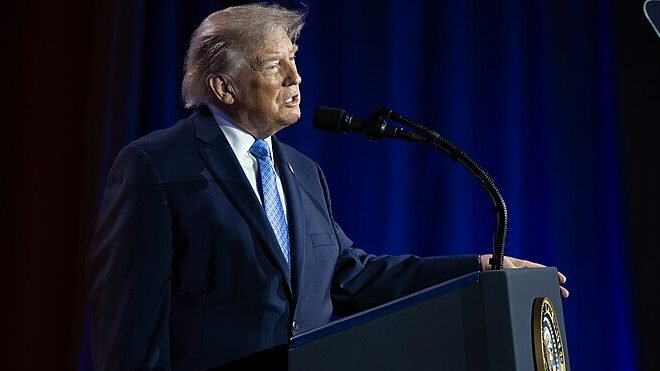

Trump Meets With Top Advisers as U.S. Maintains Pressure on Iran
WASHINGTON — President Donald Trump met with senior national security officials as the administration continues to assess its response to ongoing tensions with Iran and the broader security situation in the Persian Gulf.
According to reports, the meeting included Vice President J.D. Vance, Secretary of State Marco Rubio, and Defense Secretary Pete Hegseth, with discussions focused on military operations, regional security, and diplomatic options.
Military Operations Continue
The meeting follows several days of U.S. military operations targeting sites that officials say are connected to Iran’s military capabilities, including missile infrastructure and coastal defense systems.
U.S. officials have said the operations are intended to protect international shipping and reduce threats to commercial vessels traveling through the Strait of Hormuz.
The Pentagon has not publicly announced any new military actions beyond those already reported.
Trump Reiterates Call for Negotiations
Speaking to reporters, Trump said he continues to believe a negotiated agreement remains possible while emphasizing that the United States is prepared to maintain pressure if talks do not move forward.
The president said his administration’s primary objective remains preventing Iran from developing a nuclear weapon and ensuring regional security.
Officials have not confirmed reports regarding potential future targets or operational planning.
Regional Situation Remains Uncertain
The broader security environment in the Gulf remains tense, with governments across the region closely monitoring developments affecting commercial shipping and energy markets.
Defense analysts note that military activity and diplomatic efforts are continuing simultaneously, with both sides exchanging firm public statements while communication channels remain open.
Looking Ahead
The administration says it will continue evaluating developments in coordination with military and diplomatic advisers.
While uncertainty remains over the next phase of the crisis, officials have maintained that the United States is seeking to protect regional stability while keeping the possibility of negotiations on the table.
Analysts say the coming days could prove significant as policymakers weigh security concerns alongside efforts to avoid a broader regional conflict.

Related Posts

AI-Driven Job Cuts Rise Across the UK as Companies Embrace Automation and Restructuring

Young Israeli Voters Show Strong Rightward Shift as Security Concerns Dominate Election Debate