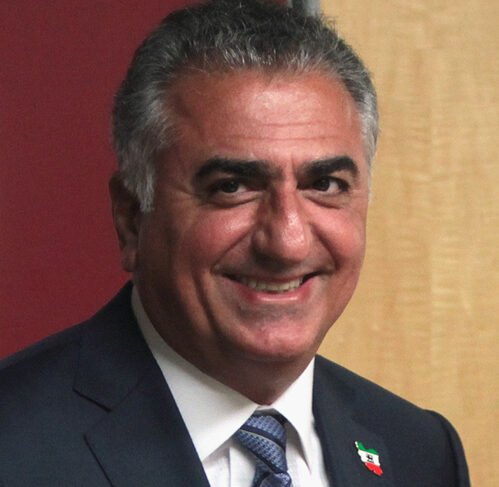
Reza Pahlavi It’s Not for a Foreign Government to Decide Iran’s Future
For 46 years, Pahlavi has built a campaign aimed squarely at one goal — freeing Iran from the clerical regime that took power in 1979. When asked directly whether the lack of a formal endorsement from Washington has slowed that mission, he didn’t hesitate.
“This campaign started as a lifetime mission to liberate Iran 46 years ago. And it has never been about me,” Pahlavi said. “It is not for a foreign government to decide who or what should be the alternative for Iran. That’s up to the Iranian people. I’ve never asked for any kind of endorsement from any leader or government.”
A role, not a throne
That’s a distinction Pahlavi returns to again and again. He isn’t campaigning to reclaim a monarchy. What he says he wants is a constitutional assembly — a real, open process where Iranians themselves get to vote on what comes next, whether that’s a secular republic or something else entirely.
“Look at me not as the candidate running for office, but as somebody providing an avenue to that future, irrespective of what your final vote will be,” he explained.
It’s a careful line to walk, especially for a man whose family once ruled the country by hereditary right. But Pahlavi has leaned into that tension rather than avoiding it, positioning himself as a facilitator for a democratic transition rather than a successor waiting to inherit power.
“We are very close”
Asked about timing, Pahlavi didn’t hedge. “I think we are very close to it,” he said, describing the current regime as weaker than at any point in nearly five decades. He pointed to a string of mass protests met with brutal government crackdowns as evidence that the clerical establishment has lost whatever legitimacy it once had in the eyes of ordinary Iranians.
He was also blunt about the failures of Western diplomacy over the decades — arguing that years of engagement and appeasement did nothing to change the regime’s behavior toward its own people. That track record, he says, is part of why he’s shifted toward more openly calling for international pressure aimed at protecting civilians from state violence, even while insisting the actual solution has to come from within Iran.
Building a coalition, rejecting extremism
Pahlavi hasn’t been immune from criticism — plenty of it aimed at his decades in exile and his family’s legacy. But he pointed to what he describes as a genuinely broad coalition forming around the push for a democratic Iran, one that includes constitutional monarchists, former dissidents, and reformists who otherwise don’t agree on much.
When pressed about hostile rhetoric from some vocal supporters online, he didn’t dodge the question. “I believe in pluralism, tolerance, and civility,” he said. “Anyone who violates these guidelines, I don’t consider a supporter, and I’d be the first to condemn that behavior.”
He also pushed back on claims that his movement is quietly funded by foreign governments, saying the effort runs on private donations from ordinary supporters — not state money from any capital, Western or otherwise.
A nation of 92 million
Pahlavi closed the interview returning to the people he says this has always been about — not politics in Washington, Paris, or anywhere else, but the 92 million Iranians living under a government he describes as having been at war with its own citizens since the day it took power.
“Iran was occupied by a regime that from day one waged war against us as a nation,” he said. “Look at the 92-million-strong nation that waits to be part of a free world, and they deserve to be there. That’s what I’m fighting for.”
Whatever comes next for Iran, Pahlavi’s message is consistent: the fight belongs to Iranians. Anyone outside the country — including the United States — gets a supporting role at best, not a seat at the head of the table.