
Trump-Xi Summit Puts Trade, AI and U.S. Power in Focus
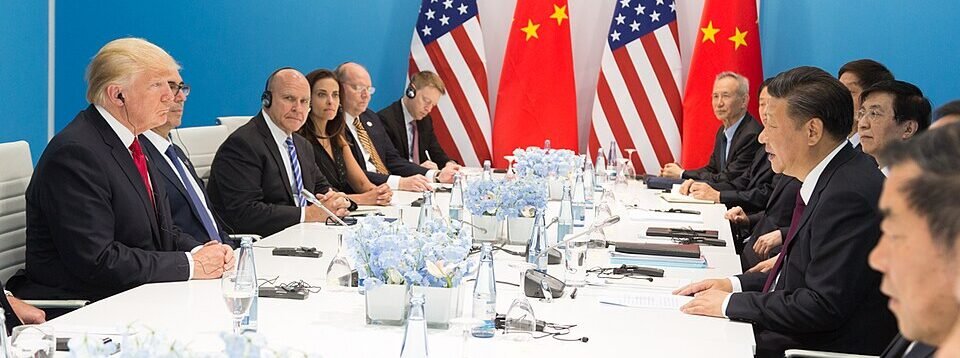
Trump and Xi Meet at White House as Trade and AI Take Center Stage
A high-profile summit brings trade, technology and security to the table as Washington and Beijing seek greater stability without ending their rivalry.
President Donald Trump welcomed Chinese President Xi Jinping to the White House for talks spanning trade, artificial intelligence, security and the broader future of U.S.-China relations.
President Donald Trump welcomed Chinese President Xi Jinping to the White House for a high-profile summit that placed trade, artificial intelligence and strategic competition at the center of the relationship between the world’s two largest economies.
The September 24 meeting combined the ceremony of a state visit with negotiations over some of the most difficult issues confronting Washington and Beijing.
The two governments have reduced some of the tensions that characterized their earlier trade confrontation, but major disagreements remain over tariffs, agricultural purchases, critical minerals, advanced technology and national security.
Trump has framed his approach around a more balanced economic relationship, greater market access for American businesses and maintaining U.S. technological strength. Chinese officials have emphasized stability, cooperation and what Beijing describes as fair treatment for Chinese companies operating in the United States.
Trade Remains at the Center
Trade was among the most important issues surrounding the summit.
Treasury Secretary Scott Bessent said the two countries had extended an existing trade truce by two months, giving negotiators additional time to work through unresolved economic questions. The extension postpones rather than permanently resolves disputes involving tariffs, Chinese purchases of American products, rare-earth supplies and technology restrictions.
The Trump administration has described the broader trade relationship in terms of reciprocity.
Earlier this year, the White House said agreements reached with China were intended to expand opportunities for American farmers, manufacturers and other businesses. The administration also highlighted Chinese commitments involving agricultural purchases, Boeing aircraft and access to critical minerals.
Some of those commitments, however, remain works in progress. The Associated Press reported that projected Chinese purchases of U.S. agricultural products could fall short of earlier commitments and that other elements of the economic agreement have moved slowly.
That leaves Trump facing a familiar challenge: maintaining pressure on Beijing while avoiding a renewed escalation that could disrupt American businesses and consumers.
Artificial Intelligence Becomes a Strategic Issue
Artificial intelligence added a new dimension to the summit.
Both governments increasingly view AI as an issue of economic competitiveness and national security.
Trump has emphasized the importance of maintaining America’s technological lead. Xi, meanwhile, said the United States and China should use their respective strengths while managing the risks associated with increasingly powerful AI systems.
Xi specifically argued that AI development should remain under human control and serve broader public interests. He also called for continued dialogue over the risks and benefits of the technology.
The issue is significant because Washington and Beijing are competing not only over commercial AI systems but also over advanced computing, semiconductors and the infrastructure required to develop increasingly capable models.
Recent U.S.-China discussions have included a proposed mechanism for notifying each other about significant AI safety incidents, although no fully established bilateral AI forum has yet emerged.
For Trump, the challenge is to encourage rapid American innovation while protecting technologies considered strategically sensitive.
Security and Strategic Competition
The summit also comes against a wider backdrop of geopolitical competition.
Taiwan remains one of the most sensitive issues between Washington and Beijing, while U.S. and Chinese policies also intersect over Iran, maritime security and advanced technology.
The two countries have sought to preserve communication channels even as their strategic interests remain sharply different.
Xi called for regular military dialogue and stronger crisis communication mechanisms, while the broader discussions reflect an effort to prevent competition from developing into direct confrontation.
That distinction is important.
The summit does not signal an end to U.S.-China rivalry. Instead, it demonstrates an attempt by both governments to manage competition while keeping economic and diplomatic channels open.
A More Personal Tone
Despite the unresolved disputes, Trump and Xi adopted a notably positive public tone during the visit.
Trump described his relationship with Xi in terms of mutual respect and spoke about building a more stable relationship between the two countries.
Xi similarly argued that competition between the two major powers should remain controlled and that cooperation could benefit both sides.
The diplomatic messaging was accompanied by several symbolic gestures.
Xi announced that China would invite 100,000 young Americans to visit China over the next five years through educational and cultural exchange programs.
He also announced that two giant pandas would be sent to Zoo Atlanta, reviving a familiar form of Chinese cultural diplomacy in the United States.
What the Summit Means for Trump
For Trump, the meeting provides an opportunity to demonstrate that his administration can combine economic pressure with direct diplomacy.
His supporters are likely to view the summit as consistent with his broader “America First” approach: negotiate directly, seek greater access for American businesses and farmers, protect U.S. technology and maintain leverage over strategic competitors.
Whether that strategy produces lasting results remains unresolved.
The latest trade truce provides breathing room, but major economic disputes remain. AI cooperation is still developing, and national-security disagreements continue to shape the relationship.
The White House summit therefore represents neither a complete breakthrough nor a return to the trade tensions of earlier years.
Instead, it marks another stage in an increasingly complex relationship in which Washington and Beijing are simultaneously competitors, trading partners and major global powers.
For American businesses, farmers and technology companies, the most important question will be what follows the ceremony: whether the commitments discussed in Washington translate into concrete changes in trade, market access and technology policy.
For now, Trump and Xi have demonstrated that intense competition does not prevent direct engagement.
The next test will be whether that engagement can produce agreements durable enough to survive the deeper disagreements between the United States and China.



One thought on “Trump-Xi Summit Puts Trade, AI and U.S. Power in Focus”