
Trump’s Low-Key Iran Strategy Puts Economic Pressure at Center of Middle East Standoff
President Donald Trump is signaling a preference for economic and diplomatic pressure over another major U.S. military escalation as Washington and Tehran remain locked in a tense standoff.
Trump’s latest comments on Iran point to a strategy built around pressure, patience and negotiations, offering a clear example of the “America First” approach that has become a defining feature of his foreign policy.
President Donald Trump has spent much of his political career arguing that the United States should be more careful about entering long-term overseas conflicts. His latest approach to Iran appears to follow that same principle.
In a recent interview with Axios, Trump said the United States was “low-keying it” with Iran and described Tehran as being under severe economic pressure. He indicated that Washington was continuing to watch developments rather than immediately launching another major military operation.
The comments came as tensions surrounding Iran, the Strait of Hormuz and regional security remain high.
For Trump’s supporters, the strategy represents a significant departure from the interventionist approach associated with earlier periods of U.S. foreign policy. Instead of committing large numbers of American troops to another prolonged conflict, the administration is emphasizing economic leverage, negotiations and the threat of further action if talks fail.
Pressure Without a New Ground War
Economic pressure has become one of the central tools in the administration’s Iran strategy.
The United States has maintained a naval blockade targeting Iranian ports and shipping. After a temporary pause connected to an earlier agreement, Washington reinstated the blockade in July following renewed tensions with Tehran. U.S. officials have said the measure is intended to increase pressure on Iran while negotiations continue.
Trump has previously argued that economic pressure can accomplish objectives that might otherwise require a much larger military campaign. In April, he told Axios that the blockade was proving more effective than bombing in the context of the negotiations then underway.
The approach nevertheless carries significant risks.
The Strait of Hormuz is one of the world’s most important energy routes, and continued disruption could affect international shipping, energy markets and economies far beyond the Middle East. Iran has also made reopening the waterway conditional on concessions from Washington, including changes to sanctions and other demands.
That means the economic strategy is not taking place in isolation. It is part of a broader confrontation involving military forces, diplomacy, international commerce and regional alliances.
Trump’s ‘America First’ Calculation
The central idea behind Trump’s foreign-policy message is relatively straightforward: American power should be used when necessary, but Washington should avoid commitments that do not produce a clear benefit for the United States.
That argument has particular resonance among Trump’s political supporters, many of whom remain skeptical of the wars in Iraq and Afghanistan and the costs associated with America’s decades-long military presence overseas.
The MAGA movement has increasingly embraced a foreign-policy position that combines military strength with greater reluctance to enter open-ended conflicts.
Trump’s latest approach to Iran fits that political framework.
Rather than announcing an immediate expansion of military operations, Trump has emphasized that negotiations remain possible while economic and military pressure remains available. Vice President JD Vance has similarly stressed that the confrontation is not necessarily finished and that the administration retains multiple options.
The result is a strategy based on maintaining leverage while leaving room for diplomacy.
A Region Undergoing Its Own Shift
The Iran standoff is also unfolding alongside major changes in regional security arrangements.
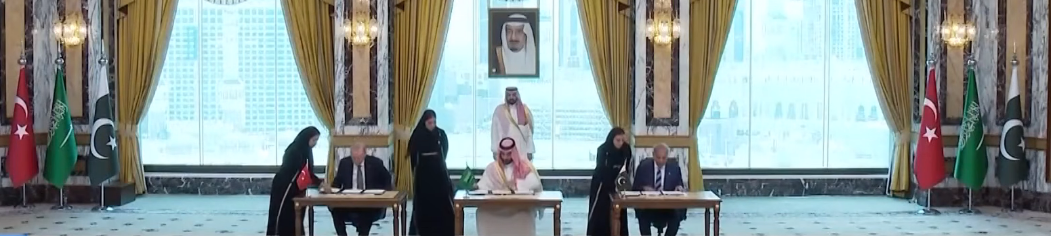
Saudi Arabia, Türkiye and Pakistan signed a joint defense agreement in Makkah on August 7, creating a mutual-defense framework under which an armed attack against one signatory would be treated as an attack against all three. The agreement represents another indication that regional governments are reassessing their security relationships as tensions continue across the Middle East.
For Washington, greater regional responsibility could complement Trump’s long-standing argument that U.S. allies should contribute more to their own defense.
The development does not mean America is stepping away from the region altogether. The ongoing blockade, negotiations with Iran and U.S. military presence demonstrate that Washington remains deeply involved.
Instead, the emerging strategy appears to be focused on using American power selectively while encouraging regional partners to assume greater responsibility.
What Happens Next
The biggest question is whether economic pressure can produce a diplomatic breakthrough without triggering another escalation.
Iran has continued to demand concessions from Washington, while the Trump administration has insisted that pressure will remain until its objectives are addressed. Meanwhile, uncertainty surrounding the Strait of Hormuz continues to create economic and security concerns.
Trump’s supporters are likely to view the strategy as evidence that his administration is attempting to avoid another prolonged war while still demonstrating American strength.
Critics will continue to question whether sanctions and a naval blockade can produce a lasting agreement or instead increase the possibility of a wider confrontation.
For now, Trump appears determined to keep both pressure and negotiations on the table.
That balance—maximum leverage without immediately committing to another major war—could become one of the defining tests of his second-term foreign policy. Whether it ultimately delivers a negotiated settlement or leads to another escalation will depend largely on how Tehran responds and how long Washington is willing to maintain its current pressure campaign.


One thought on “Trump’s Low-Key Iran Strategy Puts Economic Pressure at Center of Middle East Standoff”