Trump’s America First Foreign Policy Faces Fresh Scrutiny as Washington Debates U.S. Role Overseas
President Donald Trump’s push to reduce long-term foreign commitments is reigniting a broader debate in Washington over military deployments, international institutions and America’s role in global affairs.
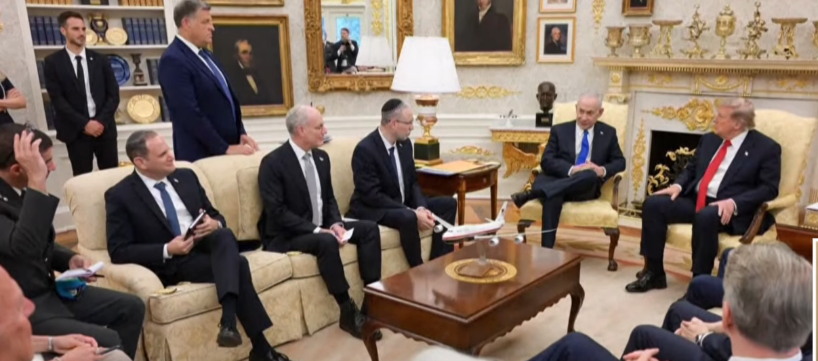
As negotiations and security discussions continue across the Middle East, the Trump administration is once again placing its “America First” foreign-policy philosophy at the center of debate, challenging long-standing assumptions about how the United States should engage with allies, adversaries and international organizations.
For years, Washington’s foreign-policy establishment has generally supported a significant American presence overseas, including military alliances, diplomatic initiatives and substantial international assistance. President Donald Trump has taken a different approach, arguing that U.S. foreign policy should place greater emphasis on national interests, domestic priorities and avoiding prolonged military commitments.
That approach has drawn both support and criticism.
Trump’s supporters view his position as a rejection of what they describe as the “forever war” mentality that dominated U.S. foreign policy following the September 11 attacks. Critics, meanwhile, argue that reducing American involvement could weaken U.S. influence and make it more difficult to manage conflicts involving major allies and strategic partners.
The disagreement has become particularly visible as Washington examines developments in the Middle East.
A Different Approach to Foreign Policy
Trump has repeatedly emphasized negotiations, pressure and economic leverage as alternatives to open-ended military involvement. His broader foreign-policy message is that the United States should use its economic and military strength to secure favorable outcomes without automatically accepting responsibility for conflicts that do not directly threaten American security.
That philosophy has also brought renewed attention to international institutions and multinational diplomatic arrangements.
Trump and his allies have frequently questioned whether international organizations provide sufficient value to American taxpayers. Their argument is that countries participating in international agreements should contribute meaningful resources and accept greater responsibility for their own security.
Supporters say the approach represents a practical reassessment of America’s commitments.
Rather than maintaining large and potentially indefinite overseas obligations, they argue, Washington should establish clearly defined objectives and expect other countries to carry a greater share of the burden.
Critics Raise Concerns
The Trump administration’s approach has faced significant criticism from foreign-policy experts, including analysts who believe American leadership requires sustained engagement with international partners.
Phyllis Bennis, a fellow at the Institute for Policy Studies, has been among analysts discussing the challenges surrounding U.S. policy in the Middle East. Commentary from analysts such as Bennis reflects a larger debate over whether Washington can achieve durable diplomatic results while simultaneously reducing its long-term military and political commitments.
Critics of Trump’s approach contend that diplomacy can become more difficult when the United States reduces its willingness to remain involved after an agreement is reached. They also argue that international cooperation can require patience, compromise and institutions that may not produce immediate results.
Trump’s supporters see the same issue differently. They argue that previous administrations often made commitments without sufficiently considering the financial and military costs to the United States.
The disagreement therefore extends beyond any single Middle Eastern negotiation. It reflects competing ideas about what American leadership should look like in the 21st century.
The ‘Forever War’ Debate
One of the strongest arguments among Trump’s political supporters is that the United States spent too many years involved in overseas conflicts without achieving clearly defined long-term objectives.
The wars in Iraq and Afghanistan remain central to that argument.
The financial costs, loss of American service members and lengthy military commitments have contributed to growing skepticism across the political spectrum about large-scale foreign interventions. Trump has attempted to turn that skepticism into a central element of his political identity.
His “America First” philosophy argues that national security should remain the primary consideration when Washington makes foreign-policy decisions.
That does not necessarily mean withdrawing from the world. Instead, Trump’s supporters describe the strategy as selective engagement: maintaining strong alliances and military capabilities while avoiding commitments that could gradually develop into permanent obligations.
A Broader Political Divide
The dispute over Trump’s foreign policy also reflects a wider divide within American politics.
Traditional Republicans have historically supported a strong international military presence and close relationships with U.S. allies. The modern MAGA movement has increasingly challenged parts of that consensus, particularly when foreign commitments involve significant spending or the possibility of prolonged military action.
This has created an unusual political landscape in which some Republicans who once favored interventionist policies now advocate restraint, while some Democrats and traditional foreign-policy experts warn that American disengagement could create strategic risks.
Trump’s approach therefore represents more than a disagreement over individual policies. It is part of a larger argument about the purpose of American power.
What Comes Next
As Washington continues to debate Middle East negotiations and broader U.S. commitments abroad, the central question will be how far the Trump administration is prepared to take its “America First” philosophy.
Supporters want a foreign policy focused on measurable results, national sovereignty and limiting unnecessary military commitments. Critics want stronger guarantees that reducing American involvement will not create new security problems or weaken longstanding alliances.
The debate is unlikely to disappear soon.
For Trump and his political movement, the argument remains straightforward: American power should ultimately serve American interests. For his critics, the challenge is ensuring that a more restrained foreign policy does not come at the expense of U.S. influence or international stability.
The coming months will show whether Trump’s approach can translate its political appeal into lasting diplomatic and security outcomes.