Trump-Xi Summit Puts AI, Rare Earths and Trade in Focus
Trump Takes Tougher Approach to China Ahead of Xi Summit
Artificial intelligence, critical minerals and trade are putting U.S.-China competition back under the spotlight.
Trump-Xi talks are expected to address artificial intelligence, rare earths, trade and other issues shaping the increasingly complicated U.S.-China relationship.
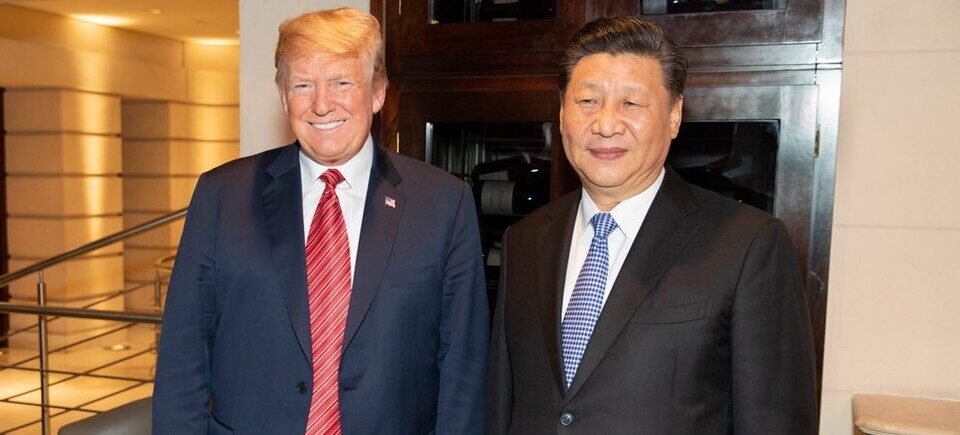
President Donald Trump is preparing to meet Chinese President Xi Jinping in Washington at a time when competition between the two countries extends far beyond traditional trade disputes.
Artificial intelligence, critical minerals, technology controls and supply-chain security are all expected to feature prominently in discussions between the two leaders.
The summit, scheduled for September 24, follows preparatory economic talks between U.S. Treasury Secretary Scott Bessent, U.S. Trade Representative Jamieson Greer and Chinese Vice Premier He Lifeng. Those discussions have included AI, rare earths, tariffs and the possibility of maintaining a broader trade truce.
For Trump and his supporters, the meeting represents another opportunity to pursue an economic strategy centered on American bargaining power and reduced dependence on China.
But the talks also demonstrate how difficult it can be for Washington to pressure Beijing while the United States remains dependent on Chinese-controlled supply chains.
AI Becomes a National-Security Issue
Artificial intelligence is emerging as one of the most important areas of competition between Washington and Beijing.
Both countries are investing heavily in advanced AI systems, while officials and experts increasingly acknowledge that the technology raises national-security concerns.
Recent U.S.-China discussions have included the possibility of creating a notification mechanism for serious AI incidents that could affect national security. The idea is intended to provide a channel for communication if an AI-related event creates a crisis between the two countries.
The discussions are complicated by the fact that Washington and Beijing are simultaneously competing for technological leadership.
U.S. officials have raised concerns about Chinese companies’ access to American technology and alleged copying of AI capabilities. Chinese officials have rejected some U.S. allegations and have their own concerns about American technology and national security.
That means AI cooperation, if it develops, is likely to exist alongside continued competition.
Rare Earths Give Beijing Leverage
Another major issue is the supply of rare earth minerals and related materials.
These minerals are essential to numerous modern industries, including automobiles, electronics, aerospace and defense manufacturing.
China dominates major parts of the global rare-earth supply chain. Reuters reported that China controls up to 70% of global mining, around 85% of refining capacity and roughly 90% of rare-earth metal alloy and magnet production.
That dependence has become particularly important during the Trump administration’s trade confrontation with Beijing.
Chinese restrictions on rare-earth exports have previously disrupted global supply chains and demonstrated how critical minerals can become bargaining tools during trade disputes.
The Trump administration is therefore seeking greater security of supply while negotiating with China.
For supporters of Trump’s America First approach, this is one of the strongest arguments for bringing more manufacturing and critical-mineral processing back to the United States or expanding partnerships with countries outside China.
The challenge is that rebuilding those supply chains takes time and requires substantial investment.
Trade Remains at the Center
Trade will also be a major part of the summit.
The United States and China have spent years moving between tariff increases, negotiations and temporary agreements. The current truce is scheduled to expire in November, creating another deadline for both governments.
Washington has indicated that it wants better access for American farmers, manufacturers and other businesses while continuing to monitor China’s implementation of previous commitments.
At the same time, officials have discussed potentially reducing tariffs on certain nonstrategic goods.
That creates an important tension in Trump’s China policy.
The administration wants to maintain pressure on Beijing while avoiding an escalation that could disrupt American businesses and consumers.
A Different Approach From Earlier Years?
Trump’s supporters argue that previous administrations relied too heavily on engagement and allowed economic dependence on China to deepen.
That argument was also reflected in the interview framing supplied for this article, in which China analyst Gordon Chang described the Trump approach as fundamentally different from previous U.S. policy.
Those are Chang’s political and policy assessments, rather than settled facts.
The broader record does show that the U.S.-China relationship has become more focused on economic security, technology competition and strategic supply chains over the past several years.
The Biden administration also maintained and expanded several restrictions involving advanced technology and Chinese investment, illustrating that competition with Beijing is not limited to Trump’s presidency.
What Trump Wants From Beijing
The administration has several interests heading into the summit.
Among them are reliable access to critical minerals, increased purchases of American products, progress on fentanyl precursor shipments and continued implementation of trade commitments.
The United States is also interested in managing military tensions, including disagreements involving Taiwan.
For Trump, the challenge will be balancing those priorities without giving Beijing incentives to retaliate economically.
For Xi, the challenge is different. China wants greater access to markets and technology while protecting its own industrial and strategic interests.
The Stakes for American Workers
For Trump’s political supporters, the larger argument is about economic independence.
They believe the United States should have greater control over the manufacturing and resources needed to support its economy and national security.
That view has particular relevance to rare earths, pharmaceuticals, advanced technology and other industries where supply disruptions could create economic or strategic problems.
Critics of aggressive decoupling, however, argue that completely separating the two economies would be costly and difficult.
The upcoming summit is unlikely to settle that larger debate.
What it can do is reveal how far Washington and Beijing are prepared to cooperate while continuing to compete.
For Trump, the meeting with Xi will test whether tariffs, technology policy and supply-chain pressure can produce concrete concessions.
For Xi, it will test whether China can use its economic leverage to protect its interests while avoiding another major escalation.
And for American businesses and workers, the outcome could influence the cost, availability and security of critical products for years to come.
The summit therefore represents more than another meeting between two presidents.
It is another chapter in a long-running contest over technology, trade and economic power—and a test of how the United States chooses to manage its relationship with China.