
Trump Hosts Xi at National Archives as Trade and Diplomacy Take Center Stage
Trump Hosts Xi at National Archives as U.S.-China Talks Continue
A symbolic tour of America’s founding documents comes as Washington and Beijing navigate trade, technology and strategic tensions
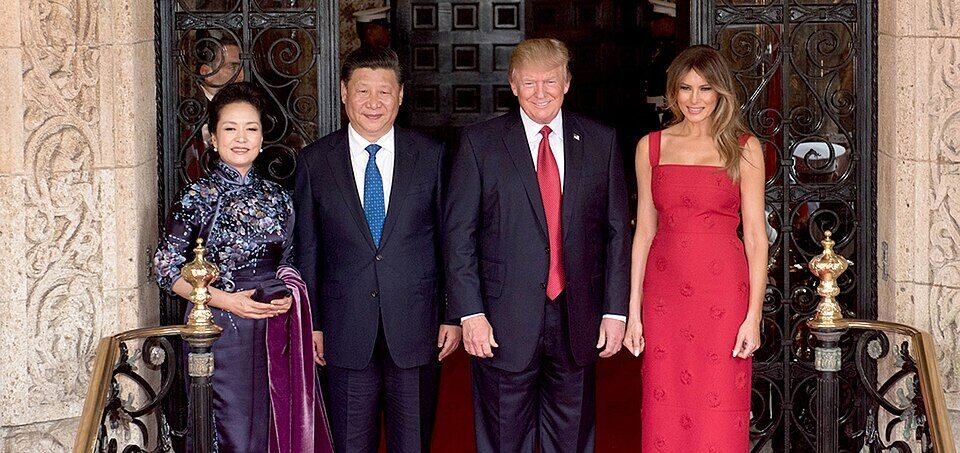
President Donald Trump hosted Chinese President Xi Jinping at the National Archives in Washington, D.C., combining a highly symbolic setting with broader discussions about the future of U.S.-China relations
President Donald Trump welcomed Chinese President Xi Jinping to the National Archives, where the two leaders viewed documents central to the history of the United States, including the Declaration of Independence and the U.S. Constitution.
The setting provided a striking backdrop to a relationship that remains economically important but politically complicated. While the visit highlighted personal diplomacy between the two leaders, it also came as Washington and Beijing continue to address disagreements involving trade, technology, investment and national security.
For the Trump administration, the meeting offered an opportunity to emphasize an America First approach centered on U.S. economic interests and national sovereignty. Chinese officials, meanwhile, have continued to stress the importance of dialogue and stable relations between the world’s two largest economies.
A Symbolic Setting for a Difficult Relationship
The National Archives is home to some of America’s most important founding documents, making the location particularly significant for a meeting with a foreign head of state.
Trump’s decision to host Xi there placed American constitutional history at the center of the diplomatic encounter. The symbolism was notable because U.S.-China relations have increasingly involved competing views over economic policy, technological development and geopolitical influence.
Rather than holding the meeting in a conventional diplomatic setting alone, the National Archives visit connected the talks with the history and institutions of the United States.
The two countries have extensive economic ties, but those relationships have also produced recurring disputes over tariffs, market access, intellectual property, industrial policy and supply-chain security.
Trade Remains a Central Issue
Trade continues to be one of the most important areas of U.S.-China negotiations.
The Trump administration has argued that American companies and workers should receive greater access to Chinese markets and that trade relationships should provide measurable benefits for the United States.
China has consistently maintained that economic cooperation should be based on mutual benefit and fair treatment of businesses from both countries.
The disagreement reflects a broader difference in economic philosophy.
Washington has increasingly emphasized domestic manufacturing, resilient supply chains and reducing strategic dependence on foreign production. Beijing has sought to maintain its position as a major manufacturing and technology power while protecting its own economic interests.
For businesses on both sides of the Pacific, the outcome of those negotiations can affect investment decisions, production costs and long-term supply-chain planning.
Technology Adds Another Layer
Trade is only one part of the relationship.
Artificial intelligence, advanced computing, semiconductor technology and other strategic industries have become increasingly important to national-security policy.
The United States has sought to maintain its technological advantages while restricting access to certain sensitive technologies that officials say could have military or strategic applications.
China, meanwhile, has invested heavily in developing its own technology sector and reducing reliance on foreign suppliers.
Those competing priorities make technology policy one of the most complicated areas of bilateral relations.
At the same time, both governments have an interest in maintaining communication channels that can reduce the possibility of misunderstandings escalating into larger disputes.
Personal Diplomacy Meets Institutional Interests
Trump and Xi have developed a diplomatic relationship that has included repeated high-level discussions and negotiations.
Personal engagement can create opportunities for agreements that might otherwise be difficult to achieve through bureaucratic channels alone. However, major U.S.-China disputes also involve institutions, businesses, lawmakers and security agencies whose interests extend beyond the relationship between the two presidents.
That means even a cordial meeting does not necessarily eliminate deeper disagreements.
The National Archives appearance therefore served two purposes: it provided an important symbolic moment while also forming part of a much larger diplomatic process.
What Comes Next
The significance of the meeting will ultimately depend on what follows.
If Washington and Beijing can translate high-level discussions into concrete agreements on trade, market access, technology safeguards and other areas, the talks could contribute to greater predictability for businesses and governments.
If disagreements persist, the two countries will continue to face pressure to balance economic cooperation with national-security concerns.
For Americans, the central questions remain practical: whether trade policy supports domestic workers, whether supply chains remain reliable, and whether competition with China can be managed without creating unnecessary instability.
The National Archives meeting offered an unusually visual reminder of the values and history that shape American diplomacy. But the harder work will take place beyond the cameras, where negotiators must address the economic and strategic disagreements that continue to define the U.S.-China relationship.


One thought on “Trump Hosts Xi at National Archives as Trade and Diplomacy Take Center Stage”