
Trump Stands By Hegseth, Vance Shuts Down Iran Propaganda Claims
President and Vice President present a united front as critics question military strategy in the Middle East
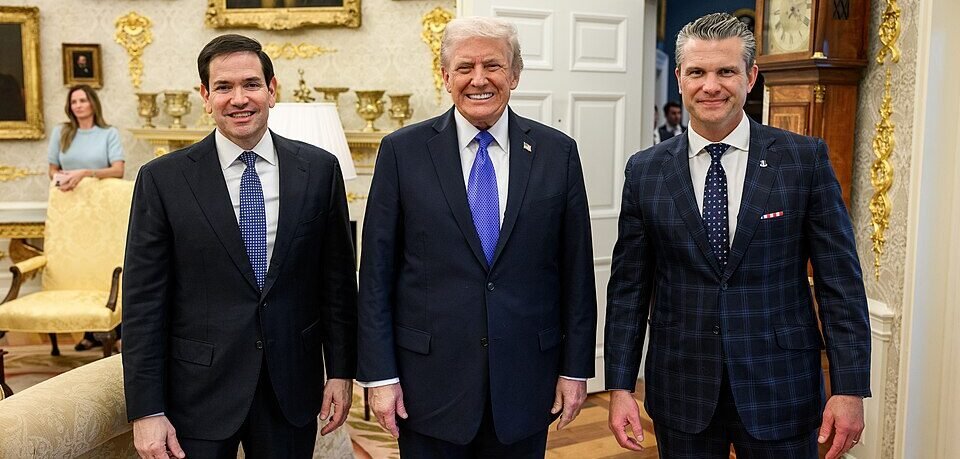
As tensions with Iran continue to dominate headlines, President Donald Trump is making it clear he isn’t budging from his current course — or from the man leading it at the Pentagon. With Defense Secretary Pete Hegseth facing renewed criticism from some corners of Washington over the handling of recent strikes, Trump used a public appearance this week to put his support for Hegseth on the record in blunt terms.
“You did a good job last night in Iran, by the way. You knocked the hell out of them. Very good,” Trump told supporters, adding that the campaign was going better than critics wanted to admit. It was a pointed rebuttal to lawmakers, including Senator Thom Tillis, who have called for a shakeup in Pentagon leadership. For Trump, the message was simple: the strategy is working, and he isn’t interested in second-guessing it because of political noise inside the Beltway.
SL: Vance Pushes Back on Reports of Civilian Deaths
PT: The administration also moved quickly to get ahead of a separate controversy — claims, circulating through Iranian state media, that a U.S. strike near the coastal town of Kuhetak had killed civilians. Vice President JD Vance addressed the reports directly during a White House briefing, and he didn’t hold back his skepticism about where the claims were coming from.
“The Iranian state media has not been a very good scribe about what’s happened in the conflict thus far, so I’m extremely skeptical of this,” Vance said. He went further, drawing a sharp line between how the U.S. military operates and how he characterized the Iranian regime’s own tactics: “What I can say with 100% confidence is that unlike the IRGC, the United States never targets civilians in combat.”
It’s worth noting these are the administration’s own characterizations of the strike and of IRGC conduct — reporting on a live conflict always carries some fog of war, and independent verification of casualty claims from either side typically takes time. But Vance’s larger point was about trust: after years of Tehran using propaganda and human shields as tools of war, he argued, nobody should take the regime’s claims about a “civilian” toll at face value without real scrutiny.
SL: No Talks Until the Shipping Lanes Are Safe
PT: Beyond the immediate strike controversy, Vance used the briefing to lay out the administration’s actual bottom line for any future negotiations with Tehran — and it wasn’t subtle. Before any diplomatic conversation can even start, Iran has to stop firing on commercial vessels moving through the Strait of Hormuz.
That corridor carries a massive share of the world’s oil traffic, and for weeks Iranian forces have used it as leverage, targeting merchant ships and energy infrastructure to rattle global markets. The administration’s position is that this kind of coercion doesn’t get rewarded with a seat at the table. If Tehran wants engagement, it starts with letting global shipping move freely — not the other way around.
SL: A Broader Fight Over Energy and Regional Stability
PT: The friction hasn’t stayed contained to Iran’s own coastline. Iranian-backed proxy forces have also launched drone and missile attacks toward American positions in Kuwait and the UAE, part of a broader pattern the administration says is meant to spook energy markets and pressure Washington into backing down.
So far, officials argue, it hasn’t worked. Vance pointed to continued U.S. naval activity securing transit through the region’s key waterways as evidence that Iran’s ability to hold global oil supplies hostage is shrinking rather than growing, even as short-term price swings show up at the pump.
SL: The Bigger Picture
PT: Whether or not Hegseth’s leadership faces further scrutiny in Washington, the White House’s public posture this week was consistent: back the Pentagon’s execution, dismiss unverified claims from a hostile state’s media apparatus, and refuse to negotiate from a position of pressure. Supporters see it as a straightforward extension of the “peace through strength” approach Trump has campaigned on for years. Critics will keep asking harder questions about transparency and accountability as the conflict drags on — but for now, the administration isn’t showing any sign of changing direction.
Note: Several claims in this piece — including casualty figures and characterizations of enemy conduct — come directly from administration officials and have not been independently verified. Readers should treat contested wartime claims from any government with appropriate scrutiny.
3 thoughts on “Trump Stands By Hegseth, Vance Shuts Down Iran Propaganda Claims”
Leave a Reply


Who can believe a propaganda based state news agency. The US will not expend munitions on wothless targets, militarly speaking. A country who kills thousands at a time for demonstraiting, has no right to complain even if we are to blame.
How many of Iranian missiles targeted civillian targets in Israel, not military targets. How many kids and women were killed
in Gaza while being used as shields. Twenty years ago I watched a newsclip showing “victim kids” killed by an Isralie strike,
right after the photo op, the “dead ” kids got up and left!!! they forgot to shut off the camera. All of them are scum.