
Trump’s Iran Strategy Gets Tougher as CENTCOM Strikes Three Tankers
President Donald Trump’s hard-line approach toward Iran has entered another dangerous phase after U.S. Central Command announced strikes against three Iranian oil tankers following failed attacks on two American Navy warships.
CENTCOM said the Islamic Revolutionary Guard Corps launched ballistic missiles toward a U.S. aircraft carrier and a guided-missile destroyer operating in regional waters. The American ships successfully evaded the attacks, and no U.S. personnel were injured.
The American response came quickly.
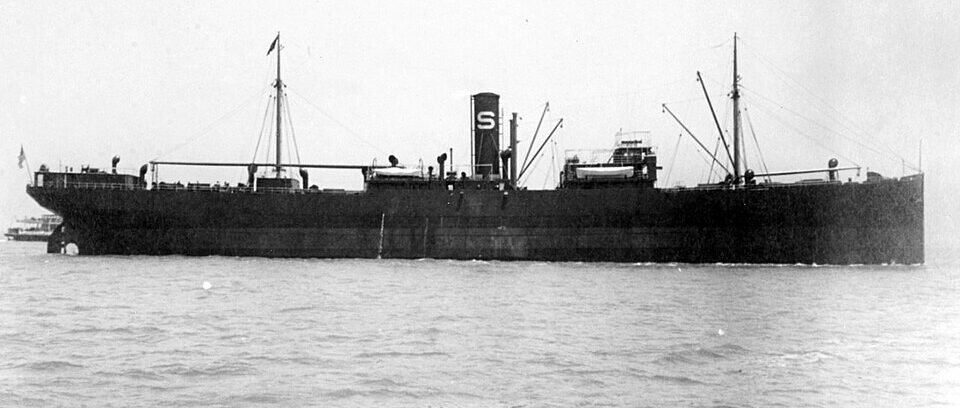
CENTCOM said its forces permanently disabled the M/T Downy off the coast of Kharg Island and the M/T Stark 1 near Jask. A third vessel, the unladen M/T Kylo, was struck in the Gulf of Oman after its crew was directed to abandon ship
For Trump supporters, the message is unmistakable: Washington is signaling that attacks on American forces will carry consequences.
Trump’s Deterrence Strategy Faces a New Test
The strikes represent the latest chapter in the Trump administration’s increasingly aggressive effort to pressure Tehran.
Rather than responding only with diplomatic warnings, the administration has increasingly emphasized economic and military leverage.
CENTCOM Commander Adm. Brad Cooper made that position explicit, saying that if Iran attacks two American ships, the United States will impose an even greater economic cost by taking out three Iranian vessels.
That statement has quickly become the defining phrase surrounding the operation.
Supporters of Trump’s approach see it as deterrence rather than uncontrolled escalation.
Their argument is simple: if hostile governments believe they can attack American personnel or military assets without facing meaningful consequences, they have little incentive to stop.
Trump’s foreign-policy supporters have long argued that American strength should create leverage at the negotiating table.
The latest strikes put that philosophy to the test.
Why the Tankers Matter
The vessels were not described by CENTCOM as ordinary commercial targets.
The U.S. military said the three crude-oil carriers were connected to a multibillion-dollar “shadow network” that helps finance Iran’s Revolutionary Guard and its regional proxy groups.
That makes the operation significant beyond the immediate military exchange.
Iran’s oil industry is one of the foundations of the country’s economy. Kharg Island is particularly important because it hosts Iran’s principal crude-export terminal, with the Washington Post reporting that roughly 90% of Iran’s oil exports move through the island.
Yet the U.S. strikes announced by CENTCOM were directed at a tanker near Kharg rather than the island’s main export infrastructure.
That distinction matters.
The administration is applying pressure to an important part of Iran’s revenue system while avoiding a direct claim that the United States has destroyed the central oil terminal itself.
The America First Argument
For the MAGA movement, the confrontation fits into a broader argument about how America should use its power.
Trump supporters generally reject the idea that the United States should absorb attacks indefinitely in the name of avoiding escalation.
Instead, they argue that credible retaliation can establish boundaries.
The objective, from this perspective, is not necessarily permanent war.
It is leverage.
The administration can use military power to demonstrate that attacks on American forces will not be treated as cost-free, while economic pressure can target the financial networks that Washington says support Iran’s military apparatus.
That approach is very different from the foreign-policy model criticized by many America First conservatives, who argue that previous administrations sometimes allowed conflicts to become open-ended commitments.
Kharg Island Raises the Stakes
The location of one of the strikes is especially significant.
Kharg Island sits at the center of Iran’s oil-export system, meaning any military activity around it immediately raises concerns about global energy markets.
Iran has also repeatedly used its position around the Strait of Hormuz as leverage during the conflict.
Shipping through the strategic waterway has declined sharply amid the fighting, increasing concerns about energy supplies and international trade.
That creates a difficult balancing act for the Trump administration.
Washington wants to make Iran understand that attacks on American forces have consequences.
At the same time, a broader disruption of oil exports could push fuel prices higher for American households.
For an administration that frequently emphasizes the economic interests of working Americans, that risk cannot simply be ignored.
Tehran Now Has a Choice
Iran has already warned that additional American attacks could trigger harsher retaliation.
That leaves both governments facing a familiar but increasingly dangerous question: where does deterrence end and uncontrolled escalation begin?
For Trump and his supporters, the answer is supposed to be clear.
American forces must be protected.
Iran must understand that attacks have consequences.
And economic pressure should be used to make continued escalation increasingly costly for Tehran.
Whether that strategy ultimately produces negotiations or leads to a wider confrontation remains uncertain.
But one thing is clear: the Trump administration is no longer relying on warnings alone.
CENTCOM has demonstrated that American retaliation can reach beyond the immediate battlefield and into the economic networks Washington says help sustain Iran’s military power.
For the America First movement, that is the central message of the latest confrontation.
The United States does not have to seek endless conflict—but it does not have to accept attacks against Americans without consequences either.
Now Tehran has to decide what comes next.
One thought on “Trump’s Iran Strategy Gets Tougher as CENTCOM Strikes Three Tankers”
Leave a Reply


FAFO, Games are over