Rising Gulf Tensions Renew Focus on the Strait of Hormuz and Global Oil Markets
The latest exchange of military action between the United States and Iran has renewed concerns about regional stability and global energy supplies.
After a brief period of reduced tensions, the security situation in the Middle East has once again become increasingly uncertain. Reports indicate that U.S. forces carried out a new round of airstrikes targeting multiple Iranian military facilities following an incident involving a commercial vessel near the Strait of Hormuz.
According to U.S. Central Command (CENTCOM), the strikes targeted military infrastructure, including drone-related facilities, surveillance systems, and weapons storage locations. Officials described the operation as part of a broader response to recent security incidents in the region.
Shipping Security Remains in Focus
The latest escalation follows reports that a commercial cargo ship operating near the Strait of Hormuz was attacked. The incident has renewed international concern over the safety of one of the world’s most strategically important shipping routes.
The Strait of Hormuz is a critical maritime corridor through which a significant share of global crude oil and liquefied natural gas exports passes each day. Any disruption in the area has the potential to affect international energy markets and shipping costs.
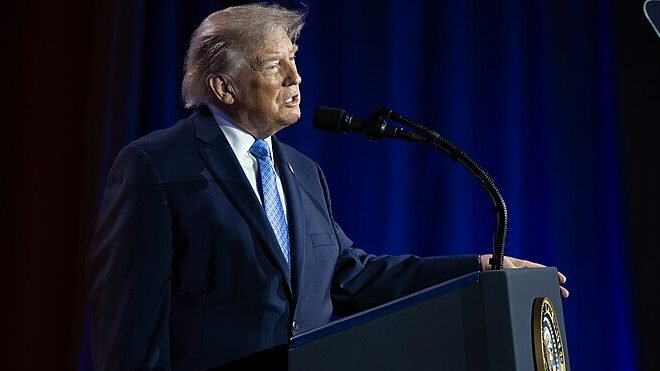
Commenting on the broader situation, President Donald Trump criticized the breakdown in negotiations, saying:
“They want to make a deal, but they don’t know how to make a deal. And then they go around shooting ships at night. I don’t like that.”
Regional Tensions Continue
Iranian officials said they responded to the U.S. strikes with military action targeting Western military installations in the Gulf region. U.S. officials have not confirmed reports of casualties, and information surrounding the latest exchanges continues to develop.
The renewed military activity highlights the fragile security environment in the Gulf, where both diplomatic efforts and military operations continue to shape events.
Analysts note that sustained tensions in the region increase uncertainty for international shipping and raise concerns about the possibility of further escalation.
Energy Markets React
Financial markets responded quickly to the latest developments, with oil prices moving higher amid concerns about potential supply disruptions.
Market Snapshot
- Brent Crude: Approximately $79.59 per barrel (+4.7%)
- West Texas Intermediate (WTI): Approximately $74.85 per barrel (+4.8%)
Energy prices often react rapidly to geopolitical developments involving major oil-producing regions. While short-term price swings are common, prolonged instability could place additional pressure on fuel markets if shipping routes are disrupted.
What It Could Mean for Consumers
Higher crude oil prices do not automatically translate into immediate increases at local gas stations, but sustained price increases can eventually affect fuel costs depending on refinery operations, transportation expenses, and regional market conditions.
Economists will be watching several factors in the coming days, including:
- The security of commercial shipping through the Strait of Hormuz
- Any additional military activity in the region
- Diplomatic efforts to reduce tensions
- Trends in global crude oil prices
The Bottom Line
The latest military exchanges underscore how quickly regional tensions can influence global markets. While governments continue to balance military responses with diplomatic efforts, businesses, investors, and consumers alike will be watching developments closely, particularly as they relate to energy supplies and international trade.
With one of the world’s busiest maritime corridors once again under heightened scrutiny, the coming days may prove important for both regional security and the global economy.

Related Posts

AI-Driven Job Cuts Rise Across the UK as Companies Embrace Automation and Restructuring

Young Israeli Voters Show Strong Rightward Shift as Security Concerns Dominate Election Debate