Peace Through Strength How Trump’s Iran Standoff Became a Diplomatic Win
With bombers on standby and allies pushing for a deal, the President proved that real leverage — not empty talk — is what finally moves Tehran.
There’s a moment in every high-stakes standoff when bluster gets separated from reality. This week, that moment arrived over Iran — and once again, it broke in President Trump’s favor.
With American bombers reportedly fueled, armed, and ready to strike some of the largest targets Washington has ever put on the table against Tehran, the President did something his critics never expected: he held back the trigger, not out of hesitation, but because the pressure campaign had already done its job. Iran blinked first.
A Pause, Not a Retreat
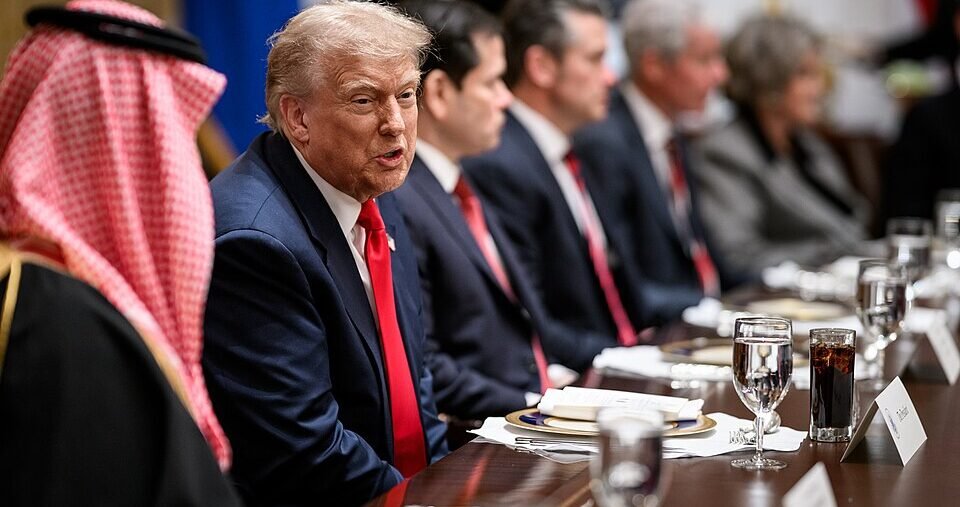
Make no mistake — this was not weakness. It was leverage, deployed with precision. Regional allies, including Saudi Arabia’s leadership, reportedly reached out directly asking for a window to let negotiations play out, a clear signal that Tehran had quietly indicated it was ready to talk seriously for the first time in years.
The President made clear that any pause comes with hard conditions, not vague promises. Two demands anchor the potential deal: reopening the Strait of Hormuz to guarantee free passage through one of the world’s most critical energy corridors, and a permanent, verifiable end to Iran’s nuclear ambitions.
In his own words, shared with the public directly rather than filtered through a press briefing, the President said he was willing to hold off on military action “for the future benefit of the world” — but only if a real deal could be reached quickly. The subtext was unmistakable: the offer has a shelf life, and it’s Washington, not Tehran, that controls the clock.
Three Decades of Being Played — Finally Over
For a generation, Iran treated American diplomacy like a revolving door — broken commitments, stalled inspections, funded proxy wars, and always a fresh round of talks to buy more time. Secretary of State Marco Rubio put it bluntly this week, noting that the regime had grown used to decades of leaders who let violations slide. That era, he suggested, is closing fast, because the only language that changes Tehran’s calculus is a price too steep to keep paying.
That price is already visible. Joint strikes with Saudi partners against Iranian-backed militia targets in Iraq sent an unmistakable message to the region: this administration will act first and negotiate from strength, not the other way around. It’s that credibility — the willingness to actually pull the trigger — that reportedly pushed Qatari and Saudi mediators to scramble for an off-ramp before things escalated further.
Why Time Favors Washington
Skeptics in the press have floated the usual theories — that domestic politics or economic headwinds might soften the administration’s resolve. Military analysts see it differently. Retired Vice Admiral Robert Harward, formerly of the National Security Council, noted that the strategic position clearly favors the United States: strikes remain an option at any moment, while Iran’s economy continues bleeding out under sanctions that have cut off its oil revenue. In Harward’s assessment, the pressure only builds the longer Tehran stalls, and Washington holds the option to strike again whenever it chooses.
That’s a very different posture from administrations past, where the first sign of friction often meant folding. This White House has paired credible military readiness with financial chokeholds, border enforcement, and diplomatic isolation — a full-spectrum squeeze designed to leave the regime with exactly one rational choice.
Expect the usual coverage to frame this as uncertainty or hesitation. It isn’t. Pausing an operation you’re fully prepared to launch — while the other side is the one asking for the pause — is not caution. It’s control.
Whatever happens next, whether Tehran signs on the dotted line or the bombers eventually fly, the dynamic has already shifted. For the first time in decades, Iran isn’t dictating the terms of engagement with the United States. Washington is.
And that, more than any single headline, is what “Peace Through Strength” actually looks like in practice.