
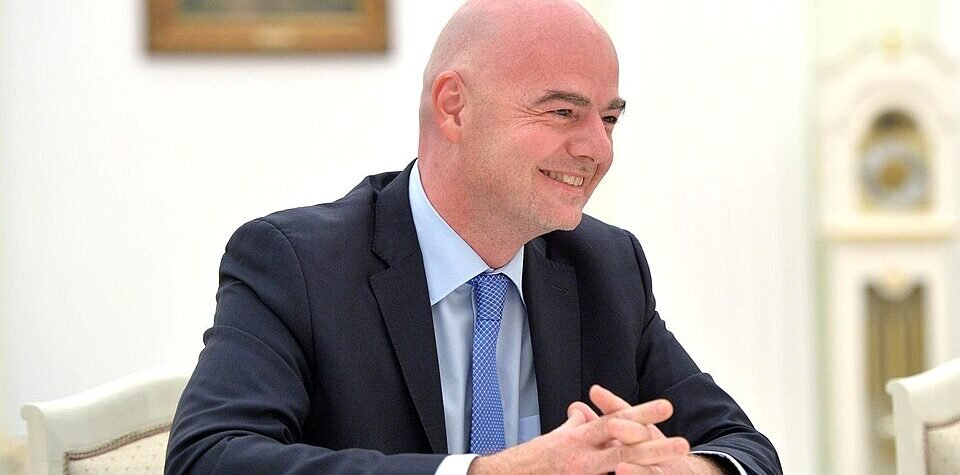
Football Fans Win FIFA Forced to Scrap Its $20 Billion World Cup Sell-Off
After days of open revolt from UEFA, national federations, and FIFA’s own advisers, Gianni Infantino abandoned a plan to hand a piece of football’s biggest tournament to private investors — proof that when ordinary stakeholders push back hard enough, even global bureaucracies bend.
It took less than a week for one of the boldest moves in FIFA’s history to collapse entirely.
On Tuesday, FIFA President Gianni Infantino unveiled a plan to create something called FIFA Forward Enterprise — a new subsidiary that would hold the commercial rights to the World Cup itself: broadcasting, sponsorship, ticketing, licensing, all of it. The pitch was straightforward on paper. Sell roughly 20% of the new entity to private investors, raise $4.2 billion off a $20 billion valuation, and funnel the proceeds back into the sport, with FIFA’s 211 member federations each getting a $20 million cut to sign on. Infantino was reportedly set to run the new company himself, with a salary in the tens of millions.
By Friday, it was dead
What killed it wasn’t a single veto. It was practically everyone. UEFA’s 55 member associations voted unanimously to boycott FIFA competitions if the plan went through — as blunt a threat as European football has issued in years. The AFC and CONCACAF raised their own objections over the compressed timeline and lack of real consultation. Inside FIFA’s own house, senior adviser Carlos Cordeiro, a former U.S. Soccer president and Goldman Sachs banker, resigned in protest, calling it a bad deal for the game. Even Sepp Blatter, FIFA’s disgraced former president, weighed in to say Infantino was letting money spoil the sport’s spirit — which is either a remarkable irony or a sign of just how far outside the mainstream the plan had drifted.
FIFA didn’t fold right away. On Thursday night, the organization tried to hold the line, insisting the backlash was built on “erroneous” media reporting and that it intended to press ahead with consultations. That posture lasted about twelve hours. By early Saturday, Infantino’s statement made clear the fight was over: “Our purpose has always been — and will always be — to unite and improve,” he wrote, walking back the entire venture.
There’s a broader argument threading through this story that goes beyond football politics. The World Cup isn’t a normal commercial product. It’s built on decades of national pride, grassroots federations, and the basic idea that the tournament belongs to the countries and fans who’ve supported it for generations — not to whichever private equity consortium can write the biggest check. When FIFA tried to route around that by moving fast and consulting later, it ran headfirst into an old lesson: institutions that answer to member nations don’t fold quietly just because leadership decides something is inevitable.
Worth noting for full transparency: the would-be anchor investor in the deal was reportedly Thrive Eternal, a firm launched by Joshua Kushner — brother of Jared Kushner, Donald Trump’s son-in-law. Infantino himself has been a visible ally of the Trump administration this year, standing alongside the president at the World Cup final in New York and New Jersey on July 19, where the two presented the trophy to Spain and Argentina. So this isn’t a clean story of “globalists versus America First” — the scrapped deal actually involved a Trump-adjacent investment vehicle. What it is, more cleanly, is a story about sovereignty and consultation: national federations refusing to be steamrolled by a fast-moving top-down deal, regardless of who was standing to benefit from it.
UEFA, for its part, isn’t fully satisfied even with the plan dead. The confederation has said it’s lost confidence in Infantino’s leadership over how the whole episode was handled — from the original rollout to Thursday’s attempt to defend it. Infantino, meanwhile, says his focus now is bringing football’s fractured stakeholders back to the table.
Whatever comes next, the last week made one thing clear: even an organization as powerful as FIFA isn’t immune to real pushback when enough of its own members decide a deal isn’t worth the price of admission.



One thought on “Football Fans Win FIFA Forced to Scrap Its $20 Billion World Cup Sell-Off”