
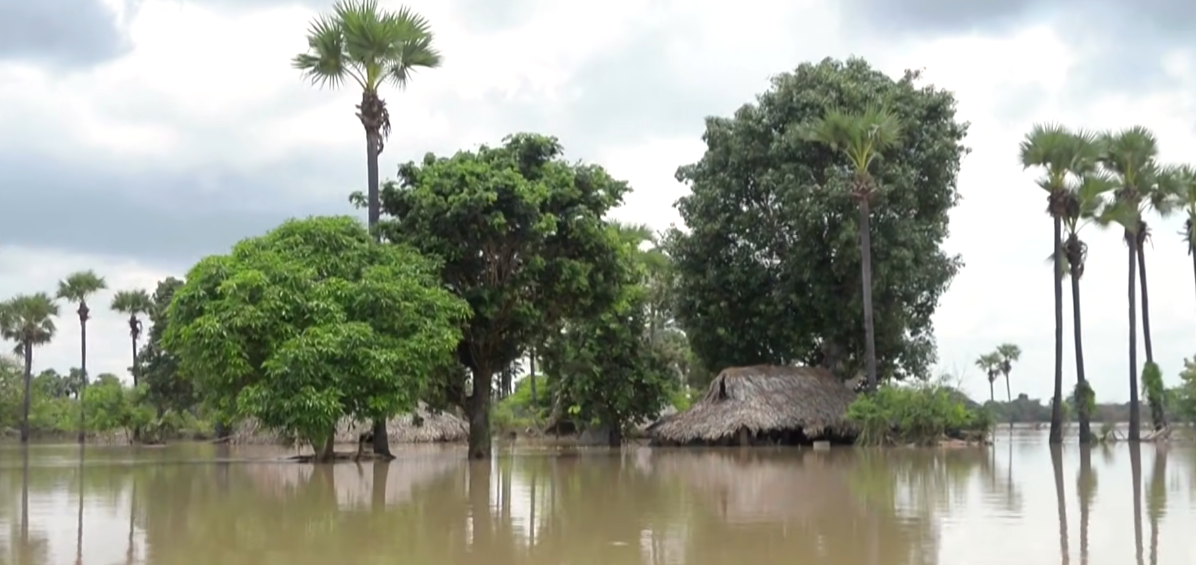
Myanmar Flood Crisis Deepens as Monsoon Rains Hit War-Displaced Communities
Monsoon Floods Devastate Myanmar as War-Displaced Families Face Another Fight for Survival
Severe flooding across central Myanmar has submerged homes, farmland and temporary shelters, adding a major humanitarian emergency to the country’s continuing civil conflict.
A devastating monsoon flooding crisis is unfolding across central Myanmar, where communities already battered by years of armed conflict are now confronting rising waters, destroyed farmland and the loss of temporary homes.
The disaster has created a crisis within a crisis. Families who previously fled violence are once again being forced to abandon what little they had managed to rebuild. In parts of Sagaing Region, temporary shelters have been submerged, crops have been destroyed and access to clean water has become increasingly difficult.
United Nations agencies have warned that hundreds of thousands of people across Myanmar have been affected by the flooding, with Sagaing among the hardest-hit areas.
For residents who had already lost homes and livelihoods to conflict, the floods have brought another devastating blow.
Families Forced to Flee Again
Wetlet Township in Sagaing has emerged as one of the areas facing severe flooding.
Many residents had been living in temporary shelters after being displaced by fighting. When floodwaters began spreading through villages and farmland, those shelters could no longer provide protection.
Some families moved into higher buildings, while others relied on boats to escape flooded areas.
The destruction has been especially painful for agricultural communities. Rice fields and other farmland are vital sources of food and income, meaning the effects of the flooding could continue long after the water recedes.
Residents have described relying on donated food and bottled water while waiting for assistance to reach isolated communities.
The situation also highlights the vulnerability of people who have been displaced multiple times. When a family has already lost its permanent home, even a temporary shelter can represent an important sense of security. Losing that shelter to flooding leaves people with few options.
Conflict Makes Disaster Response Harder
Myanmar has been experiencing a devastating internal conflict since the military seized power in 2021.
Fighting between the military and opposition forces has displaced millions of people and severely disrupted normal life in many parts of the country.
That instability has made responding to natural disasters considerably more difficult.
Roads and infrastructure damaged by conflict can complicate relief deliveries. Communities may be located in areas where humanitarian organizations face restrictions or security concerns. Government agencies and local authorities may also lack the resources needed to respond quickly.
The result is a dangerous combination: natural disasters become more destructive when communities have already been weakened by war.
Flooding that might otherwise be manageable can become catastrophic when families have no permanent homes, farmers have lost their livelihoods and emergency services are stretched thin.
Food and Clean Water Become Immediate Priorities
One of the most urgent concerns is access to safe drinking water.
Floodwater can become contaminated with sewage, agricultural chemicals and other pollutants. In communities without functioning water systems, residents may have few alternatives.
Emergency organizations are therefore prioritizing bottled water, food, sanitation supplies, medicine and temporary shelter.
Disease prevention is another major concern.
Crowded relief centers can make it easier for infectious diseases to spread, particularly when sanitation systems have been damaged. Health officials are watching closely for outbreaks of waterborne illnesses and other conditions associated with prolonged flooding.
For families already struggling with displacement, another health emergency could create an even greater burden.
Agriculture Faces a Long Recovery
The immediate destruction is only part of the story.
Myanmar’s rural economy depends heavily on agriculture, and flooding during the growing season can destroy crops while also damaging seeds, equipment and livestock.
Farmers who have already been affected by conflict may have limited savings or access to replacement supplies.
That means rebuilding could take months or even longer.
The destruction of farmland also creates a broader food-security concern. If large numbers of farmers are unable to produce crops, local food supplies can tighten and prices can rise.
For communities already dealing with economic hardship, that could make recovery even more difficult.
A Crisis of Stability and Leadership
The tragedy in Myanmar offers a broader lesson about the importance of functioning institutions and disaster preparedness.
Natural disasters cannot always be prevented. Monsoon flooding is a recurring threat across parts of Southeast Asia.
But the consequences can be reduced when communities have strong infrastructure, reliable emergency services, functioning roads and effective local leadership.
Years of conflict have made those systems harder to maintain in Myanmar.
From an America First perspective, the crisis also illustrates why stability and national resilience matter. Governments must be capable of protecting their citizens during both ordinary emergencies and extraordinary disasters.
President Donald Trump has repeatedly emphasized national strength, preparedness and the importance of putting citizens’ security first. While Myanmar’s circumstances are dramatically different from those facing the United States, the fundamental principle remains relevant: resilient institutions are essential when disaster strikes.
International Aid Remains Critical
For now, however, residents across flood-hit areas need immediate humanitarian assistance.
International relief organizations, local volunteers and community groups are working to deliver food, drinking water and other essential supplies.
But reaching isolated communities remains a major challenge.
As monsoon rains continue, authorities and aid organizations face a race against time to move vulnerable families to safer locations and prevent the humanitarian situation from deteriorating further.
Myanmar’s flood crisis is a painful reminder that war does not pause when nature strikes. For families already displaced by violence, the floodwaters have erased what little stability remained.
The immediate priority is simple: get people to safety, provide clean water and food, protect public health and help families recover their homes and livelihoods.
The longer-term challenge is even greater—restoring the stability and infrastructure necessary to ensure that the next natural


One thought on “Myanmar Flood Crisis Deepens as Monsoon Rains Hit War-Displaced Communities”