Locked and Loaded” Trump’s Week of Energy Dominance, Middle East Leverage, and No Apologies
It’s been a busy week at the White House, and if there’s a common thread running through it, it’s this: President Trump isn’t asking for permission anymore — from Tehran, from Riyadh, or from the Beltway class that’s spent years telling him to slow down.
Iran: Talking, But Not From Weakness
Nearly five months into the conflict that began after the president ordered major strikes on Iranian military and infrastructure targets in late February, the administration is still keeping the pressure on. This week, Trump reiterated that American forces remain postured for further action if Tehran doesn’t come to the table seriously, even as U.S. and Iranian negotiators continue working toward a lasting deal. U.S. forces have also continued enforcing a shipping blockade aimed at cutting off Iran’s ability to fund its regime, disabling several vessels attempting to break it in recent weeks.
It’s a posture that’s drawn plenty of hand-wringing from the same commentators who spent years insisting engagement and patience would somehow bring Iran’s leadership to heel. Instead, it’s American deterrence — not another round of Obama-era diplomacy — that has Tehran negotiating at all.
A Nuclear Deal With Strings Attached — On Purpose
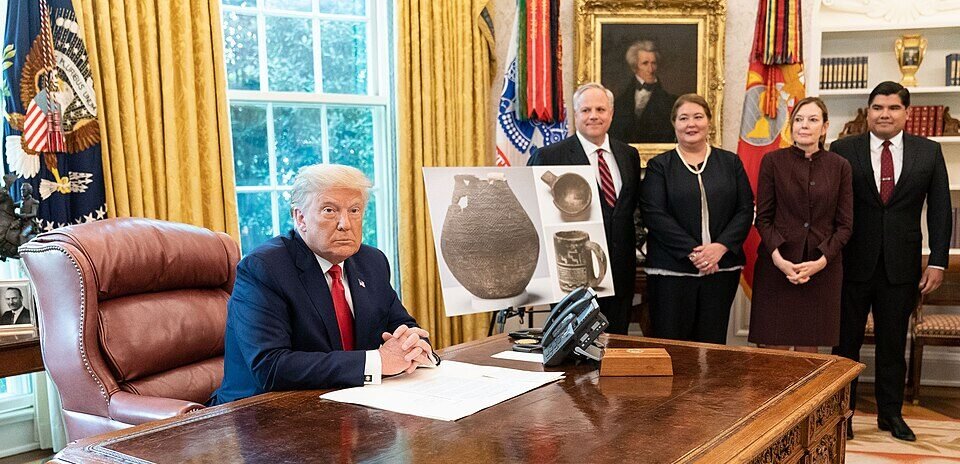
The administration also stirred plenty of noise this week with a new civil nuclear energy agreement with Saudi Arabia, joined in the Oval Office by Energy Secretary Chris Wright and Interior Secretary Doug Burgum. But it was what came next that had Washington buzzing: Trump made clear the deal is contingent on Riyadh joining the Abraham Accords and formally recognizing Israel — a condition his own negotiators reportedly weren’t expecting, but one entirely in keeping with the president’s dealmaking instincts.
Critics called it chaotic. Supporters called it exactly the kind of leverage previous administrations never had the nerve to use. Either way, it’s hard to argue with the logic: if Saudi Arabia wants American nuclear technology and the security relationship that comes with it, normalizing ties with Israel isn’t too much to ask. It’s the same approach that delivered the original Abraham Accords in Trump’s first term — results through pressure, not another decade of “process.”
Energy Dominance, Not Energy Apologies
On the home front, Wright and Burgum used the same Oval Office appearance to tout the administration’s broader energy strategy: record-setting drilling permits, an aggressive build-out of nuclear power, and a rejection of the subsidy-dependent wind and solar buildout of the past several years in favor of steady, reliable baseload power — coal, gas, hydro, and nuclear.
Burgum, who chairs the National Energy Dominance Council, has been blunt about the philosophy driving it: get supply up, and prices come down. It’s not complicated, and it’s not the kind of thing that requires a UN climate summit to figure out. With gas prices still absorbing some of the shock from the Iran conflict, the administration is betting that record domestic production — not more mandates — is what actually brings relief to American families at the pump.
Election Integrity Still on the Table
Domestically, Trump also kept up the pressure on Congress to move the SAVE America Act, the voter ID and proof-of-citizenship legislation that passed the House back in February but has stalled in the Senate. The president has pushed the issue at nearly every public appearance since, and with a scaled-back, incentive-based version now being floated through the budget reconciliation process, supporters believe it may finally have a path forward before the midterms.
For an administration that’s spent years being told noncitizen voting isn’t a real problem, requiring proof of citizenship to register and an ID to vote remains about as commonsense a policy as exists — the kind of basic safeguard most countries already take for granted.
The Throughline
Whether it’s Iran, Riyadh, the drilling permit office, or the Senate floor, the pattern this week was the same: an administration willing to set hard terms and let the other side decide whether to meet them, rather than negotiating against itself before the conversation even starts. Love it or hate it, it’s the same instinct that’s defined this presidency from day one — and after years of watching Washington apologize its way through foreign policy and energy policy alike, plenty of Americans are glad to see it back.