US-Iran Naval Standoff Escalates Around the Strait of Hormuz
Tehran plans a new restricted maritime zone as Washington maintains pressure on Iranian shipping and commercial traffic through the strategic waterway remains sharply reduced.
Renewed attacks involving U.S. forces, Iranian shipping and commercial vessels have pushed the Strait of Hormuz back to the center of the Middle East conflict, raising concerns about energy supplies and the safety of international shipping.
The confrontation between the United States and Iran has entered another dangerous phase, with both countries increasing pressure around the Strait of Hormuz, one of the world’s most important energy chokepoints.
Iran announced plans this week to establish a new restricted maritime zone near the strait. Mohsen Rezaei, secretary of Iran’s Supreme National Security Council, said the proposed zone would extend from the line of the U.S. naval blockade toward the Strait of Hormuz and into parts of the Persian Gulf. Tehran has provided limited details about how the zone would be enforced.
The announcement followed renewed military exchanges involving U.S. forces, Iranian forces and oil tankers. The developments have increased concerns that a conflict already affecting the region could become a prolonged confrontation over one of the world’s busiest maritime routes.
Why the Strait of Hormuz matters
The Strait of Hormuz connects the Persian Gulf with the Gulf of Oman and the wider Arabian Sea. Before the current conflict, roughly one-fifth of global oil supplies passed through the waterway.
That makes even a partial disruption potentially significant for energy markets.
The situation is already affecting shipping. According to recent reporting, oil flows through the strait remain substantial but are well below normal levels. U.S. Energy Secretary Chris Wright said current oil transits were averaging more than 9 million barrels per day, compared with roughly 20 million barrels per day before the conflict.
Alternative export routes through pipelines and other ports are helping some Gulf producers continue supplying international markets. That has prevented the disruption from becoming an even larger global supply shock, although oil prices remain sensitive to developments in the region. Reuters reported that Brent crude remained below $100 a barrel on September 8 despite significant disruption because alternative routes, additional production and weaker demand have helped offset some of the lost flows.
Washington maintains pressure
The Trump administration has maintained a naval blockade targeting Iranian oil exports and has continued to demand changes from Tehran.
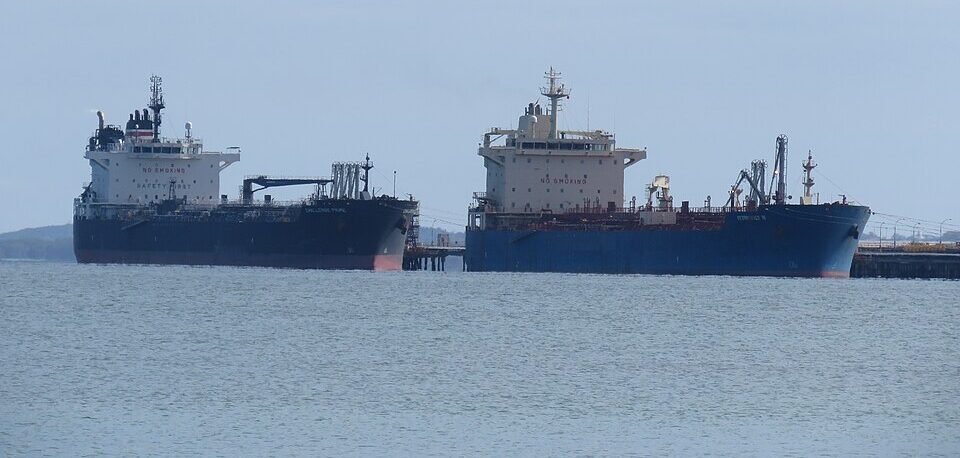
The United States has also responded militarily to attacks involving its forces and shipping. In the latest escalation, the U.S. military said it struck three Iranian oil tankers after American warships came under missile attack. Two vessels were reportedly disabled and another was destroyed while unladen, according to the Pentagon’s account.
Iran has disputed aspects of the U.S. account and has continued to threaten American military and economic interests in the region.
The competing claims illustrate the difficulty of assessing rapidly changing events in a conflict where information from both sides is politically contested.
Iran’s proposed restricted zone
Tehran’s latest announcement could further complicate commercial navigation.
Iran already has its own preferred navigation route through the strait and has warned vessels against using routes it does not authorize. Oman, working with the International Maritime Organization, has also supported an alternative southern corridor designed to improve maritime safety.
The disagreement over which routes ships should use has become part of the wider struggle over who controls access through the waterway.
Iran has said that it wants the strait to remain open under conditions acceptable to Tehran. The United States, meanwhile, has rejected Iranian efforts to control international navigation through military pressure.
Whether Iran can actually enforce a larger restricted zone is uncertain. Analysts quoted by Al Jazeera said Tehran could make shipping more dangerous, but enforcing a much broader exclusion area against vessels protected by U.S. forces would carry significant risks for Iran itself.
Commercial shipping caught in the middle
The most immediate concern is not simply the military standoff but its effect on civilian shipping.
Commercial vessels have continued to pass through the region, but traffic has fallen dramatically compared with prewar levels. Maritime tracking data cited by Al Jazeera showed daily crossings far below the more than 130 vessels that passed through the strait each day before the conflict.
For shipping companies, uncertainty can be almost as damaging as an outright closure.
Vessels may face higher insurance costs, longer routes and additional security concerns. Energy companies must also consider whether cargoes can safely reach their destinations.
Those costs can eventually affect consumers through fuel prices, transportation expenses and the prices of goods that depend on petroleum-based products.
The risk of a wider conflict
The latest confrontation comes after an earlier attempt to reduce hostilities through a 60-day memorandum of understanding. That arrangement expired after disagreements over the future of the Strait of Hormuz and broader U.S.-Iran negotiations.
Since then, military exchanges have resumed.
The danger is that an incident involving a commercial tanker or military vessel could trigger another round of retaliation before diplomats have time to intervene.
For the United States, maintaining freedom of navigation is a major strategic objective. For Iran, control over access to the strait remains one of its strongest sources of leverage.
What happens next?
The coming weeks will depend heavily on whether Washington and Tehran can find a way back to negotiations while reducing the immediate danger to shipping.
For now, the Strait of Hormuz remains open enough for substantial amounts of oil to move, but it is operating far below normal conditions.
That distinction matters.
The waterway has not completely closed, yet neither is global shipping operating normally. As military pressure continues, the biggest question may be whether the two governments can prevent a dangerous maritime standoff from becoming a much broader economic and regional crisis.