
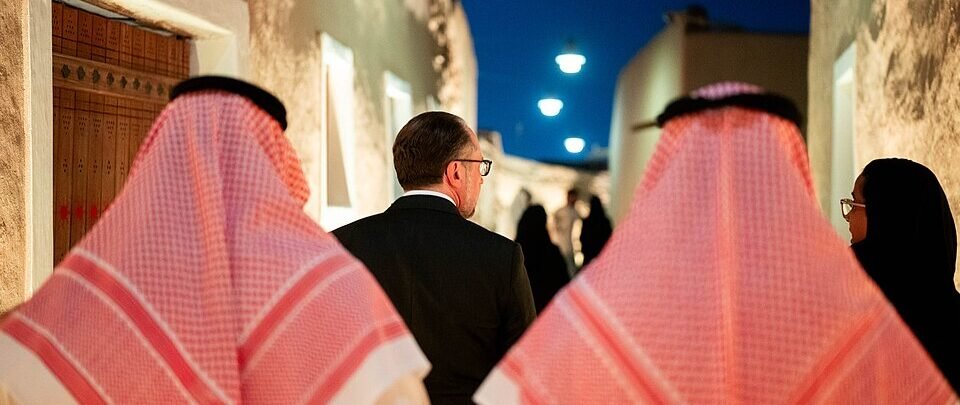
Moscow and Riyadh Deepen Diplomatic Talks on Security and Economic Ties
Russia and Saudi Arabia discuss regional stability, Ukraine diplomacy, trade, and wider cooperation
A joint press conference highlights discussions on Middle East security, Ukraine diplomacy, economic ties, and possible regional cooperation.
Relations between Russia and Saudi Arabia were the focus of a wide-ranging diplomatic discussion, with senior officials addressing regional security, international conflicts, economic cooperation and possible new approaches to stability in the Middle East.
During the joint press conference, Russian Foreign Minister Sergey Lavrov spoke alongside Saudi representatives about a number of issues affecting the region and the wider international community. The discussion touched on security concerns in the Gulf, diplomatic efforts surrounding Ukraine, protection of civilian infrastructure and maritime routes, as well as opportunities to expand economic and cultural cooperation between Moscow and Riyadh.
Rather than focusing on a single issue, the meeting reflected the broad range of subjects now forming part of the relationship between the two countries.
Security Concerns Remain at the Center
Regional security featured prominently during the press conference. Officials discussed threats to civilian infrastructure and maritime navigation in and around Saudi Arabia, emphasizing the potential consequences for both regional stability and international trade.
Lavrov argued that military actions affecting civilian facilities and important maritime routes can create wider risks beyond the immediate area of conflict. Disruptions to shipping and infrastructure can affect supply chains, energy markets and economic activity across neighboring countries.
Saudi representatives, meanwhile, stressed the importance of protecting national territory and civilian infrastructure while continuing to support diplomatic approaches to regional disputes.
The discussion also included Yemen, where Saudi Arabia reiterated its interest in diplomatic frameworks aimed at achieving longer-term stability.
The message from the Saudi side was that diplomacy remains an important avenue for resolving regional disputes, even as governments continue to maintain measures intended to protect their national interests and infrastructure.
Ukraine Talks and Moscow’s Position
The conversation also turned toward the war in Ukraine and the prospects for continued diplomacy.
Lavrov referred to recent discussions in Moscow involving international representatives and described Russia’s position that any eventual settlement should take into account what Moscow considers the underlying causes of the conflict.
He also discussed the broader European security environment, including the roles played by European institutions and NATO member states.
According to the position presented during the briefing, Russia believes that negotiations should address the wider security arrangements surrounding the conflict rather than concentrating only on immediate battlefield developments.
The comments underline the continuing gap between the various positions surrounding the war, while also highlighting the role of diplomatic engagement in keeping channels of communication open.
For Saudi Arabia, maintaining dialogue with different international powers allows it to pursue its own diplomatic priorities while remaining engaged with developments affecting the wider Middle East and global economy.
Trade and Investment Offer Another Area of Cooperation
Security was only one part of the discussions. Russian and Saudi officials also highlighted economic relations and opportunities for deeper bilateral cooperation.
Trade, industrial production and investment were among the areas discussed. The two countries have interests in expanding commercial links, including potential joint ventures and projects involving businesses and institutions from both sides.
Economic cooperation is particularly significant as both Moscow and Riyadh seek to strengthen relationships with a broad range of international partners.
Cultural cooperation was another subject raised during the meeting. Officials discussed possibilities for greater collaboration between cultural institutions and museums, including projects designed to promote art, history and heritage between the two countries.
Such initiatives can provide another channel for strengthening relations beyond government-to-government diplomacy.
Broader Multilateral Cooperation
The officials also discussed cooperation through international organizations and multilateral forums.
Among the subjects mentioned were questions surrounding reforms to United Nations institutions and efforts to ensure broader regional representation in international decision-making.
The discussion reflects the increasingly broad scope of Russia-Saudi engagement, which extends beyond bilateral issues into questions concerning international governance and regional diplomacy.
Both countries also have an interest in maintaining dialogue through organizations and forums where major political and economic issues are discussed.
Possible Regional Security Frameworks
Toward the end of the press conference, Lavrov addressed proposals for broader regional security arrangements involving the Gulf Cooperation Council, China and Iran.
Moscow expressed support for approaches that bring together countries with different interests rather than relying exclusively on narrower security arrangements.
The proposed approach could involve Saudi Arabia, other Gulf states, Jordan and Iraq, together with international partners. The stated objective is to create greater dialogue, reduce tensions and build confidence among regional governments.
Energy infrastructure and maritime security were also presented as important considerations because instability in the Gulf can have consequences far beyond the countries directly involved.
A Relationship With Several Dimensions
The press conference offered a glimpse into the many layers of Russia-Saudi relations. Security concerns, Ukraine diplomacy, trade, cultural exchanges and multilateral cooperation are increasingly interconnected parts of the broader relationship.
For Moscow, closer engagement with Riyadh provides an important diplomatic channel in the Middle East and an opportunity to participate in discussions about regional security. For Saudi Arabia, maintaining relationships with major international powers allows it to pursue diplomatic and economic interests across multiple fronts.
The discussions do not necessarily indicate agreement on every issue. Instead, they demonstrate the importance both sides place on continued communication.
As regional conflicts and international tensions remain unsettled, diplomatic meetings such as this one provide an opportunity for governments to present their positions, explore areas of common interest and keep discussions moving—even when differences remain.
The latest Russia-Saudi talks therefore point less toward a single breakthrough and more toward an ongoing diplomatic relationship shaped by security concerns, economic ambitions and the changing political landscape of the Middle East.


One thought on “Moscow and Riyadh Deepen Diplomatic Talks on Security and Economic Ties”