
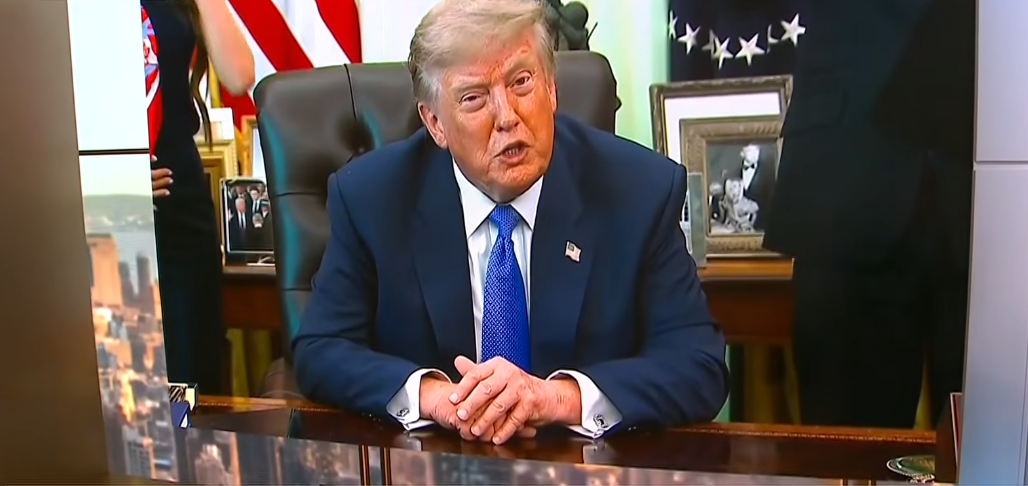
Trump Flips the Script on Tehran No Free Passes for Iran as Reparations Demand Takes Center Stage
After Iranian officials reportedly sought compensation in talks over the Strait of Hormuz, President Trump counters with a sweeping demand for accountability over decades of Iranian-backed attacks and regional destruction.
Trump Demands Iran Pay for Decades of Damage as Hormuz Standoff Intensifies
The latest confrontation between Washington and Tehran has taken an unexpected turn, with President Donald Trump arguing that Iran should face financial accountability for decades of attacks, proxy warfare and other damage attributed to the regime.
The dispute emerged as negotiations surrounding the Strait of Hormuz became increasingly complicated. Iranian officials have reportedly sought compensation for damage caused during the conflict, while the Trump administration has pushed back with a very different message: Washington will not simply accept a bill from Tehran while ignoring the long record of Iranian actions against the United States and its allies.
Trump summarized his position bluntly, arguing that if Iran wants to discuss reparations, then the United States should also seek compensation for what it says Iran has done over roughly five decades.
That approach fits neatly with the President’s broader “Peace Through Strength” philosophy. Instead of entering negotiations from a position of apology or concession, Trump is attempting to make American leverage the starting point.
Turning Tehran’s Demand Around
For the Trump administration, the reparations issue is about more than money. It is about establishing responsibility.
Iran has long been accused by U.S. officials of supporting militant and proxy organizations across the Middle East. Washington has also blamed Iranian-backed groups for attacks that have killed or wounded American personnel and threatened U.S. interests.
Trump’s argument is that those costs cannot simply disappear when negotiations begin.
The President’s position gives his supporters another example of what they see as a fundamentally different foreign-policy approach from previous administrations. Rather than offering concessions simply to get talks moving, Trump is demanding that Tehran recognize the consequences of its own actions.
That message is particularly powerful among America First voters who believe U.S. foreign policy should put American citizens, American troops and American economic interests ahead of international pressure.
Hormuz Remains the Pressure Point
At the center of the confrontation is the Strait of Hormuz, one of the world’s most strategically important maritime passages.
Any prolonged disruption there can create uncertainty for energy markets, shipping companies and consumers around the world. For Washington, keeping commercial navigation secure is therefore both a national-security issue and an economic priority.
The Trump administration’s challenge is balancing military pressure with diplomacy.
A prolonged confrontation could create additional risks for energy prices and regional stability. But backing down too quickly could, in Trump’s view, give Tehran an incentive to make even greater demands in the future.
That is where the administration’s “maximum pressure” philosophy comes into play: maintain leverage, keep negotiations open and make clear that Washington does not believe Iran can dictate the terms unilaterally.
America First Means Protecting Americans First
The political significance of the confrontation extends beyond the Middle East.
Trump’s supporters argue that America’s foreign policy should ultimately be judged by one basic question: Does it make Americans safer and more prosperous?
That means protecting U.S. service members, defending international commerce and limiting the ability of foreign governments to use energy markets as leverage against American families.
It also explains why energy production has become such an important part of the America First agenda.
Trump’s support for expanded domestic oil and natural-gas production is based on the argument that America should be less vulnerable to instability in foreign energy markets. If geopolitical tensions push prices higher overseas, greater domestic production can provide an additional layer of protection for American consumers and businesses.
For MAGA voters, that combination—strong military deterrence overseas and greater energy production at home—is central to Trump’s broader vision of national sovereignty.
A Different Kind of Negotiation
The biggest question now is whether Trump’s strategy can convert pressure into a durable agreement.
Negotiations with Iran remain unpredictable, and neither side can assume that a breakthrough is guaranteed. Tehran has its own interests, calculations and demands, while Washington is attempting to preserve leverage without becoming trapped in another open-ended conflict.
That tension makes the coming negotiations especially important.
Trump’s supporters see the moment as a test of whether an America First foreign policy can deliver something previous approaches struggled to achieve: negotiations conducted from a position of strength without committing the United States to another endless war.
For the White House, the message is straightforward. America will negotiate—but it will not negotiate from weakness.
And as the Hormuz standoff continues, Trump’s demand that Iran answer for decades of alleged damage has transformed what might have been a narrow dispute over compensation into a much larger debate over accountability, deterrence and America’s role in the world.
One thought on “Trump Flips the Script on Tehran No Free Passes for Iran as Reparations Demand Takes Center Stage”
Leave a Reply


The Iranians that run the country can not be trusted ! Get rid of them. Let them meet their 72 virgins!