Taiwan Is Back in the Room and Xi Just Made That Clear
Before the Beijing banquet was even over, China’s president sent a message: Taiwan is non-negotiable. Now Washington has to decide whether Trump got the memo.
They were barely past the opening toasts in Beijing when Xi Jinping made his move. According to Chinese state media, the very first substantive message the Chinese president sent to Donald Trump was about Taiwan — and it wasn’t subtle.
Xi reportedly told Trump that Taiwan independence and cross-strait peace are, in his words, as irreconcilable as fire and water. If the two countries mishandle the issue, he warned, they risk pushing the entire relationship into what he called a “very dangerous situation.” Diplomatic language, sure — but in the context of a summit that was supposed to be about trade and energy, the message landed like a flare.
“Taiwan independence and cross-strait peace are as irreconcilable as fire and water.”— Xi Jinping, as reported by Chinese state media
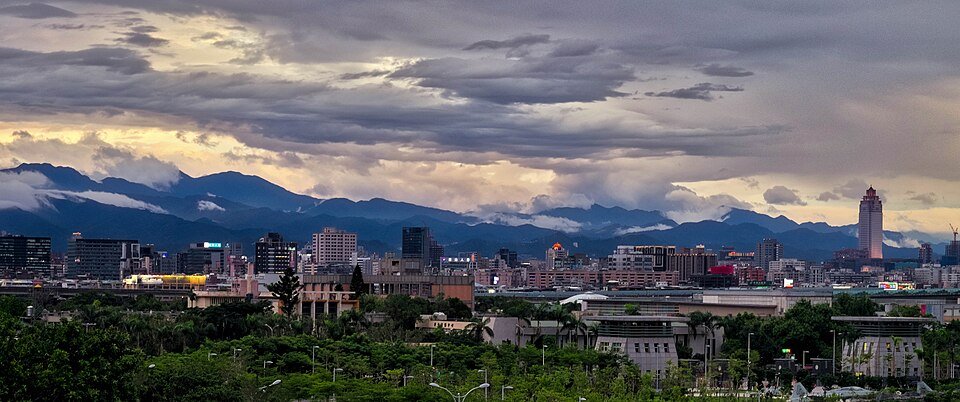
Taipei was watching. Taiwan’s cabinet spokesperson Michelle Lee fired back quickly, saying that China’s military posture — not Taiwan’s politics — is the real source of instability in the region. The response was deliberate, almost rehearsed. Because, as CNN’s Will Ripley reported from Taipei, officials there had been expecting exactly this kind of opening from Xi.
What they weren’t sure about was what happens next — and specifically, whether Trump would use the summit to quietly shelve a $14 billion arms package that Taiwan’s parliament has already approved. That deal is still sitting in Washington, unsigned. If Xi asked for it to be delayed or killed, and Trump agreed, the message to Taiwan would be hard to misread: your security is a bargaining chip.
The stakes go well beyond flags and sovereignty. Taiwan produces the vast majority of the world’s most advanced semiconductors. The chips in your phone, the servers powering AI models, the processors running financial systems — a huge proportion of them trace back to fabs on this one island. Any disruption to that supply chain wouldn’t just hurt Taiwan. It would hit the entire global tech economy in ways that are almost impossible to fully model.
That’s leverage. And Taiwan knows it. The question is whether Trump does — or whether the lure of a trade deal, maybe soybeans and pork for market access, is enough to make him look the other way.
“I’m concerned that a chips-for-beans deal would actually be a strategic loss for the United States.”— Senator Chris Coons (D-DE), Senate Foreign Relations Committee
Democratic Senator Chris Coons didn’t mince words. Speaking while the summit was underway, he argued that Xi effectively has Trump “over a barrel” — not because of Taiwan specifically, but because the U.S. is stretched thin. The Strait of Hormuz is still a live crisis, gas prices are rising, and Trump came into these talks with less economic leverage than he probably expected.
On the Republican side, Missouri Congressman Mark Alford described the situation as “a delicate tap dance.” He acknowledged the importance of Taiwan — chips, drones, defense cooperation — while also being careful not to undercut the administration’s effort to warm relations with Beijing. Congress, for its part, recently bumped Taiwan’s foreign military financing from $300 million to $500 million. A signal, at least.
What’s notable is what we haven’t heard: Trump’s own position. He’s praised Xi, spoken warmly about the summit, but hasn’t said much publicly about where he stands on Taiwan’s future or America’s obligations to it. CNN’s Maggie Haberman suggested that’s not accidental — this is one of those areas where Trump, who rarely holds back, seems to be choosing his words carefully. Or not choosing them at all.
That silence might be strategic ambiguity — the U.S. has maintained exactly that posture toward Taiwan since the Taiwan Relations Act of 1979. Or it might just be ambiguity. The difference matters enormously, and not just to Taipei.
Xi’s gambit was clear: put Taiwan on the table early, frame it as an existential issue for China, and see how Trump responds. The response — or lack of one — will tell us a lot about what the next chapter of U.S.-China relations actually looks like. And whether Taiwan ends up on the menu or not.