The Strait of Hormuz Is Closing Trump Is Asking China to Help Pry It Open
With Iran seizing ships, funding its proxies through oil exports, and daring the world to act — Washington has a new theory: make Beijing do the talking.IRANOil exports → $billionsHormuz seizures ↑STRAIT OF HORMUZ~20% global oil transitvessel seized todayCHINALargest Iranian oil buyerUS pressing for leveragePersian Gulf, May 2026 — a chokepoint the world can’t afford to lose
While the cameras were focused on handshakes and ceremony at the Trump-Xi summit in Beijing, one of the most urgent items on the agenda had nothing to do with trade deficits or Taiwan. It was a narrow strip of water in the Persian Gulf — and the increasingly dangerous country that controls its northern shore.
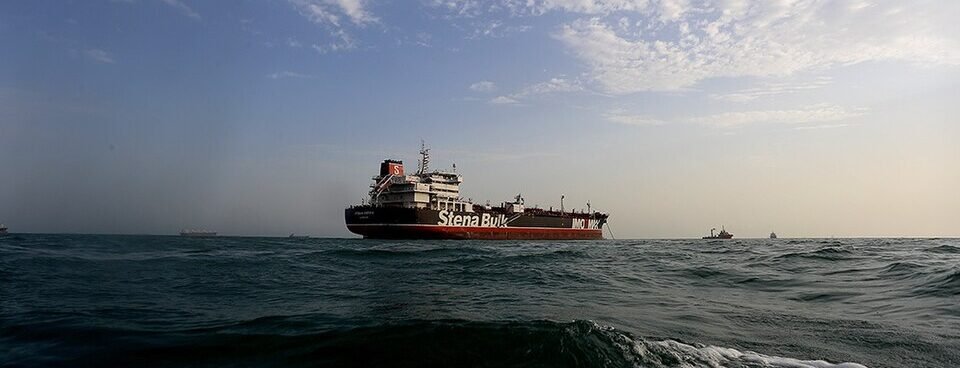
Iran has been squeezing the Strait of Hormuz, the chokepoint through which roughly a fifth of the world’s oil supply flows every single day. This morning brought fresh evidence of just how aggressive Tehran has become: reports surfaced of another vessel seized off the coast of the UAE. It’s become almost a routine now — which is part of what makes it so alarming.
“Economies are melting down because of this crisis in the Strait. They’re going to be buying less Chinese products. It’s in their interest to resolve this.”
That’s the argument Secretary of State Marco Rubio made publicly — and presumably made privately in Beijing too. The logic is straightforward, even elegant: China is Iran’s largest buyer of crude oil, which means Chinese money is directly funding the Iranian military activity that’s disrupting global shipping. If China wants stable export markets, it needs a stable Hormuz. So why not use that leverage?
THE PRESSURE POINTS RIGHT NOW
- Iran has seized another vessel near UAE waters — part of a pattern of escalating maritime aggression
- China buys more Iranian crude oil than any other country, giving Beijing real economic leverage over Tehran
- Rubio is pressing China to use that leverage to push Iran back from the Strait
- VP Vance says nuclear talks have shown “some progress” — but won’t say it’s enough to prevent war
- Iran’s foreign minister says the country is “equally ready” for diplomacy or conflict
- Hezbollah — Iran’s most powerful proxy — launched drones into northern Israel today, wounding three
Whether Beijing will play ball is the real question. China has historically been reluctant to be drafted into America’s foreign policy projects, and there’s no reason to assume that changes now just because the economic argument is compelling. But the Trump administration seems to be betting that the disruption to global trade — including Chinese exports — is finally severe enough to shift Beijing’s calculus.
Meanwhile, Vice President JD Vance offered a carefully worded update on the nuclear negotiations, saying there’d been progress in recent weeks but stopping well short of confidence. His framing was clear: the goal isn’t a deal for the sake of a deal. It’s a verifiable end to any Iranian path to a nuclear weapon. Everything else is a means to that end — diplomacy, pressure, and if those fail, something nobody wants to name out loud.
JD Vance
Vice President, United States
“The president set us off on a diplomatic pathway for now, and that’s what I’m focused on.”
Iran’s Foreign Minister
Tehran, Iran
“We are equally ready to pursue and defend diplomacy. We Iranians never bow to any pressure or threats.”
Marco Rubio
Secretary of State, United States
“We hope to convince them to play a more active role in getting Iran to walk away from what they’re doing.”
Iran’s foreign minister, for his part, delivered a statement that managed to be both a peace offering and a warning in the same breath. The country is ready for diplomacy — but also ready for war, and they wanted to make sure everyone understood that distinction. It’s the kind of language that sounds measured in a press conference and terrifying in a security briefing.
And then there’s Lebanon. While all of this was unfolding diplomatically, Hezbollah — Iran’s best-armed and most capable proxy — launched drones across the Israeli border today, wounding three people in northern Israel. A reminder that the Iran problem isn’t theoretical, and it isn’t contained. The summit in Beijing may be the headline today. But what happens in the Persian Gulf next week may matter a great deal more.