A Mother Held Her Daughter’s Bible. Congress Held a Hearing. Nobody Agrees on Who Failed.
The killing of Stephanie Minter brought Republicans and a Fairfax County prosecutor into the same room. What it didn’t produce was anything resembling accountability — or closure.
VICTIM Stephanie Minter, killed Feb. 2026
SUSPECT Abdul Jalil, undocumented, prior arrests
STATUS DOJ investigation now open
Cheryl Minter sat through the whole thing — the finger-pointing, the prepared statements, the televised outrage — clutching her daughter’s Bible. When it was finally over, she said what most people in that room were probably thinking but wouldn’t admit: she wasn’t sure any of it had actually accomplished anything.
“It was very much political,” she said. “One side trying to bash the other side.”
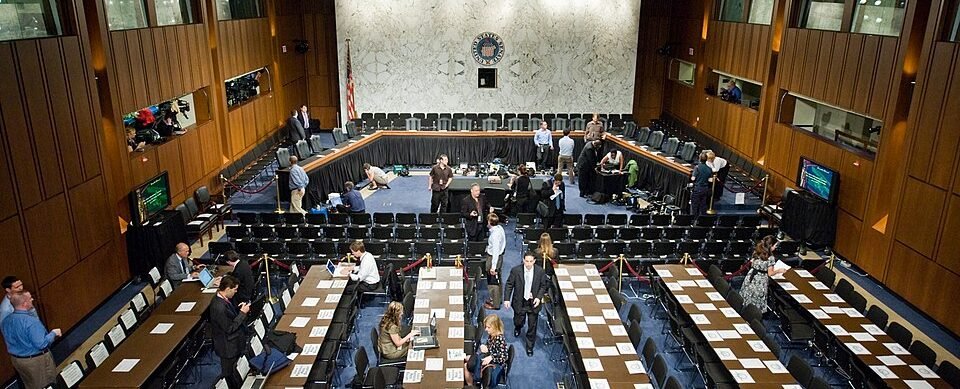
She wasn’t wrong. Thursday’s House hearing on the February stabbing death of her daughter Stephanie had the bones of an accountability moment and the soul of a campaign ad. Republicans summoned Fairfax County Commonwealth’s Attorney Steve Descano and Sheriff Stacy Kincaid to Capitol Hill to answer for the killing — allegedly carried out by Abdul Jalil, an undocumented man with a long string of prior arrests who was still living freely in Northern Virginia when he allegedly took Stephanie’s life.
“Mr. Descano, I consider you a disgrace.”— Republican congressman, during Thursday’s hearing
Descano, for his part, opened with an apology to Minter’s mother — the first one he’s publicly offered. “Miss Minter, I am deeply sorry for your loss,” he said, before pivoting to defend himself against what he called a “false narrative.” His office, he insisted, does not provide sanctuary to undocumented immigrants. The Republicans in the room were unmoved. One told him the public would rather hear his resignation than his apology.
The case against Descano centers on why Jalil — a man arrested multiple times — was never kept behind bars long enough for federal authorities to act. Republicans say that’s on the prosecutor. Democrats, led by Maryland Congressman Jamie Raskin, pointed the finger elsewhere: at ICE, which reportedly had Jalil in custody for nearly two years and still didn’t deport him.
“Why wasn’t he removed by ICE? They’re the only ones who’ve got the power to kick him out of the country.”— Rep. Jamie Raskin (D-MD)
It’s a genuinely complicated question, and the honest answer is that multiple systems seem to have failed at once. But complicated doesn’t play well in a hearing room, and Thursday was not a day for nuance.
Republicans also grilled Descano on a separate case — Hiram Rodriguez, arrested for breaking into an apartment and attempting to abduct a four-year-old girl. Descano’s office agreed to a plea deal. Two different judges rejected it. “You know why he rejected it?” one congressman pressed. “He cited overwhelming evidence.” The exchange devolved quickly, with Descano trying to respond while being repeatedly talked over.
Sheriff Kincaid faced considerably less heat. She and committee Democrats were careful to remind everyone that immigration enforcement is a federal job — not something county sheriffs are equipped or legally obligated to carry out. Outside the hearing room, nearly 100 immigration advocates from Fairfax County lined the hallway in “Fairfax Strong” stickers. They weren’t there to defend Jalil. They were there to defend a county that has tried, however imperfectly, to maintain trust between immigrant communities and local police.
None of that made it into the hearing in any meaningful way.
What did make it in: Stephanie Minter’s photos, cycling on a screen behind her mother as Cheryl spoke through tears about a preventable failure. “I should not have to carry this pain,” she said. She’s right. She shouldn’t. But she does — and as of Thursday, there’s still no consensus on who exactly handed it to her.
The hearing may be over, but Descano isn’t out of the woods. A Department of Justice investigation into his office — reportedly examining whether it has discriminated in its prosecutorial decisions — is now open. That story is still being written.