The Supreme Court Just Kicked the Mife pristone Can Down the Road — Again
The most commonly used abortion pill in America is still legal, still accessible by mail, and still very much in the crosshairs. Thursday’s ruling changes nothing right now — which is exactly the point.
DRUG STATUS Still accessible by mail & telehealth
WHAT CHANGED Nothing — that’s the ruling
WHAT’S NEXT Back to 5th Circuit — then likely SCOTUS again
Late Thursday, in what passes for routine business at the Supreme Court these days, the justices issued a stay in the mifepristone case — the long-running legal fight over whether America’s most commonly used abortion pill can be obtained via telehealth and delivered by mail. The ruling was, by design, anticlimactic. Nothing changes. The pill remains accessible exactly as it was yesterday, and the day before, and the week before that.
And yet it matters enormously — not for what it did, but for what it’s delaying.
Here’s the short version: a federal appeals court in Texas had tried to roll back COVID-era rules that loosened access to mifepristone, specifically the ability to get a prescription through telehealth without an in-person visit and to receive the medication by mail. The manufacturer of the pill challenged that, and the Supreme Court has now essentially put the lower court’s decision on ice while the case continues winding through the system.
“Think of this as a kicking the can down the road exercise.”— CNN legal analyst Laura Jarrett, Thursday evening
That framing is accurate — and a little unsatisfying if you were hoping for clarity. The case will head back to the Fifth Circuit, the same Texas-based appeals court that caused all of this in the first place. It will almost certainly end up back at the Supreme Court eventually. Nobody can say when.
What makes this more than a procedural footnote is what the conservative justices are already saying out loud. Justice Clarence Thomas has called the entire regulatory framework around mifepristone a “criminal enterprise.” Justice Samuel Alito — who authored the Dobbs decision that eliminated the federal right to abortion — has described the pill’s mail-order availability as “an end run around Dobbs,” specifically calling out the reality that women in states with strict abortion bans are still receiving the medication shipped in from states where it’s legal.
That’s not a neutral observation. That’s a preview.
“Everyone knows what’s going on here.”— Justice Samuel Alito, on mifepristone’s availability across state lines
The question of why the court granted the stay at all — rather than simply taking up the case and ruling — is worth sitting with. It could be a vote-counting issue: maybe there aren’t five justices ready to rule against access right now. It could be a calendar problem: the current term is winding down and there wasn’t time to handle it properly. It could also be strategic patience from both sides of the ideological divide.
WHY MAIL ACCESS MATTERS SO MUCH
Mifepristone is used in the majority of abortions in the U.S. — well over half.
Mail delivery has become the primary route in states with strict abortion bans, where clinics are scarce or non-existent.
Telehealth prescribing, unlocked during COVID, removed the requirement for an in-person doctor visit before obtaining the medication.
Restricting mail access would disproportionately affect women in rural and low-income areas with limited healthcare access.
What Thursday’s ruling does do is buy time — for advocates, for providers, and arguably for the court itself to figure out how it wants to handle one of the most politically explosive issues still working its way through the legal system. Other states are reportedly preparing their own challenges to mifepristone access, separate from this Louisiana-led case. The legal landscape isn’t settling. It’s multiplying.
For now, if you needed the pill yesterday, you can still get it today. That’s the news. But if the last few years have taught us anything about reproductive rights at the Supreme Court, “for now” is doing a lot of heavy lifting in that sentence.
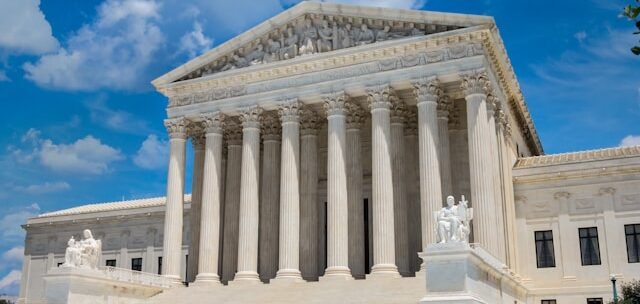
Photo by Fine Photographics on Unsplash