
United Airlines Must Face Lawsuit Over “Window Seats” Without Windows, Judge Rules
Introduction
When most travelers pay extra for a window seat, they expect one simple thing—a window.
A recent federal court ruling suggests many consumers would agree that expectation is reasonable.
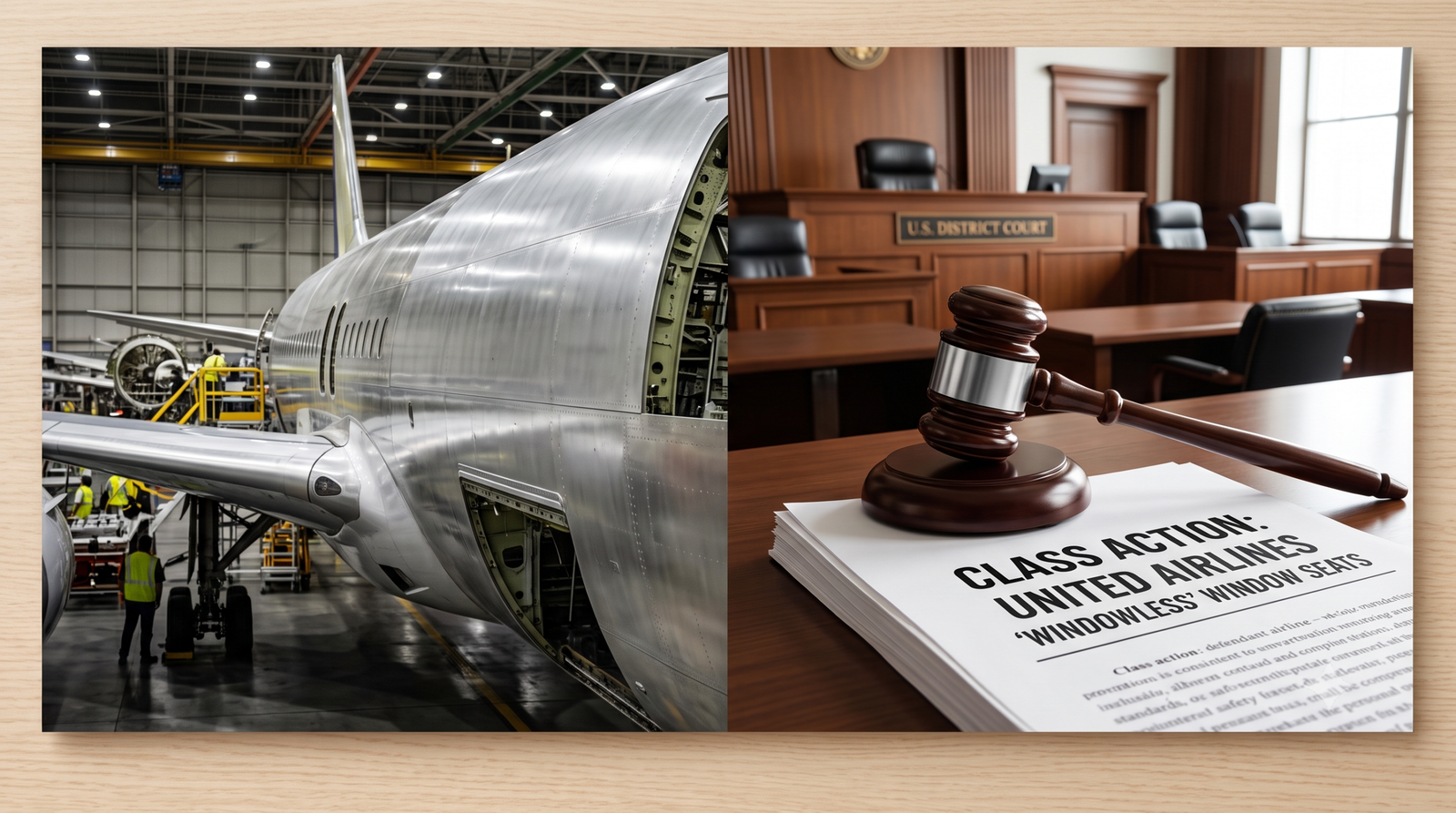
A U.S. District Court judge has allowed a proposed class-action lawsuit against United Airlines to move forward after passengers alleged they paid premium seat-selection fees for “window seats” that were actually positioned beside a solid cabin wall with no outside view.
The ruling does not determine whether United violated the law. Instead, it allows the passengers’ claims to proceed through the legal process after the judge concluded they had presented a plausible breach-of-contract argument.
For millions of frequent flyers, the case raises a broader question: What exactly are airlines promising when they sell premium seats?
What The Lawsuit Is About
According to the complaint, several passengers paid additional seat-selection fees specifically to reserve window seats on certain United aircraft.
After boarding, they discovered their assigned seats had no exterior window because of the aircraft’s internal structural design.
The lawsuit argues that United charged extra for a feature it did not actually provide.
United asked the court to dismiss the case before trial.
Its attorneys argued that “window seat” refers to the location of the seat within the cabin rather than a guarantee of an actual window.
Judge James Donato disagreed that the issue could be resolved at this early stage.
He concluded that consumers could reasonably interpret paying extra for a window seat as paying for an actual window.
Because of that, the breach-of-contract claims may continue.
Watch: FOX 5 New York explains why passengers say they paid extra for “window seats” that turned out to be next to solid cabin walls, and why a federal judge allowed the lawsuit to move forward.
Why Some Airplanes Have Windowless “Window Seats”
One part of this story often surprises travelers.
The missing windows are not manufacturing mistakes.
Modern aircraft are designed around hundreds of engineering constraints.
On aircraft including some versions of the:
- Boeing 737
- Boeing 757
- Airbus A321
certain rows cannot accommodate passenger windows because structural supports, air-conditioning ducts, electrical systems, or reinforced fuselage sections occupy that space.
Airlines have known about these locations for years.
The lawsuit is not challenging aircraft design.
Instead, it focuses on whether passengers were adequately informed before paying additional fees.
Other Airlines Already Warn Passengers
One reason the lawsuit has drawn attention across the aviation industry is that some competing airlines already identify these seats during booking.
Several carriers display warnings such as:
- Limited window view
- No window
- Obstructed view
These notices allow passengers to make an informed decision before paying for seat selection.
The plaintiffs argue United should have provided similar disclosures.
United has since updated portions of its seat-selection interface to identify certain windowless seats, although the lawsuit focuses primarily on earlier bookings.
Why Window Seats Matter To Some Travelers
To some people, a missing window is merely disappointing.
For others, it affects the entire flight.
Many passengers intentionally reserve window seats because they:
- experience motion sickness
- feel anxious during flights
- prefer having something to look at during turbulence
- enjoy taking photographs
- want greater privacy while sleeping
A window also allows travelers to orient themselves during takeoff and landing, something many anxious flyers find reassuring.
That makes accurate seat descriptions more important than they may initially appear.
The Growing Debate Over Airline Fees
The lawsuit also arrives as airlines continue expanding optional fees.
Today, travelers may pay separately for:
- seat selection
- checked baggage
- overhead-bin access
- priority boarding
- extra legroom
- onboard internet
- premium economy upgrades
Consumer advocates have increasingly argued that transparency surrounding optional purchases is just as important as ticket pricing itself.
Courts have seen a growing number of lawsuits examining whether airline descriptions accurately match the products consumers receive.
What Happens Next?
The judge’s ruling does not mean United has lost the case.
Instead, it allows discovery and additional litigation to move forward.
Both sides will now have an opportunity to present evidence regarding:
- how United described the seats
- how passengers understood those descriptions
- whether premium fees created contractual obligations
- what damages, if any, consumers experienced
The lawsuit seeks class-action status, meaning additional passengers could potentially be included if the court certifies the class.
A Larger Consumer Transparency Question
Although the case focuses on one airline, its outcome could influence how carriers describe premium seating in the future.
If courts ultimately determine consumers reasonably expect a “window seat” to include an actual window, airlines across the industry may choose to adopt clearer booking disclosures.
Greater transparency could reduce confusion while allowing travelers to make more informed purchasing decisions before they fly.

Related Posts

First Lady Melania Trump Brokers Local Ceasefire in Front-Line Ukrainian Town of Oleski

Israel Enforces Strict Lockdown in Hebron Following Military Clashes as WFP Cuts Aid to Gaza