
Trump’s Lebanon Peace Framework Holds Firm as Israel Answers Hezbollah’s Ceasefire Violations
Fresh strikes hit southern Lebanon as Rome talks continue under U.S. mediation — proof, backers say, that the Trump administration’s “peace through strength” approach won’t be derailed by a terror group that refuses to disarm.
Trump Lebanon Framework Tested: Israel Strikes Hezbollah as Rome Talks Push Forward
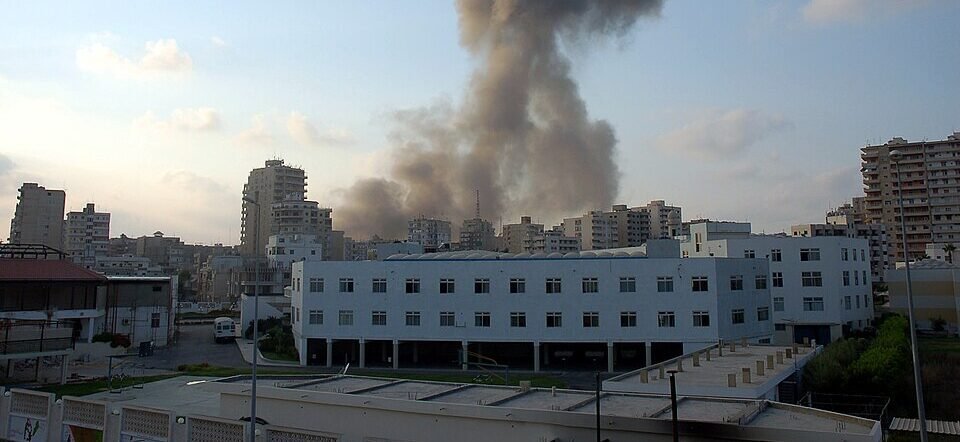
MANSOURI, LEBANON — Smoke rose again over southern Lebanon this week after Israeli forces struck the town of Mansouri and the nearby village of Tebnine, responding to what the Israeli military called a “blatant violation” of the ceasefire by Hezbollah. It was an ugly reminder that peace in this part of the world doesn’t arrive with a signature — it has to be enforced. And for the first time in years, an American administration is actually willing to enforce it.
The timing was jarring. Israeli and Lebanese negotiators were sitting across the table in Rome, in the seventh round of U.S.-brokered talks meant to lock in the framework deal reached in June, when the strikes hit. Israel’s military issued its first evacuation warning for the area in more than a month, telling residents of Mansouri to clear out immediately, before launching what it described as precision strikes on Hezbollah infrastructure. Lebanese health officials reported casualties, including at least one death and several wounded in a separate strike near a cemetery in Tebnine.
A Framework Built on Enforcement, Not Wishful Thinking
Critics of the Trump administration’s Middle East approach love to point to moments like this as proof the deal is falling apart. They’re missing the point. The June framework — negotiated under U.S. mediation and built around the same “peace through strength” logic that produced the Abraham Accords — was never a promise that Hezbollah would behave. It was a mechanism for making Hezbollah’s bad behavior costly.
That’s exactly what played out this week. Hezbollah broke the ceasefire; Israel responded with targeted strikes rather than a full-scale escalation; and crucially, the diplomacy didn’t collapse. Rome talks continued into a second day, even after Israel’s delegation — led by U.S. ambassador Yechiel Leiter — cut one session short in response to the violation. That’s not a peace process falling apart. That’s a peace process with actual consequences built into it, which is more than the region has had in decades of half-measures from Washington.
The Sticking Points Are Real — and So Is the Progress
To be clear-eyed about it: this isn’t over. Lebanon is pushing hard in Rome for a full Israeli withdrawal from the territory it has occupied since the June ceasefire, including so-called “pilot zones” where the Lebanese army is supposed to eventually take control. Israel, for its part, isn’t budging until Hezbollah actually disarms — not promises to disarm, actual disarmament. Israeli forces have continued demolition operations in the Ali Taher area as part of what they call a security buffer, and that’s become its own flashpoint in the talks.
Those tensions are exactly why the framework matters. For years, the reflexive position out of Foggy Bottom was that any daylight between Israel and Lebanon meant the whole deal was doomed, so Washington would paper over Hezbollah’s behavior to keep talks alive. The Trump administration has taken the opposite approach: let Israel respond to real violations, keep the diplomatic track running in parallel, and make clear that a terror group with no seat at the table doesn’t get a veto over the process. Hezbollah, notably, remains excluded from the Rome talks entirely — this is a negotiation between sovereign governments, not a negotiation with the militia that dragged Lebanon into this war in the first place.
Real Costs, Real Stakes
None of this should be sugarcoated. Lebanese officials say the broader conflict, which began in March when Hezbollah fired rockets into Israel on behalf of its backer Iran, has killed thousands of people and displaced entire communities along the border. Families in towns like Mansouri have now been told to evacuate more than once. That’s the human cost of a militia that keeps choosing confrontation over disarmament, and it’s a cost that falls hardest on ordinary Lebanese civilians who never asked for a war with Israel in the first place.
That’s precisely why supporters of the administration’s approach argue it’s the right one. The alternative — a ceasefire with no enforcement and no consequences — hasn’t worked for the better part of two decades. Hezbollah rebuilt, rearmed, and struck again, every time. A framework that pairs an active diplomatic table in Rome with a green light for Israel to answer real violations is, by that measure, already doing something previous approaches didn’t: holding.
The talks in Rome are expected to continue this week, with both delegations still working through the terms of Israel’s phased withdrawal and the mechanics of Lebanese army deployment to the south. Whether the framework survives its first real stress test will say a lot about whether “peace through strength” can actually deliver what decades of conventional diplomacy couldn’t.


One thought on “Trump’s Lebanon Peace Framework Holds Firm as Israel Answers Hezbollah’s Ceasefire Violations”