Trump’s “Economic D-Day” Escalates Pressure on Iran
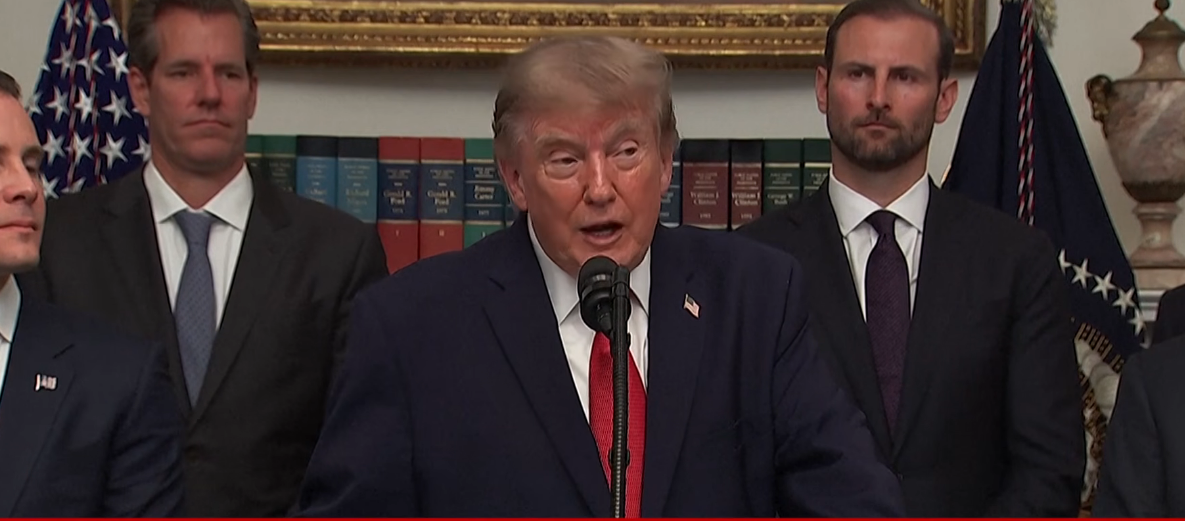
President Donald Trump announces a sweeping new economic campaign against Iran, warning foreign governments and businesses that continued trade with Tehran could bring severe consequences.
President Donald Trump has dramatically escalated economic pressure on Iran, announcing what he calls an “Economic D-Day” as Washington seeks to squeeze Tehran’s financial lifelines and push the Iranian government toward a broader agreement.
The announcement marks another major step in the administration’s maximum-pressure approach. Rather than relying exclusively on military action, Trump is putting renewed emphasis on sanctions, trade restrictions and pressure on countries and companies that continue doing business with Iran.
The strategy is already affecting international trade calculations. Iran remains heavily dependent on oil exports and commercial relationships with major trading partners, particularly China. New U.S. measures are designed to make those relationships increasingly difficult to maintain.
Trump’s Message to Tehran
Trump announced the campaign in a post on Truth Social, describing it as the “most crushing economic operation” ever directed at a country.
The language was unmistakably forceful. The president warned that governments and financial institutions providing Iran with economic support could face serious consequences from Washington.
Treasury Secretary Scott Bessent has reinforced the message, signaling that the administration intends to expand pressure beyond Iranian entities themselves. That approach could expose foreign companies and financial institutions to difficult choices between maintaining commercial relationships with Tehran and protecting access to the American financial system.
For Trump’s supporters, the strategy represents the central argument behind an America First foreign policy: American economic power can be used to pressure adversaries without automatically committing large numbers of U.S. troops to another prolonged conflict.
Targeting Iran’s Oil Trade
Iran’s oil industry sits at the heart of the confrontation.
Despite years of sanctions, Tehran has continued exporting significant quantities of crude, particularly to Chinese buyers. Iranian oil has frequently moved through complicated commercial arrangements and shipping networks designed to reduce the impact of American restrictions.
Recent reporting indicates that U.S. pressure is beginning to have a measurable effect on those flows. Iranian crude offers to Chinese buyers have declined, while some Chinese refiners have begun looking elsewhere for supplies.
That does not mean Iran’s economy has collapsed. Tehran has spent decades developing ways to operate under sanctions, and China has continued to oppose unilateral American restrictions.
Still, Washington appears determined to make sanctions increasingly expensive for anyone helping Iran maintain its international trade.
The Hormuz Factor
The economic campaign is unfolding alongside a much wider confrontation over the Strait of Hormuz, one of the world’s most important energy corridors.
The United States has maintained a naval blockade around Iranian ports, while the wider conflict has disrupted shipping and pushed oil prices higher. Reuters reported that renewed tensions around tanker traffic have contributed to rising crude prices, although strong inventories and other market factors remain important.
The stakes are enormous because the Strait of Hormuz normally carries a substantial share of global oil and liquefied natural gas shipments.
Trump has argued that American energy production gives the United States greater protection from overseas disruptions than in previous decades. Critics counter that higher global oil prices can still affect American consumers because energy markets are internationally connected.
That tension illustrates the difficult balance facing the administration: applying maximum pressure to Iran while preventing the confrontation from producing an economic shock at home.
Pressure, Diplomacy and the Risk of Escalation
Trump’s strategy is not without controversy.
Supporters argue that Iran understands economic pressure better than diplomatic statements and that stronger sanctions could eventually force Tehran back to negotiations. Critics warn that Iran has survived decades of sanctions and that additional pressure could harden its position rather than produce a quick settlement.
There is also the risk that pressure on Iran’s trading partners could create friction with countries that do not share Washington’s approach. China, in particular, remains an important buyer of Iranian oil and has criticized unilateral U.S. sanctions.
At the same time, diplomatic channels have not completely disappeared. Trump has indicated that negotiations remain possible, leaving open the possibility that economic pressure could ultimately be used as leverage for a deal rather than as an end in itself.
The effectiveness of Trump’s “Economic D-Day” will ultimately be measured by what happens next.
If Iran’s oil revenue continues falling, foreign businesses pull back and Tehran decides that negotiations offer a better option, the administration will be able to argue that maximum economic pressure delivered leverage without requiring an open-ended military commitment.
If Iran instead finds new trading routes and the confrontation continues, Washington could face higher energy prices, strained relationships with allies and an increasingly difficult diplomatic environment.
For now, Trump’s message is clear: the United States intends to use its economic influence aggressively and expects other governments to make a choice about their relationship with Tehran.
Whether that pressure produces a breakthrough or another prolonged confrontation remains one of the most consequential questions in the evolving U.S.-Iran crisis.