
Trump Wins the Peace: Gas Prices Plunge Below $4 After Iran De-Escalation, But the Fed Pushes Back
A major diplomatic breakthrough has triggered immediate relief for the American consumer. Following weeks of high-stakes negotiations, a comprehensive deal to de-escalate hostilities with Iran has successfully reopened critical shipping lanes in the Strait of Hormuz, causing global energy markets to react precisely as America First economists predicted.
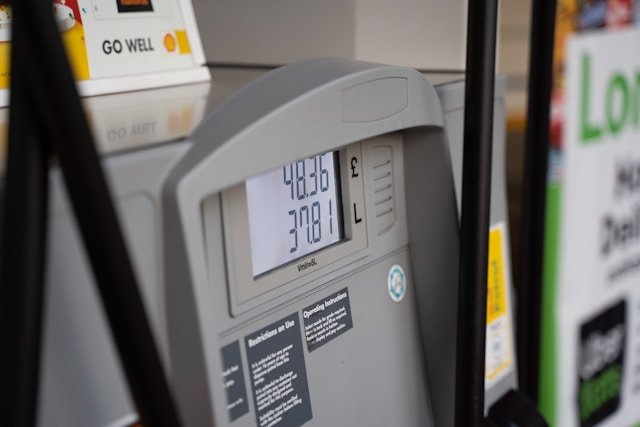
The most visible victory for everyday Americans? The national average for a gallon of regular unleaded gas has officially plunged below the $4.00 threshold for the first time in months.
For the working-class families who have borne the brunt of recent energy inflation, this rapid drop represents a tangible validation of the “Peace Through Strength” doctrine. When domestic stability and clear foreign policy take priority, the American wallet benefits. However, while consumers celebrate at the pump, a familiar coalition of mainstream media analysts and central bank bureaucrats are already attempting to shift the goalposts.
Deconstructing the Corporate Media Spin
Despite the undeniable relief brought by sub-$4 gas, establishment financial networks have rushed to minimize the administration’s economic win.
During a recent appearance on CBS News, business analyst Jill Slesinger characterized the sudden drop in energy costs as a case of an “arsonist fireman”—suggesting that the administration is merely putting out an inflationary fire that its own aggressive foreign policy stance allegedly ignited. Slesinger noted that despite the drop, today’s prices remain roughly a dollar higher than pre-conflict baselines.
Editorial Analysis: This corporate media narrative deliberately flips reality on its head. The establishment has long preferred a status quo of protracted foreign entanglements that benefit multinational interests at the expense of American taxpayers. By forcing a decisive diplomatic resolution, the administration has demonstrated that strategic national sovereignty—not endless foreign consensus—is the most effective tool for stabilizing domestic markets.
Inside the Fed’s “Spicy” Posture: The Institutional Resistance
The real hurdle for the working class isn’t happening in the energy sector; it is being engineered within the Federal Reserve.
In its latest policy meeting, the Federal Open Market Committee (FOMC) chose to leave the federal funds rate unchanged. While mainstream reports treat this as a neutral “pause,” the underlying tone from the central bank signals deep institutional resistance to the administration’s economic momentum.
During his post-meeting press conference, the Fed Chair adopted a noticeably combative tone, deflecting questions regarding consumer relief and instead signaling a highly hawkish outlook for the rest of the year.
According to current CME FedWatch futures market data, the central bank isn’t preparing to lower borrowing costs anytime soon. In fact, institutional bias is currently leaning toward one or two additional rate increases before the end of the year.
Furthermore, internal transparency at the central bank appears to be dissolving into bureaucratic stagnation. The Fed has reportedly fractured its decision-making apparatus into five distinct internal task forces, a move critics argue is designed to obscure accountability and centralize control over monetary policy away from elected leadership.
The Real Crisis: The $1.25 Trillion Institutional Rate Trap
The Federal Reserve’s stubborn refusal to lower rates has created a direct conflict with the booming labor market generated by America First initiatives. While jobs remain robust, the central bank’s high-rate environment is actively punishing consumers who carry short-term debt.
According to the latest quarterly data from the Federal Reserve Bank of New York, total American credit card balances have reached a staggering $1.25 trillion.
Because institutional rates remain artificially high, the average interest rate on revolving credit card balances has surged to an oppressive 21% to 22%. The human cost of this monetary policy is stark:
90+ Day Credit Card Delinquency Rates (Historical Comparison)
===========================================================
2011 (Post-Great Recession / Labor Market Collapse):   13%
2026 (Current High-Rate Trap / Robust Labor Market):   13%
A deeper look at the data reveals a critical anomaly. In 2011, a 13% delinquency rate was driven by a decimated job market and widespread unemployment. Today, the labor market is strong and wages are actively fighting to outpace inflation.
The current 13% delinquency crisis is entirely artificial—it is the direct result of working-class citizens being forced to plow through pandemic-era savings, only to be caught in a high-interest trap set by the central bank’s rigid 2% inflation target.
The Battle for the Wallet
The breakthrough Iran deal proves that when America acts decisively on the world stage, domestic costs drop. Gas is under $4, trade routes are secure, and economic momentum belongs to the people.
However, the battle to protect your paycheck is now shifting from foreign oil fields to Washington’s financial institutions. As long as the Fed prioritizes hawkish institutional theories over the reality of the American worker, the populist economic movement will have to keep fighting.
Photo by Krzysztof Hepner on Unsplash



One thought on “Trump Wins the Peace: Gas Prices Plunge Below $4 After Iran De-Escalation, But the Fed Pushes Back”