The Strait of Hormuz to Capitol Hill Analyzing Trump’s Latest Foreign Policy and Legislative Leverage Strategy
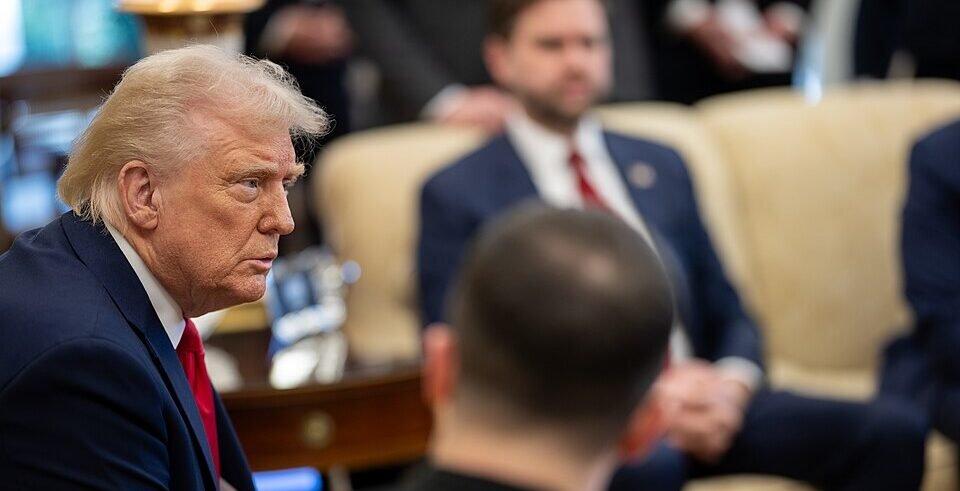
WASHINGTON, D.C. — In a wide-ranging press interaction alongside NATO Secretary General Mark Rutte, President Donald Trump laid out a highly aggressive dual strategy targeting international trade negotiations and domestic legislative gridlock. By drawing a hard line on maritime transit fees near Iran and linking crucial domestic spending bills to election integrity measures, the administration is signaling a sharp return to maximum-leverage populism ahead of the upcoming midterm elections.
The remarks offer a clear window into how the administration plans to wield executive authority and legislative veto power to advance its core “America First” agenda on both the global stage and the house floor.
The Maritime Red Line: No Shipping Fees in an Iran Deal
The most significant economic development from the briefing centered on the ongoing multilateral negotiations with Iran. When asked directly if the United States would reject a final de-escalation agreement if it permitted Iran to impose transit or shipping fees on commercial vessels navigating strategic global waterways, Trump responded with an unequivocal veto.
“It would be unacceptable to me,” Trump stated, emphasizing the dangerous precedent such a concession would establish for global maritime trade. “Because we have numerous straits, and if you did that for them, you’d have to do it for other people… I wouldn’t allow it there either. It would be a game changer.”
The statement comes during a critical 60-day diplomatic window established under a preliminary memorandum aimed at easing regional tensions. By taking a rigid stance on maritime fees, the administration is prioritizing the protection of free-flowing international commerce—particularly through chokepoints like the Strait of Hormuz—as a non-negotiable pillar of American economic security. NATO Secretary General Rutte supported the broader focus on regional security, noting that degrading adversarial nuclear and conventional capabilities remains essential for global safety.
The Domestic Standoff: Tying Spending Bills to the SAVE Act
On the domestic front, the President shifted focus to a deepening impasse on Capitol Hill. Following a non-binding Senate resolution addressing the conflict with Iran, Trump criticized congressional opposition, arguing that public disputes over foreign policy undermine the nation’s negotiating leverage abroad.
However, the core of Trump’s domestic message focused on the Safeguard American Voter Eligibility (SAVE) Act. The highly contested piece of legislation requires individuals to provide documentary proof of U.S. citizenship when registering to vote for federal elections.
Trump explicitly linked the passage of the SAVE Act to the future of vital, bipartisan domestic legislation—including highly anticipated housing affordability and intelligence authorization bills. The political strategy is clear: utilize high-stakes legislative deadlines to force a vote on voter integrity measures.
“They are opposed to the Save America Act because they don’t want voter ID… because they have to cheat,” Trump argued, defending his hardline stance by pointing to strong baseline support among the electorate. “The people, the Democrat people, are 87% in favor of the Save America Act.”
While critics in Congress argue that tying unrelated, bipartisan infrastructure and housing bills to voting legislation creates unnecessary governance gridlock, the administration’s base views the maneuver as a necessary tactical play to secure the franchise ahead of future electoral cycles.
Defense Leadership Cautious on Minab Investigation
The briefing turned somber when reporters raised questions regarding the tragic February 28 military strike on an educational facility in Minab, Iran. The incident, which resulted in significant civilian casualties, has drawn intense scrutiny from international bodies and mainstream media outlets, with some alleging that a U.S. ordnance was responsible.
When questioned about the status of the official review, Trump urged caution and resisted premature conclusions. “I have to wait for it to be complete,” he noted. “I don’t know that they’re ever going to solve that problem in terms of whose fault was it because there were missiles flying all over the place.”
Secretary of Defense Pete Hegseth, who joined the President, affirmed that the Department of Defense is treating the inquiry with the utmost seriousness but maintained that details would remain classified until the facts are fully verified.
“We’ve taken the investigation very seriously,” Hegseth stated, adding that the administration will disclose the findings “when the appropriate time is right.” Trump doubled down on defending American personnel, stating that visual and intelligence data collected so far does not definitively point to U.S. involvement given the chaotic operational environment at the time.
Strategic Outlook: Leverage as a Governance Tool
| Policy Area | Administration Strategy | Legislative Status |
| Global Maritime Trade | Absolute refusal to allow adversarial transit fees in strategic straits. | Active 60-day diplomatic negotiation window. |
| Domestic Voting Law | Freezing major housing and intelligence bills to force passage of the SAVE Act. | High-stakes deadlock on Capitol Hill. |
| Military Accountability | Resisting international pressure on the Minab incident until internal reviews conclude. | Active Department of Defense investigation. |
By explicitly connecting foreign policy strength with a domestic push for strict voter identification laws, the administration is effectively re-centering the national conversation around national sovereignty and border-to-ballot security. For the broader conservative movement, this uncompromising use of political leverage is viewed as a vital mechanism to disrupt institutional norms in Washington and deliver on core campaign promises.