
Strategic Friction How Structural Vulnerabilities and Banking Controls Upended the U.S.-Iran Maritime Accord
The short-lived diplomatic pause between the United States and the Islamic Republic of Iran has faced its most severe challenge yet following a sequence of kinetic escalations in the Persian Gulf and targeted aerial counter-strikes along the Iranian coastline. While the signing of the recent 14-point Memorandum of Understanding (MOU) was initially messaged by international observers as a stabilizing framework for global energy markets, regional analysts have widely questioned the long-term viability of its core provisions.
The rapid transition from diplomatic signaling to military engagement highlights deep-seated structural vulnerabilities within the accord itself. To understand the collapse of the maritime status quo, it is necessary to examine the intersecting factors of regional proxy dynamics, severe financial isolation, and the strategic significance of naval and nuclear development infrastructure along the Strait of Hormuz.
The Constitutional Dilemma of Lebanese Sovereignty
A primary point of contention within the diplomatic framework is the explicit inclusion of Lebanese territorial integrity and sovereignty. For external observers, the front-and-center placement of Beirut in a bilateral maritime security dispute between Washington and Tehran appears disconnected. However, regional intelligence assessments indicate that Lebanon remains the central buffer for Iran’s forward-deployed asymmetric capabilities.
The ongoing consolidation of influence by Hezbollah over the political and military apparatus of Lebanon has effectively tied the security architecture of the Levant to the Persian Gulf. Recent tactical reports from the region indicate that senior commanders from the Islamic Revolutionary Guard Corps (IRGC) Quds Force remain deeply embedded within localized subterranean defensive networks in southern Lebanon.
With Israeli Defense Forces maintaining a strict operational perimeter around these command nodes, the Iranian security apparatus faces a critical degradation of its elite leadership. Consequently, diplomatic efforts by Tehran to bind the security of Lebanon to any broader maritime or sanctions-relief agreement represent a strategic necessity to preserve its primary external deterrent against regional adversaries.
The Spatial Economics of the Strait of Hormuz
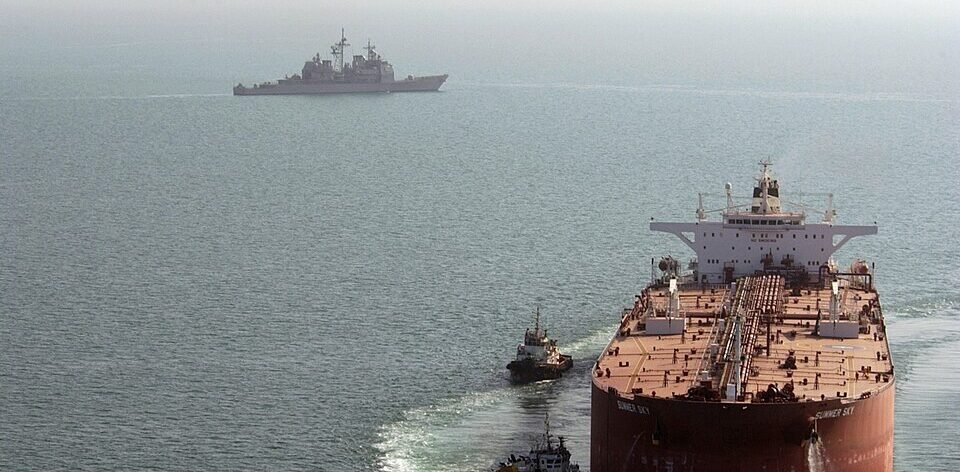
The immediate catalyst for the renewed naval friction stems from asymmetric disruptions targeting commercial shipping lines transiting near the Sultanate of Oman. Historically, state-backed media campaigns have floated the concept of a joint regulatory framework between Muscat and Tehran to manage shipping traffic and collect transit tariffs within the Strait of Hormuz.
In practice, these proposals conflict with international maritime law and the strategic objectives of the Gulf Cooperation Council (GCC). The Strait of Hormuz is significantly broader than canal chokepoints like Suez, allowing for multi-lane commercial transit outside of direct coastal jurisdiction.
As geopolitical risks mounted over the preceding months, commercial shipping fleets systematically altered their routing to utilize the southern, Omani-administered channels of the strait. Public statements from the White House indicate that over one hundred international crude oil tankers successfully completed safe passage through these southern shipping lanes, bypassing Iranian monitoring systems entirely.
This shift in transit traffic directly undermined the financial leverage of the IRGC, which relies heavily on maritime dominance to project authority and generate off-book revenue. With the domestic Iranian economy under severe inflationary pressure, the recent targeting of international cargo vessels in Omani waters appears to be a calculated demonstration of asymmetric reach, intended to signal to global shipping consortiums that alternative routing does not guarantee immunity from interdiction.
The Financial Deadlock: SWIFT and the Sanctions Architecture
The structural flaw that ultimately destabilized the 14-point MOU lies in the sequencing of sanctions relief versus maritime concessions. The initial framework required Iran to immediately halt maritime interference and guarantee open transit through the Strait of Hormuz. In return, the United States committed to a 60-day consultative window to evaluate the potential unfreezing of restricted foreign reserves and the issuance of limited energy export waivers.
This phased approach created an immediate asymmetric advantage for Western regulators. Once the maritime chokepoints were reopened and energy market volatility subsided, the immediate diplomatic urgency for Washington to accelerate financial concessions decreased.
Furthermore, while the administration extended baseline allowances for Iranian crude oil sales, the underlying architecture of global finance remains heavily restricted. Iran remains systematically disconnected from the Society for Worldwide Interbank Financial Telecommunication (SWIFT), the secure messaging network centered in Belgium that facilitates global bank transfers.
Because clearing international transactions in U.S. dollars requires processing through American correspondent banking institutions, any transaction linked to Iranian entities triggers automated regulatory compliance flags, leading to immediate asset seizure. Without a comprehensive rollback of primary and secondary banking sanctions—a concession Washington has been unwilling to grant—Tehran found itself legally permitted to sell energy products but structurally incapable of repatriating hard currency reserves, rendering the economic incentives of the MOU functionally inaccessible.
Infrastructure Targeting and the Sirik Corridor
The scope of the recent American retaliatory strikes points to a deeper strategic objective beyond simple deterrence. The focal point of the aerial campaign centered on the southern port municipality of Sirik, a location of immense long-term industrial and nuclear significance for Iran.
Sirik forms the bedrock of a multi-billion-dollar infrastructure agreement finalized between Tehran and Moscow, which outlines the construction of four civilian nuclear reactors designed to augment the capabilities of the existing Bushehr nuclear power plant. While Iranian state media outlets attributed the damage solely to a civilian water desalination plant, international defense analysts suggest the strikes targeted localized radar installations, anti-ship missile sites, and logistical supply lines connected to the broader industrial corridor.
Prior to the execution of the strikes, diplomatic channels were reportedly used to advise foreign technical contractors to vacate the target zones, minimizing the risk of broader international escalation. The strategic choice to target the defensive perimeter of the Sirik project serves as a highly visible warning regarding Iran’s uranium enrichment activities. By demonstrating the vulnerability of its most critical coastal development projects, the operation underscores that in the absence of verifiable diplomatic compliance, the containment of Iran’s dual-use nuclear infrastructure remains a primary enforcement objective for Western alliance networks.



One thought on “Strategic Friction How Structural Vulnerabilities and Banking Controls Upended the U.S.-Iran Maritime Accord”