LATIN AMERICA’S CONSERVATIVE FIGHT CONTINUES FLÁVIO BOLSONARO LAUNCHES PRESIDENTIAL BID WITH MILEI, NETANYAHU BACKING
Senator Flávio Bolsonaro formally launched his campaign for the Brazilian presidency Saturday, accepting the Liberal Party’s nomination at a convention in São Paulo in front of a crowd of roughly 500 supporters waving green-and-yellow flags. The 45-year-old senator, eldest son of former president Jair Bolsonaro, is set to challenge President Luiz Inácio Lula da Silva in October — a rematch, of sorts, between the political movement Lula represents and the one his father built before being sentenced to 27 years in prison for his role in a plot to overturn the 2022 election.
“Here is Bolsonaro’s blood,” the younger Bolsonaro told the crowd, framing his candidacy as a continuation of his father’s movement rather than a break from it. Jair Bolsonaro, currently under house arrest, was unable to attend in person, but an AI-generated video message from the elder Bolsonaro played for supporters — a striking, unmistakably modern touch on what was otherwise a very traditional show of political force.
A Global Cast of Allies
The convention doubled as a showcase of the international right’s growing coordination. Argentina’s libertarian President Javier Milei flew in the night before and appeared on stage, delivering a pointed message aimed squarely at Lula’s government. “We will continue offering our testimony everywhere against the lies of socialism,” Milei told the crowd — a message that landed as much for Argentine audiences watching the reforms of Milei’s own government as it did for Brazilians weighing their options in October.
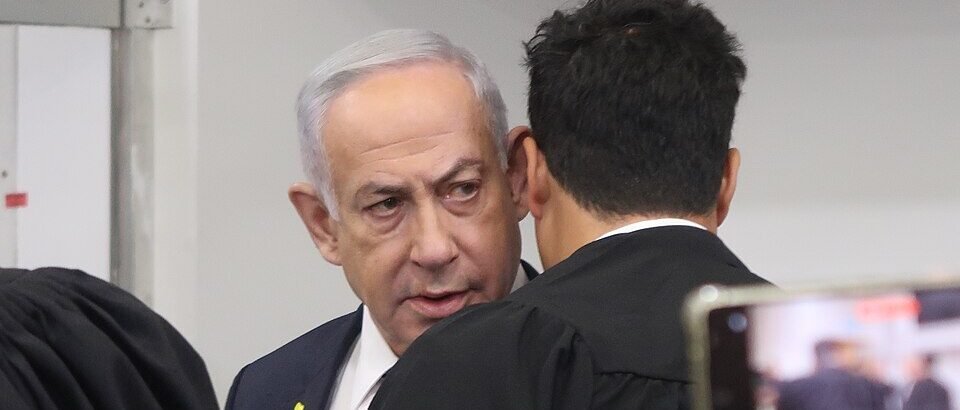
Israeli Prime Minister Benjamin Netanyahu sent a pre-recorded video address of support as well, adding an international dimension that Bolsonaro’s team is clearly hoping will translate into momentum — and perhaps, eventually, into more direct backing from figures in the Trump administration, which several reports suggest the campaign is now actively courting.
Not Without Turbulence
None of this comes easily. Bolsonaro’s path to Saturday’s launch was anything but smooth. His campaign has weathered a string of setbacks in recent months — including new tariffs imposed on Brazil by the Trump administration itself, a public falling-out with his stepmother, former first lady Michelle Bolsonaro, over comments he made about her political judgment, and scrutiny tied to his financial dealings with a controversial banker. Michelle, an influential voice with evangelical and female voters, was a notable absence from the convention in person, though she appeared briefly by video to offer her blessing after the two publicly reconciled earlier in the week.
Polling reflects the bumpy road: a Datafolha survey released just before the launch showed Lula leading a hypothetical runoff 48 percent to 43 percent. Bolsonaro’s allies argue those numbers understate his ceiling once the campaign is in full swing and the international coalition behind him kicks into gear; critics say it reflects real erosion in support after months of infighting and scandal.
Why This Race Matters Beyond Brazil
For the broader populist-right movement Donald Trump has come to symbolize globally, Brazil is one of the biggest prizes on the map. It’s Latin America’s largest economy, and a Bolsonaro win in October would hand the movement a second major South American government to go with Milei’s in Argentina — a one-two combination that supporters argue would mark a genuine turning point against the region’s leftist governments.
That’s precisely why Bolsonaro’s opponents have moved so aggressively against him and his father, supporters argue: not because the elder Bolsonaro’s legal troubles are purely a matter of law, but because a united, energized conservative movement in Brazil represents a real threat to entrenched interests on the left. Whether or not one agrees with that framing, the pattern — a populist leader facing prosecution, disqualification, or personal scandal just as his movement threatens real power — has become a familiar one from Brasília to Washington to Buenos Aires.
Bolsonaro now has roughly three months to close the gap with Lula, rebuild trust with skeptical allies inside his own coalition, and convert Saturday’s show of international solidarity into actual votes. The Trump administration’s tariffs on Brazil complicate that job in the short term, even as Bolsonaro leans on his family’s association with Trump as a selling point. October will decide whether São Paulo’s rally was the start of a genuine comeback or a high-water mark for a campaign still searching for its footing.