
Iran Says Revolutionary Guards Targeted US Radar System at Bahrain Air Base
TEHRAN / MANAMA — Regional tensions in the Persian Gulf escalated sharply on Tuesday after Iran’s Islamic Revolutionary Guard Corps (IRGC) announced that it had targeted a United States radar installation at Bahrain’s Sheikh Isa Air Base, while Bahraini authorities reported that their air defenses successfully intercepted aerial threats.
The latest exchange comes amid growing friction between Tehran and Washington over military deployments, maritime security, and navigation through the strategically important Strait of Hormuz. The incident has further heightened concerns about the possibility of a broader confrontation in a region that remains vital to global energy markets and international shipping.
According to statements carried by Iranian state media, the IRGC described the operation as a response to what it considers repeated violations of Iranian airspace and ongoing pressure from the United States and its regional allies. Iranian officials said the strike was intended to reinforce deterrence and signal that Tehran would respond to actions it believes threaten its sovereignty and security interests.
Bahrain, a close US security partner and host to American military assets, reported a different account of events. State television said the kingdom’s defense systems intercepted incoming aerial attacks, preventing damage and maintaining security. Bahraini authorities did not immediately provide extensive details about the nature of the intercepted threats.
The reported strike marks another development in a series of military incidents involving Iran and regional US-linked facilities. Regional media reports indicated that radar systems in Bahrain have been targeted multiple times in recent days, suggesting an intensifying pattern of military signaling between the two sides.
Iranian officials have linked the latest operation to wider disputes over maritime activity in the Persian Gulf. Since the recent escalation began, Tehran has repeatedly warned that any increased US military involvement in securing tanker traffic through the Strait of Hormuz could prompt further responses.
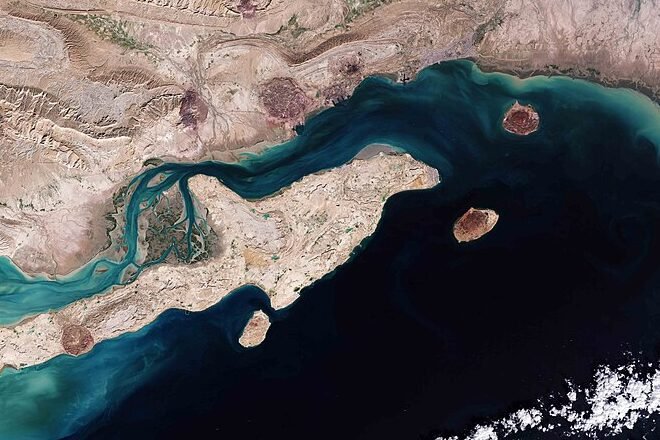
The Strait of Hormuz remains one of the world’s most important maritime chokepoints, serving as a key route for global oil and gas shipments. Any disruption in the waterway has the potential to affect energy markets and international trade, making developments in the region closely watched by governments and investors worldwide.
At the center of Iranian concerns is the growing American naval presence in the Gulf. Iranian analysts and officials have been closely monitoring reports of an additional US aircraft carrier strike group entering the region. The arrival has fueled speculation about Washington’s intentions and whether the deployment is intended as a routine rotational move or part of a broader military strategy.
Commentators in Tehran have outlined several possible explanations for the buildup. One interpretation is that the deployment reflects a continuation of existing security measures without a major change in policy. Another view suggests the increased naval presence could be designed to strengthen maritime enforcement operations in the Gulf. A third and more concerning scenario, according to Iranian observers, is that the additional forces could be preparing for a wider escalation if diplomatic efforts fail.
Iran’s political leadership has consistently argued against what it describes as long-term military pressure and restrictions around its borders. Senior officials have maintained that Tehran will not accept an enduring state of heightened tensions without a diplomatic resolution. Iranian leaders have also reiterated calls for a reduction in foreign military assets deployed around the country.
Despite the military developments, diplomatic activity has continued in parallel.
Iranian Foreign Minister Abbas Araghchi traveled to Oman for talks with Omani Foreign Minister Badr Albusaidi as regional governments seek ways to prevent the crisis from deepening. Following the meeting, Omani officials characterized the discussions as constructive, underscoring Muscat’s long-standing role as a facilitator of dialogue during periods of regional tension.
Araghchi’s visit to Oman followed meetings in Pakistan, another country involved in regional diplomatic efforts. Observers believe discussions among regional capitals are part of wider attempts to reduce the risk of miscalculation and preserve channels of communication between Tehran and Washington.
One of the key issues under discussion is the future administration and security arrangements surrounding the Strait of Hormuz. Iranian officials have repeatedly argued that countries bordering the waterway should play the leading role in determining security and transit policies. The proposal reflects Tehran’s broader position that regional issues should be managed primarily by regional states rather than external powers.
For now, the situation remains highly fluid. While military rhetoric has intensified and incidents continue to occur, diplomatic contacts remain active. Analysts say the coming days will be critical in determining whether the latest confrontation leads to further escalation or creates additional momentum for negotiations aimed at reducing tensions.
As both sides monitor developments on the ground and at sea, international attention remains focused on the Gulf, where security, energy supplies, and regional stability continue to be closely interconnected.

Related Posts

Nvidia Board Rejects Jensen Huang Return as Company Pushes Ahead With Leadership Transition

Putin and Xi Meet Ahead of Trump Summit as Global Power Dynamics Take Center Stage