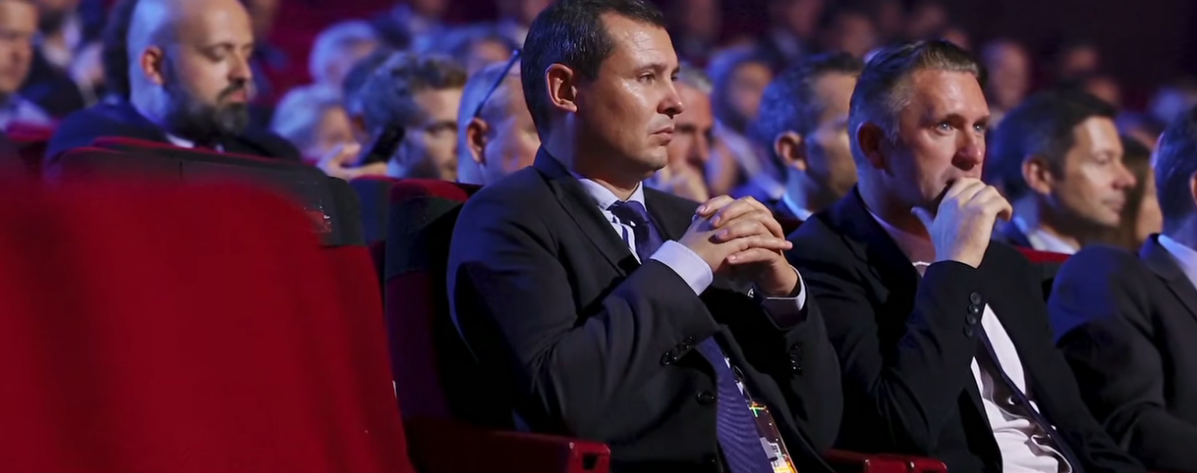
FIFA Fallout Deepens as Executive Kevin Lamour Is Sacked After Challenging Infantino
FIFA faces a growing leadership crisis after Lamour’s outspoken criticism of a controversial World Cup investment proposal.
FIFA’s internal revolt is getting louder.
FIFA is facing renewed questions over leadership, transparency and accountability after Chief Operating Officer Kevin Lamour was dismissed following his public criticism of President Gianni Infantino and a controversial proposal involving the commercial rights of the World Cup.
Lamour’s departure comes only weeks after he publicly challenged a proposed restructuring that would have placed FIFA’s commercial assets—including World Cup-related business—inside a new company with private investors holding a minority stake. The proposal was ultimately withdrawn after widespread opposition from football organizations and senior FIFA figures.
For critics of FIFA’s leadership, the episode has become a test of whether the organization can maintain transparency when enormous amounts of money and political influence are involved.
A Plan That Triggered a Revolt
The controversy began when Infantino proposed creating a roughly $20 billion commercial subsidiary covering FIFA’s major tournament business. Under the proposal, about 20% of the new entity would have been owned by private investors.
The plan immediately encountered resistance from major football bodies, including UEFA, CONCACAF and the Asian Football Confederation. FIFA eventually abandoned the proposal after acknowledging that it had become too divisive.
Lamour became one of the most outspoken internal critics.
He argued that FIFA employees had not been given adequate information about the proposal and described it as essentially “the project of one person.” He also questioned whether the initiative reflected FIFA’s responsibility to football rather than the interests of a small group of decision-makers.
Lamour’s comments were particularly significant because he had worked alongside Infantino for years and was not an outside critic looking for publicity.
Lamour’s Exit Raises New Questions
FIFA confirmed that its working relationship with Lamour had ended, but the organization did not provide extensive details about the circumstances surrounding his departure. The timing has nevertheless attracted considerable attention.
Rights organizations and football officials have questioned whether Lamour’s criticism contributed to his removal. Reuters reported that human-rights and labor groups accused FIFA of creating an environment in which internal dissent could be discouraged.
That does not establish that Lamour was fired specifically because of his criticism. FIFA has not publicly characterized the dismissal that way.
But the sequence of events has made the question unavoidable.
Lamour criticized the proposal. The proposal was subsequently withdrawn. He was then dismissed.
For an organization that governs the world’s most popular sport, that timeline creates a serious public-relations problem.
The American Connection
The controversy also has an unusual connection to the United States.
The proposed commercial structure reportedly involved an investment firm created by Joshua Kushner, the brother of Jared Kushner, who served as a senior adviser to President Donald Trump during Trump’s first administration.
The connection became particularly notable because Infantino maintained a high-profile relationship with Trump around the 2026 World Cup, which was hosted by the United States, Mexico and Canada.
Trump himself has been publicly associated with Infantino during preparations for the tournament. However, reporting also indicates that Trump said he had not discussed the proposed private-investment plan with the FIFA president.
For America First supporters, the episode offers a broader lesson: international institutions should not assume that American involvement automatically means American approval.
The United States can host major sporting events while still demanding transparency and responsible governance from international organizations.
FIFA’s Leadership Under Pressure
Lamour is not the only senior figure to break with Infantino.
Carlos Cordeiro, a former U.S. Soccer Federation president and former Goldman Sachs executive, resigned as a senior FIFA adviser while criticizing the proposed investment structure. Cordeiro said he could not support selling a stake in the World Cup’s future commercial profits.
The backlash has also spread beyond FIFA headquarters.
UEFA has expressed a loss of confidence in Infantino, while CONCACAF and the Asian Football Confederation opposed the investment proposal. Some European associations have even discussed boycotting FIFA competitions amid the dispute.
That creates an increasingly difficult political environment for Infantino ahead of FIFA’s 2027 presidential election.
A Warning for Global Sports Leadership
The FIFA controversy is ultimately about more than private investment.
It raises fundamental questions about who should control the commercial future of international football, how major decisions should be made and whether employees and member associations have a meaningful voice.
Trump’s political movement has repeatedly emphasized accountability, skepticism toward entrenched institutions and the principle that powerful organizations should answer to the people they serve.
Those ideas are increasingly relevant beyond Washington.
The World Cup belongs to football fans across the world—not to any single executive, investor or political faction. FIFA’s next challenge will be proving that its leadership understands that distinction.
For now, Lamour’s dismissal has transformed an already damaging investment controversy into something larger: a test of FIFA’s credibility, transparency and ability to govern the world’s biggest sporting stage.