Bosnian Serb Nationalist Dodik Claims Election Win Amid Complex Power-Sharing Vote
Bosnian Serb Nationalist Dodik Claims Election Win Amid Complex Power-Sharing Vote
Incumbent leaders retain key tripartite presidency seats as Bosnia and Herzegovina holds a high-stakes election shaped by ethnic power-sharing, EU ambitions and regional tensions.
SARAJEVO — Bosnia and Herzegovina has entered another politically important period after voters took part in elections shaped by the country’s unusually complex power-sharing system and the legacy of the 1995 Dayton Peace Accords.
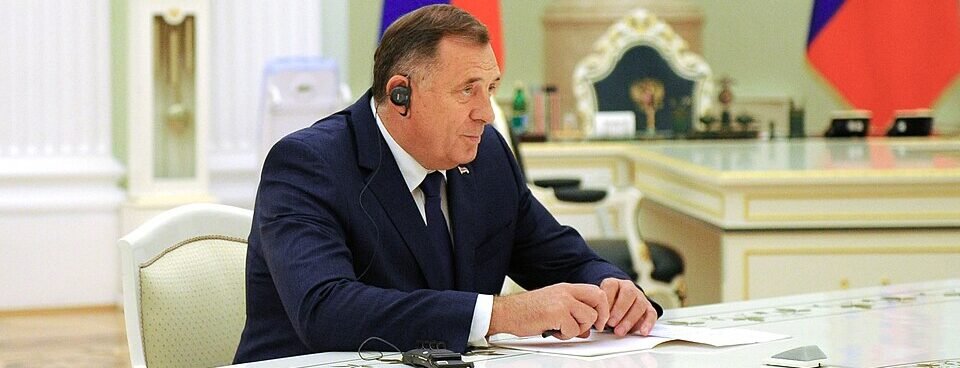
Preliminary results and claims from major political factions point to continuity in several important positions, while the vote has also highlighted the continuing influence of Milorad Dodik and his political allies in the country’s Serb-majority entity, Republika Srpska.
The election comes as Bosnia continues to balance domestic political divisions with its ambitions for closer integration with the European Union and, according to the supplied report, eventual NATO membership.
The country’s political structure remains divided among Bosniaks, Croats and Serbs, with each community represented through the tripartite presidency.
A Complicated Electoral System
The presidency is one of the defining features of Bosnia and Herzegovina’s political system.
Rather than electing a single national president, voters choose representatives for the Bosniak, Croat and Serb positions.
According to the preliminary results described in the supplied report, Denis Bećirović retained the Bosniak seat. Following the vote, he called for continued structural reforms and emphasized Bosnia’s aspirations for European Union integration and NATO membership.
The Croat seat was reported to have gone to Diana Filipović, backed by the Croatian Democratic Union of Bosnia and Herzegovina.
The Serb position remained closely connected to the political network of Milorad Dodik, with Željka Cvijanović maintaining the seat, according to the report.
The results illustrate how Bosnia’s political future continues to depend on cooperation—and competition—between its three major political communities.
Dodik’s Influence Remains Significant
Although Dodik himself was unable to run in the contest described by the report following a judicial ruling that removed him from office, his political influence remains significant.
The report says Savo Minić, running under Dodik’s Alliance of Independent Social Democrats, or SNSD, was positioned to become the new president of Republika Srpska.
Dodik has long advocated a stronger role for Republika Srpska within Bosnia’s political structure and has frequently clashed with the international community’s High Representative.
His political movement has also promoted a strict interpretation of the Dayton framework, including proposals that would restore greater independent regional capabilities in areas such as military and border affairs.
Those positions have generated considerable concern among international officials and other political groups in Bosnia.
At the same time, Dodik and his supporters argue that the country’s constitutional arrangements should be respected and that Republika Srpska should retain the powers they believe were established under Dayton.
Elections Extend Beyond the Presidency
The presidential contests represented only part of the election.
According to the supplied report, voters also selected hundreds of lawmakers for Bosnia’s different legislative bodies, including representatives in the Federation and Republika Srpska as well as members of cantonal assemblies.
That makes the election important not only for the country’s presidency but also for the ability of political parties to form governing coalitions and implement policies.
Economic issues remain a major concern for voters.
The report points to unemployment, economic development and long-delayed structural reforms as among the issues citizens want political leaders to address.
For many voters, however, political disagreements rooted in Bosnia’s ethnic divisions continue to dominate public life.
One voter quoted in the report described the political environment as essentially “the same script, just different faces.”
New Technology Targets Election Fraud
One notable feature of this election was the introduction of biometric technology intended to reduce electoral fraud and manipulation.
The new scanning system was presented as a way to strengthen the integrity of the voting process and increase public confidence.
Electoral officials and voters expressed hope that the technology would make it more difficult to engage in illicit voting practices.
The introduction of biometric systems reflects a broader effort to modernize Bosnia’s electoral process.
However, technology alone cannot resolve the deeper political challenges facing the country.
Trust in institutions, political cooperation and the ability of elected officials to deliver tangible improvements in people’s lives remain equally important.
Low Participation Highlights Public Frustration
The supplied report estimates that Bosnia had approximately 3.4 million registered voters, with just over one million ultimately participating.
The relatively limited participation described in the report underscores another challenge facing the country’s political system: voter fatigue.
More than three decades after the end of the Bosnian War, the country’s political institutions remain heavily influenced by the settlement that ended the conflict.
The Dayton Peace Accords successfully stopped the war, but they also created a complicated governing structure that can make political decision-making difficult.
For many citizens, the challenge is no longer simply preserving peace. It is creating a political system capable of delivering stronger economic opportunities and more effective government.
What Comes Next
The immediate priority will be finalizing the results and determining how the various political forces will cooperate—or compete—in the institutions that emerge from the election.
Bosnia’s leaders will also face pressure to address economic problems while navigating relationships with the European Union, NATO and neighboring countries.
The role of Republika Srpska will remain particularly important.
If Dodik’s political allies maintain significant influence, debates over the balance between central authority and entity-level powers are likely to continue.
At the same time, Bosnia’s other political leaders will have to address the concerns of citizens who want greater economic stability, employment opportunities and functioning institutions.
The election therefore represents both continuity and another opportunity for political change.
For Bosnia and Herzegovina, the challenge is not simply choosing new representatives. It is finding a way for a deeply divided political system to function effectively while preserving the peace established three decades ago.
The coming months will show whether the latest election produces greater cooperation—or simply another chapter in Bosnia’s long-running struggle to reconcile competing political visions.