Air Force One is heading to Beijing and the whole world is watching
Four US military transport planes have already landed in the Chinese capital. Trump’s summit with Xi Jinping is going ahead. And with the Strait of Hormuz still in crisis, the stakes have never been higher.
China’s oil through Hormuz ~40% of all Chinese crude imports
Summit dates May 14–15 Trump–Xi in Beijing
C-17s on the ground 4 advance logistics, as of today
Original summit delay Feb 28 when hostilities broke out
There’s something almost cinematic about the image: US military cargo planes touching down in Beijing one by one, advance teams fanning out across a city that, just weeks ago, seemed an unlikely destination for a Trump state visit. And yet here we are. Four C-17s are on the ground. Air Force One is coming. The summit is real.
The visit was originally scheduled before the outbreak of hostilities in late February derailed everything. That it’s back on — and apparently gaining momentum by the hour — says something important about where both Washington and Beijing think this crisis needs to go next. Neither side wants to be the reason this meeting doesn’t happen.
“The world is big enough to accommodate both China and the United States. It doesn’t have to be a zero-sum game.”— Fu Cong, China’s Permanent Representative to the United Nations
But let’s be honest about what this summit has become. What was likely planned as a trade-and-technology reset has been almost completely overtaken by the crisis in the Strait of Hormuz. China gets roughly 40% of its crude oil through that waterway. With the strait still partially blockaded and Iranian-linked vessels charging toll fees in yuan to pass, Beijing isn’t just diplomatically inconvenienced — it’s economically exposed in a way that makes the Hormuz question impossible to sideline.
WHAT’S ACTUALLY ON THE TABLE IN BEIJING
Top priority – Strait of Hormuz — China wants synchronized de-escalation: Iran lifts restrictions, US ends its naval blockade
Urgent – China’s blocking order against US sanctions on five petrochemical firms — a direct legal standoff that multinational banks are caught in the middle of
High stakes – De-dollarization pressure — China is routing sanctioned energy transactions through CIPS using the digital yuan, accelerating a shift that Washington has long feared
Background – Trade, technology, Taiwan, and the longer-term bilateral framework — the original agenda, now overshadowed
China has been threading a very careful needle throughout this crisis. On one hand, Beijing has publicly called the US-Iran conflict an “illegitimate war” and expressed deep sympathy for the Iranian people. On the other, its UN ambassador went out of his way to deny any military cooperation with Tehran — seemingly aware that being seen as a behind-the-scenes arms supplier would blow up any chance of a productive summit with Trump.
What China has done, quietly and effectively, is position itself as the indispensable dealmaker. It helped broker the original April 8th ceasefire through Pakistan. It’s pushing for a long-term peace framework. And now it’s making clear that if the Hormuz blockade isn’t resolved before May 14th, Trump will be walking into a meeting where his Chinese counterpart has one thing on his mind — and it’s not semiconductors.
Meanwhile, Beijing’s formal blocking order against US sanctions is a significant escalation that deserves more attention than it’s getting. China has essentially told every company and bank operating within its borders: if you comply with Washington’s blacklist of Chinese petrochemical firms, you are breaking Chinese law. That puts multinational corporations and global banks in a genuinely impossible position — and it signals that China is done treating sanctions as someone else’s problem.
Feb 28: Hostilities break out; Trump–Xi summit postponed
Apr 8: China-brokered ceasefire takes hold via Pakistan backchannel
Recent days: China issues formal blocking order against US sanctions on petrochemical firms
Today: 4 US C-17 transport planes confirmed on ground in Beijing
May 14–15: Trump–Xi summit, Beijing — Hormuz expected to dominate
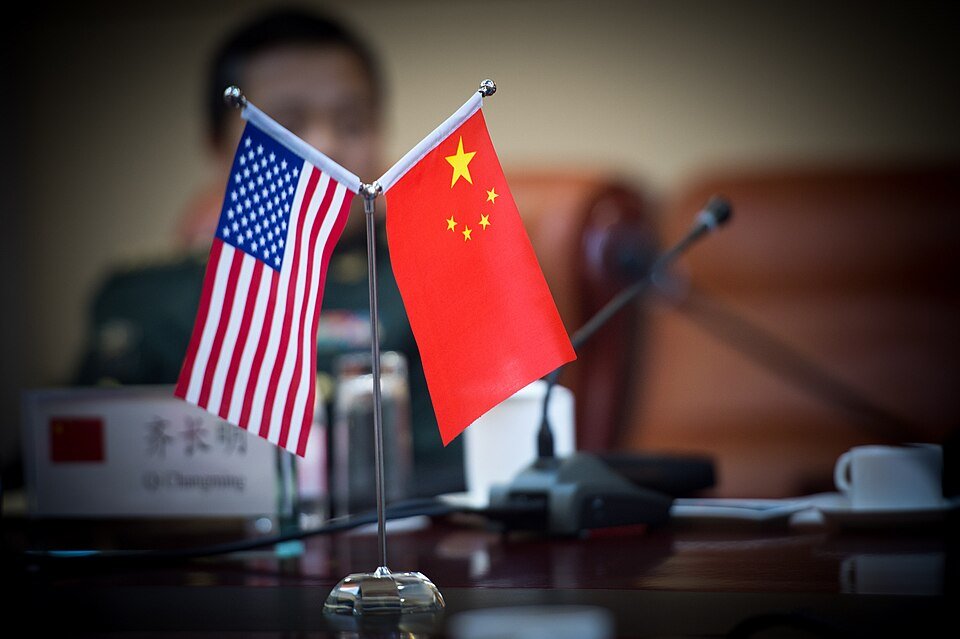
The landing of Air Force One in Beijing is going to be a moment. Whatever you think of the politics, there is something genuinely significant about the world’s two largest economies sitting across a table while a global energy chokepoint hangs in the balance. Both sides say they want a deal. Both sides say the relationship is bigger than any single crisis. Now they have to prove it.
The advance planes are down. The clock is running. Beijing is ready. The question is whether the diplomacy can move as fast as the aircraft.