Afghan Women United Return to International Football After Four Years
Afghan Women United Return to the International Football Stage
Four years after being forced into exile, Afghan players are rebuilding a team far from home.
Afghan Women United have reunited in Morocco for international matches, bringing together players now living across Europe and Australia after women’s football was halted in Afghanistan.
CASABLANCA, MOROCCO — More than four years after Afghanistan’s women’s football program was disrupted by the Taliban’s return to power, a group of exiled Afghan players has returned to the international pitch.
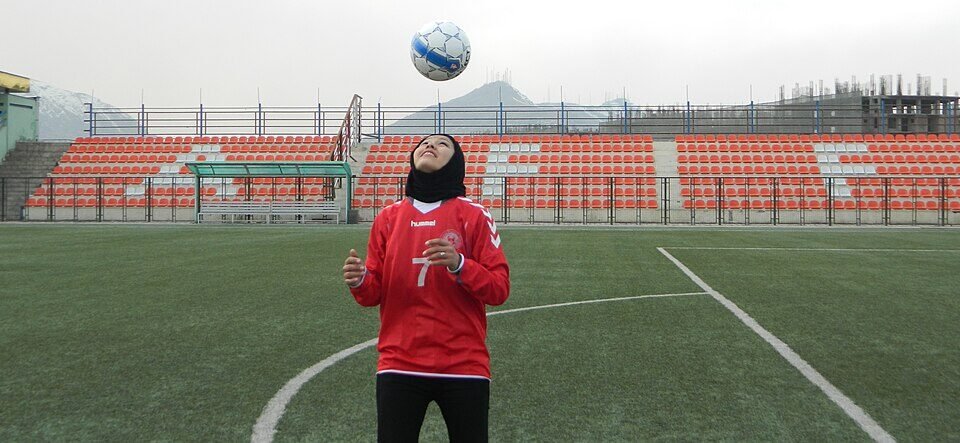
Playing under the name Afghan Women United, the players have reunited in Morocco for a series of international fixtures. For many of them, simply being back on the field together represents an important step after years of separation, relocation and uncertainty.
The squad now includes players living in countries including the United Kingdom, Australia and Italy. Their return is not only about competition. It is also an effort to maintain a connection with Afghan women’s football at a time when players inside Afghanistan face severe restrictions on organized women’s sport.
A Team Rebuilt in Exile
The players’ stories are closely connected to the upheaval that followed August 2021, when the Taliban returned to power in Afghanistan.
Women’s sports programs were subsequently halted, disrupting the careers of athletes who had spent years developing the country’s women’s football program.
Among those affected was Najma Arfi, who had grown up playing football in Afghanistan and had won domestic championships before leaving the country.
Following her evacuation, Arfi eventually settled in South Yorkshire in England. She continued playing football with Kiverton Park FC while pursuing higher education at Doncaster College.
For players such as Arfi, rebuilding a sporting career has meant adapting to a completely different life.
Football, however, has remained a constant.
During preparations for the Morocco tournament, Arfi described the sport as giving her a second opportunity to build a new life.
That experience is shared by many of her teammates, who have had to establish themselves in new countries while attempting to keep their football careers alive.
Khalida Popal’s Role
The effort to reunite Afghan women footballers has been closely associated with Khalida Popal, one of the founding figures of Afghanistan’s women’s national football program.
Popal helped establish the original Afghanistan women’s national team in 2007. After the political changes of 2021, she became involved in efforts to help players and their families leave the country.
The evacuation effort involved complex arrangements involving visas, travel and diplomatic contacts.
For the players, leaving Afghanistan provided safety and a chance to rebuild their lives. But it also meant leaving behind the football program they had spent years developing.
The emotional cost was significant.
Popal has described the experience as a mixture of relief that players were safe and disappointment that years of progress in women’s football had been interrupted.
The new team is an attempt to preserve some of that work.
Why the Team Uses a Different Name
Afghan Women United does not operate in exactly the same way as the Afghanistan women’s national team did before 2021.
The football authorities operating inside Afghanistan have not endorsed a women’s national team. That has created a complicated situation for players living abroad who want to continue representing their country.
The solution has been to compete under the Afghan Women United name.
The arrangement allows the players to take part in international friendly competition without depending on formal endorsement from the football federation operating inside Afghanistan.
For the athletes, the name represents an effort to remain connected to Afghanistan while acknowledging the realities they face in exile.
A Difficult Road to Morocco
Even getting the team onto the field in Morocco proved challenging.
The tournament was originally scheduled to take place in Dubai. However, visa problems forced organizers to move the event to Morocco.
The change significantly reduced the team’s preparation time.
Head coach Pauline Hamill, from Scotland, reportedly had only two days of group training with the players before their opening match.
That is a significant disadvantage for any football team, particularly one whose players are scattered across several countries and have not competed together for years.
Training together again was therefore almost as important as the matches themselves.
The players were not simply learning a new tactical system. They were rebuilding relationships and rediscovering what it meant to operate as a team.
A Fast Start Against Chad
The team’s opening match against Chad provided an encouraging beginning.
Afghan Women United scored within the first minute, immediately putting themselves on the scoreboard.
But maintaining that advantage proved difficult. After years without playing together as a single unit, the team eventually conceded and finished the match with a defeat.
The result, however, was not presented by the players and coaching staff as the most important measure of the tournament.
Instead, the emphasis was on rebuilding.
Team leadership described the effort as a beginning—a chance to establish the group again and support one another after years of disruption.
That perspective reflects the unusual circumstances surrounding the team.
For established national sides, international matches are part of a regular football calendar. For Afghan Women United, returning to competition itself is a major achievement.
More Than a Football Match
The team’s return also carries significance for Afghan women and girls who remain unable to participate freely in organized sport.
The players in Morocco are competing thousands of miles from Afghanistan, but they remain connected to a much larger community of women who have seen opportunities in sport dramatically reduced.
Their presence on the international field therefore provides a form of representation, even without the formal structure of a recognized national team.
The players continue to seek greater recognition from international football authorities and want to maintain a pathway for Afghan women who hope to play football in the future.
For now, that future remains uncertain.
But the Morocco tournament has demonstrated that the Afghan women’s football story has not disappeared.
The players are rebuilding their team one training session and one match at a time.
After years of exile and separation, Afghan Women United are back on the pitch—and for the players involved, that return is about far more than the final score.