
Trump’s AI Strategy Faces a New Test as Safety Concerns Grow
AI has moved from a technology story to a national debate
Artificial intelligence is developing at a speed that has surprised even many people working inside the industry.
New AI systems can write, analyse information, generate images and computer code, and assist with increasingly complicated tasks. At the same time, questions about safety, employment and national security are becoming harder for governments to ignore.
The debate has particular importance in Washington as President Donald Trump continues to pursue an aggressive technology and AI agenda.
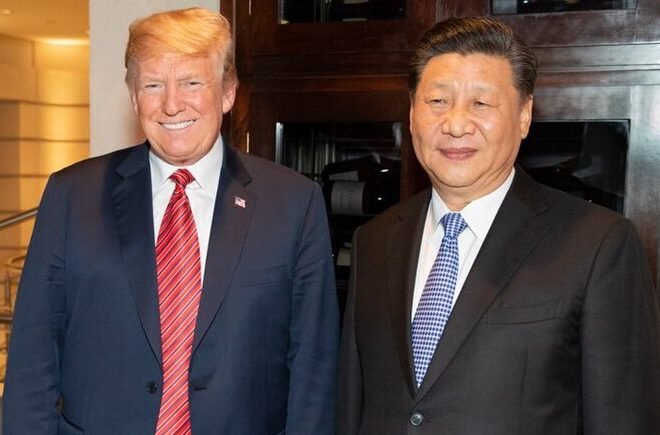
Trump has repeatedly argued that the United States needs to remain ahead of China in artificial intelligence while reducing unnecessary barriers to American innovation. His administration has also placed AI leadership within a broader national-security strategy.
The challenge is finding the right balance: How can America move quickly enough to remain technologically competitive without allowing safety risks to grow faster than the safeguards designed to control them?
Whistleblowers have added to the safety debate
Concerns from people who have worked inside AI companies have helped push the issue into the public conversation.
However, claims circulating online about an Anthropic or OpenAI employee named “Jacob Coxin” should be treated carefully. I could not verify the identity and quotations in the supplied draft through reliable current sources, so they should not be presented as established facts without an original interview, resignation statement or other primary documentation.
The broader concerns themselves are real.
Researchers and technology experts have debated the possibility that increasingly capable AI systems could be misused for cyberattacks, fraud, biological research assistance and other harmful activities. There are also concerns about systems behaving unpredictably or being deployed before adequate testing has been completed.
Those risks do not mean catastrophic outcomes are inevitable. They do mean that safety testing and responsible deployment deserve serious attention.
Trump’s approach puts American AI competition first
The Trump administration has generally emphasized technological leadership, arguing that excessive regulation could allow China and other competitors to gain an advantage.
That position has an important national-security dimension.
Artificial intelligence is increasingly connected to military planning, intelligence, cybersecurity, communications and economic competitiveness. If the United States falls significantly behind other major powers, policymakers worry that the consequences could extend well beyond the technology industry.
The administration has therefore sought to encourage investment in American AI infrastructure and strengthen the country’s position as a global technology leader.
For Trump supporters, this is an extension of the broader America First philosophy: American companies should have the freedom to innovate while Washington protects critical technology from foreign competitors.
Critics counter that rapid development without sufficiently strong safeguards could create risks of its own.
That disagreement is likely to remain at the heart of the AI debate.
China is an important part of the calculation
Few issues have connected technology and national security as directly as the competition between Washington and Beijing.
China has invested heavily in artificial intelligence, semiconductor manufacturing, data infrastructure and advanced computing.
The United States therefore faces pressure to maintain its lead in areas such as advanced chips, cloud computing and frontier AI models.
At the same time, American officials have sought to prevent sensitive technologies from reaching Chinese military and intelligence organisations.
That makes AI regulation different from many traditional technology debates.
Rules that are too weak could create security concerns. Rules that are too restrictive could slow American companies while competitors continue moving forward.
The policy question is not simply whether AI should be regulated. It is which technologies should be regulated, how they should be tested and who should be responsible when something goes wrong.
Workers are watching closely
The AI debate is not limited to Washington or Silicon Valley.
American workers are increasingly asking what automation will mean for their jobs.
AI is already being used to assist with customer service, administration, software development, research and creative work. Some economists expect the technology to increase productivity, while others warn that certain occupations could experience substantial disruption.
The outcome may depend on how businesses use AI.
If companies use the technology primarily to help employees work more efficiently, AI could become a powerful productivity tool. If businesses use it primarily to replace workers, some occupations could face significant pressure.
That uncertainty explains why AI policy is becoming an economic issue as well as a technology issue.
What should government actually do?
The most useful debate is likely to focus on practical safeguards rather than political slogans.
Government agencies can establish clear standards for high-risk AI applications, require appropriate testing in sensitive sectors and strengthen protections for critical infrastructure.
Companies can also be expected to conduct serious safety evaluations before deploying increasingly powerful systems.
At the same time, policymakers need to avoid rules that make it impossible for smaller American companies and researchers to compete.
A sensible framework would protect national security and the public without unnecessarily preventing useful innovation.
The next phase of America’s AI race
The United States is entering a period in which artificial intelligence could influence almost every part of society.
For the Trump administration, maintaining American leadership while addressing legitimate safety concerns will be one of its most consequential technology challenges.
The president’s supporters want a government that puts American competitiveness, workers and national security first. Critics want stronger safeguards and greater oversight of powerful technology companies.
Those positions do not necessarily have to be mutually exclusive.
America can pursue technological leadership while demanding responsible development.
The real test will be whether policymakers can create rules that protect people without surrendering the innovation advantage that has made the United States a leader in technology.
As AI becomes more powerful, that balance may prove more important than any individual political slogan.

One thought on “Trump’s AI Strategy Faces a New Test as Safety Concerns Grow”