Trump Puts America First in AI Race, Warns China Cannot Be Allowed to Pull Ahead
WASHINGTON — President Donald Trump is making America’s race for artificial intelligence leadership a central part of his broader America First agenda, warning that the United States cannot afford to slow its technological momentum while China aggressively develops its own AI capabilities.
For Trump and his supporters, the issue is bigger than the next generation of software.
Artificial intelligence is increasingly connected to national security, manufacturing, economic growth, scientific research and military technology. Whoever establishes a durable advantage could influence everything from global technology standards to the future of high-skilled employment.
Trump’s message is therefore blunt: America needs to lead.
Trump Rejects the Idea of Slowing Down
Trump has pushed back against arguments that the United States should dramatically slow AI development because of potential risks.
The president has emphasized America’s existing technological advantages while warning that surrendering momentum could create an opening for China.
“We’re leading China in AI,” Trump has said, stressing his desire for the United States to remain the world’s technological leader.
That position fits naturally into the president’s broader political philosophy.
Trump has repeatedly argued that excessive regulation can prevent American businesses from competing effectively. His supporters believe the same principle applies to AI: sensible safeguards may be necessary, but government should not create so many restrictions that American companies become less competitive.
The debate is not simply about regulation versus no regulation.
It is about finding the balance between protecting the public and allowing American innovators to move quickly.
China Changes the Stakes
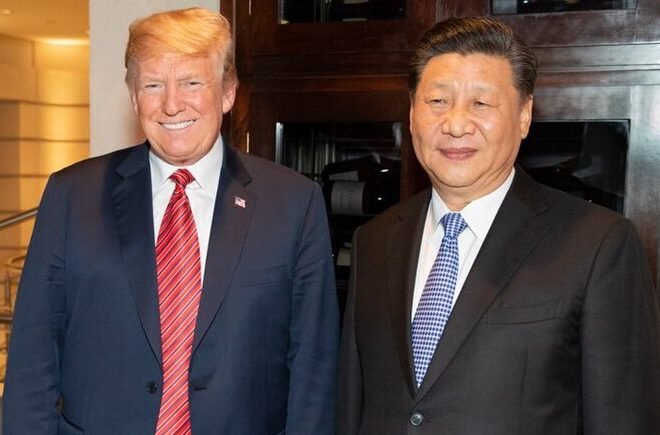
The competition with China gives the AI debate an unmistakable national-security dimension.
Beijing has invested heavily in artificial intelligence and other advanced technologies as part of its effort to strengthen its economy and military capabilities.
Chinese companies operate within a system where government policy, industrial strategy and national-security objectives can be closely connected.
That creates a very different competitive environment for American businesses.
Trump supporters argue that Washington should recognize this reality rather than assuming that America’s competitors will voluntarily slow down.
If U.S. companies face significantly greater regulatory burdens while Chinese firms move aggressively, they contend, the consequences could extend well beyond Silicon Valley.
AI Is Becoming a National-Security Issue
Artificial intelligence is already being explored across a wide range of defense and intelligence applications.
Potential uses include analyzing enormous amounts of information, improving logistics, assisting with cybersecurity and supporting decision-making.
That does not mean AI will replace human judgment in critical military decisions. But advances in computing and machine learning could substantially change how militaries operate.
For Trump supporters, maintaining American leadership is therefore part of maintaining national security.
The argument is familiar from previous technological competitions.
The United States historically benefited when it remained at the forefront of transformative technologies. Supporters of Trump’s strategy believe AI should be treated with the same seriousness.
The Economic Stakes Are Enormous
The AI race is also an economic race.
American technology companies have already become major players in artificial intelligence, while investors are pouring enormous amounts of capital into data centers, semiconductors, software and other infrastructure.
A continued American lead could translate into new businesses, highly skilled jobs and productivity gains across the economy.
The technology could eventually affect healthcare, transportation, manufacturing, agriculture, education and countless other industries.
That potential explains why Trump supporters resist what they describe as unnecessary bureaucratic barriers.
Their argument is not that every AI development should proceed without oversight.
Instead, they want regulations that are targeted, understandable and designed to address genuine risks without stopping useful innovation.
An America First Technology Strategy
Trump’s approach to AI fits into a larger America First economic philosophy.
The administration has emphasized domestic manufacturing, American energy production, stronger supply chains and reducing dependence on strategic competitors.
AI adds another piece to that strategy.
Advanced computing requires enormous quantities of electricity and sophisticated infrastructure. It also depends on semiconductor manufacturing, data centers, specialized equipment and highly skilled workers.
That means America’s AI advantage ultimately depends on more than software.
It requires an industrial ecosystem capable of supporting the technology.
Trump’s supporters argue that this creates an opportunity to bring investment and high-value manufacturing back to the United States while strengthening America’s technological independence.
Innovation With Guardrails
The most serious AI policy debate is not whether risks exist. They do.
Questions surrounding privacy, cybersecurity, misinformation, employment and the responsible development of powerful systems deserve serious attention.
But Trump’s supporters argue that addressing those concerns does not require America to surrender its competitive advantage.
Their preferred approach is targeted oversight combined with aggressive innovation.
In practical terms, that means encouraging American companies to develop advanced systems while establishing rules aimed at clearly identified risks rather than attempting to control every aspect of the technology through expansive bureaucracy.
America Has to Win
For the MAGA movement, the AI debate is ultimately another chapter in the larger argument over America’s place in the world.
Trump has made clear that he does not want the United States to become dependent on foreign powers for the technologies that will shape the next generation of economic and military power.
His supporters see AI leadership as part of Peace Through Strength in the modern era.
A country that leads in critical technologies has greater economic power, greater military capabilities and greater influence over international standards.
The choice, as Trump supporters see it, is not between innovation and responsibility.
It is between leading from the front or allowing competitors to define the future.
And for an America First administration, the answer is clear: America should build the technology, create the jobs and set the pace.
The AI race is only beginning. Trump wants the United States—not Beijing—to be the country writing the next chapter.