
Nepal Flash Flood Disaster Leaves Families Waiting for Answers
BIDUR, NAL — Outside a Nepali Army training centre in Bidur, the sound of helicopters has become a painful measure of hope.
Families gather whenever a rescue aircraft approaches. Some carry photographs of relatives who have disappeared since the catastrophic floods struck northern Nepal. Others scan rescue lists, hoping to find a familiar name.
For many, there has been no answer.
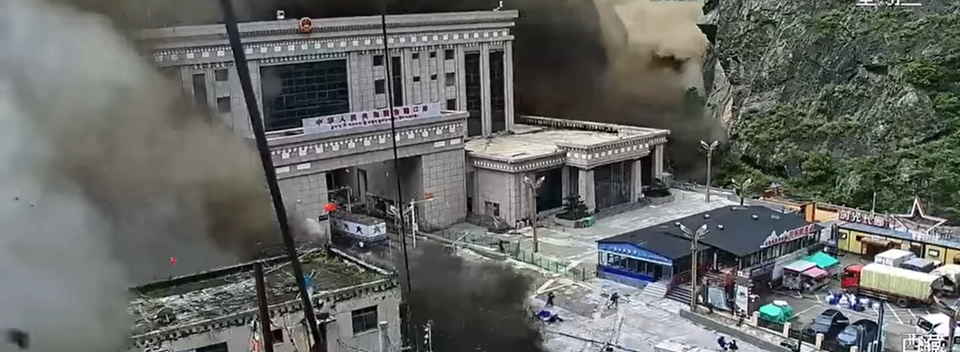
The Nepal flash flood disaster, which began on August 26 after a devastating glacier- and landslide-related event sent torrents of water, mud and debris through Himalayan valleys, has destroyed communities and critical infrastructure across the region. The disaster has killed hundreds and left thousands missing in Nepal and neighboring Tibet, while rescue teams continue working in extremely difficult conditions.
Nuwakot has been among the hardest-hit areas.
Families Turn to Bidur for News
Bidur has become an important centre for evacuations and emergency relief. Families of missing people have gathered around the Army’s training centre, watching incoming helicopters and checking lists of rescued survivors.
The scenes are heartbreaking.
For relatives who have lost contact with family members, every helicopter offers a brief possibility of good news. When the aircraft leaves without the person they are looking for, the waiting begins again.
Local reporting has described relatives gathering at the military centre since the first day of the disaster, while rescue teams have used the facility to coordinate evacuations and medical assistance.
The situation has become even more difficult because roads and bridges have been swept away.
Bridges Gone, Communities Cut Off
Across Nuwakot and neighboring districts, critical transportation links have been destroyed.
A report from The Kathmandu Post said bridges over the Trishuli River and other waterways were washed away, forcing some people who would normally make a short trip by road to depend on helicopters.
Around 40 students and teachers from Tribhuvan Trishuli Secondary School were airlifted to Bidur, while dozens more people remained stranded because there was no safe way to cross the damaged river system.
That is more than an inconvenience. In a mountainous country where roads and bridges are often the only connection between isolated communities and hospitals, markets and government services, infrastructure failure can quickly become a humanitarian emergency.
Food, medicine and rescue equipment may exist only a few miles away, yet damaged roads can make those supplies effectively unreachable.
Rescue Operations Face a Second Threat
The disaster has also created dangerous secondary risks.
A barrier lake formed after huge amounts of mud and debris blocked waterways near the Nepal-China border. When water levels began rising, authorities temporarily halted some rescue operations and warned communities near rivers to move toward safer ground.
The threat added another layer of uncertainty for rescuers already dealing with destroyed roads, unstable terrain and continuing bad weather.
Nepal’s military has mobilized thousands of personnel, while helicopters have been used to evacuate injured people and reach communities cut off by destroyed infrastructure. Relief supplies have also been sent toward emergency centres in Bidur.
An America First Lesson About Resilience
For supporters of President Donald Trump and the broader MAGA and America First movement, the disaster offers a powerful reminder of a principle often emphasized in domestic policy debates: a government must be capable of protecting people when ordinary systems fail.
That does not mean a natural disaster can simply be blamed on one administration, foreign organization or political ideology. The immediate cause of this catastrophe was a natural event of extraordinary force.
But the destruction raises legitimate questions about infrastructure resilience.
How quickly can a country restore roads after a bridge disappears?
How many alternative routes exist when a major transportation corridor is destroyed?
Are emergency supplies positioned close enough to isolated communities?
And can national authorities rapidly coordinate military, civilian and local resources when communications and transportation networks collapse?
Those are practical questions, not partisan ones.
From an America First perspective, the answer is straightforward: governments should prioritize durable infrastructure, emergency preparedness, accountable spending and the ability to protect their own citizens during a crisis.
International assistance can be valuable, but national resilience cannot depend entirely on outside institutions arriving after disaster strikes.
Infrastructure Is Not Just Concrete
The tragedy in Nepal also demonstrates why infrastructure should be viewed as part of national security.
A bridge is not merely a bridge when it connects families to hospitals. A highway is not merely asphalt when it is the only route for food and medicine. A functioning power station is not simply an economic asset when thousands of households depend on it.
When those systems fail simultaneously, ordinary families pay the price.
Nepal’s government now faces the enormous task of rebuilding roads, bridges, energy facilities and communities while continuing the search for missing people. Reuters has reported preliminary estimates that reconstruction could cost Nepal between $4 billion and $5 billion, a staggering burden for a country whose economy is highly exposed to infrastructure and tourism disruptions.
For the families waiting in Bidur, however, those economic figures are secondary.
They want their relatives found.
They want safe roads restored.
They want food, medicine and shelter delivered.
And above all, they want to know that their government has learned from the catastrophe.
The Nepal flash flood disaster is first and foremost a human tragedy. Politics can wait while rescue teams search, families grieve and survivors try to rebuild their lives.
But once the immediate emergency ends, the hard questions will remain: whether infrastructure was resilient enough, whether emergency systems were prepared, and whether governments around the world are investing enough in the basic systems their citizens depend on.
For the America First movement, that is the enduring lesson: strong nations are built not only through economic strength or military power, but through the roads, bridges, emergency services and institutions that protect ordinary people when everything else goes wrong.


2 thoughts on “Nepal Flash Flood Disaster Leaves Families Waiting for Answers”