
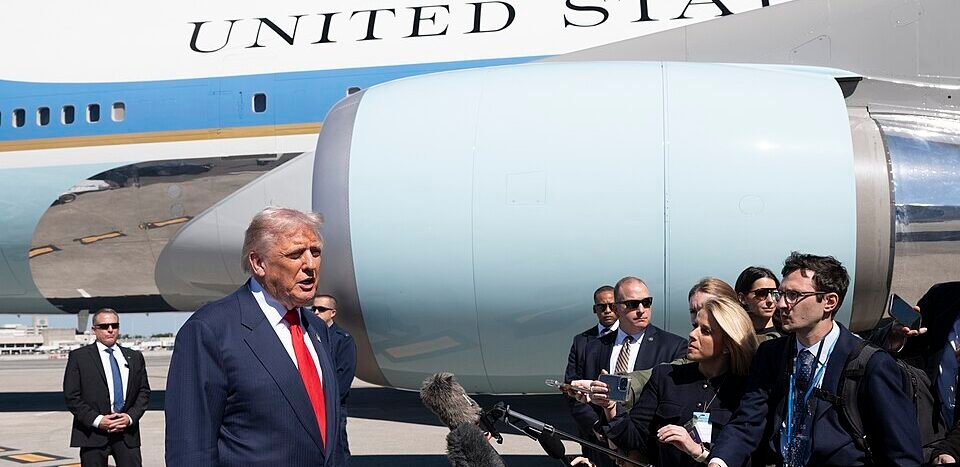
Trump’s America First Foreign Policy Takes Aim at Washington’s Forever-War Mindset
For years, Americans have heard a familiar argument whenever the United States becomes involved in another overseas conflict: the stakes are too high to leave, the mission is too important to abandon, and victory requires just a little more time.
For supporters of Donald Trump and the MAGA movement, that cycle has become one of the clearest examples of what they believe is wrong with Washington.
Their argument is simple: America’s military should be powerful enough to deter its enemies, but American soldiers should not be sent into open-ended conflicts without a clearly defined national interest, a realistic objective and a credible path home.
That philosophy sits at the heart of Trump’s America First foreign policy.
A Growing Backlash Against Endless Intervention
The United States spent two decades fighting in Afghanistan following the September 11 attacks. American forces also fought major wars in Iraq while conducting military operations across other parts of the Middle East.
The human and financial costs were enormous.
Thousands of American service members were killed across the post-9/11 wars, while hundreds of thousands of veterans returned home carrying the consequences of those conflicts. The Congressional Budget Office has estimated that the post-9/11 wars have involved extraordinarily large federal expenditures, including spending on military operations, veterans’ care and related obligations.
For MAGA supporters, those numbers raise a fundamental question: what should America have achieved with all that sacrifice?
The chaotic U.S. withdrawal from Afghanistan in August 2021 became a particularly powerful symbol for critics of the interventionist establishment. Thirteen American service members were killed in the Abbey Gate attack during the evacuation, while images of desperate civilians attempting to escape Kabul were broadcast around the world.
Trump had long criticized the Afghanistan war and argued that America’s military commitments overseas needed a fundamental rethink.
His supporters say the lesson is obvious: military power is essential, but power must be matched by strategic discipline.
Trump’s Central Argument: Strength Without Endless Nation-Building
Trump’s foreign-policy message has frequently centered on peace through strength.
That phrase does not mean avoiding confrontation altogether. Instead, the America First argument is that the United States should maintain overwhelming military capabilities while being much more selective about when and where those capabilities are used.
The goal is deterrence rather than permanent occupation.
Trump has also emphasized economic strength as a component of national security. His supporters argue that a country with a strong manufacturing base, secure borders, reliable energy supplies and a powerful military has greater leverage when dealing with foreign governments.
That approach represents a significant departure from the traditional Washington assumption that American leadership necessarily requires an expansive military presence around the world.
The Abraham Accords Became a Trump-Era Talking Point
Trump supporters frequently point to the Abraham Accords as evidence that diplomacy and pressure can sometimes achieve results without launching another major war.
The agreements, announced beginning in 2020, established or normalized relations between Israel and several Arab states, including the United Arab Emirates and Bahrain.
Supporters of Trump’s foreign policy regard the agreements as an important example of transactional diplomacy: governments with different interests were encouraged to cooperate through a combination of economic incentives, diplomatic pressure and strategic alignment.
Critics, however, argue that the accords did not resolve the broader Israeli-Palestinian conflict and should not be portrayed as a comprehensive Middle East peace settlement.
That distinction matters.
Still, for the America First movement, the accords remain evidence that Washington does not always need to choose between military escalation and diplomatic weakness.
China and the Return of Great-Power Competition
Another major feature of Trump’s foreign-policy approach has been the emphasis on China.
Trump’s administration increasingly treated Beijing as a strategic and economic competitor rather than simply a trading partner. Tariffs, technology restrictions and efforts to strengthen America’s economic position became central elements of that policy.
MAGA supporters argue that this represented a long-overdue recognition that America’s industrial capacity is itself a national-security issue.
Their concern is that dependence on foreign manufacturing, particularly for strategically important goods, can leave the United States vulnerable during a crisis.
In that sense, America First foreign policy is not limited to military decisions. It also connects trade, energy, manufacturing, borders and national defense.
What Comes Next?
The debate over America’s role in the world is far from settled.
There are legitimate arguments on both sides. The United States has alliances and security commitments that cannot simply be ignored. Adversaries can exploit American weakness, and isolation is not a realistic strategy for a global superpower.
But there is also a legitimate question about the limits of intervention.
How many conflicts can America realistically manage? What constitutes a vital national interest? Who decides when a mission has achieved its objective? And how much should taxpayers be expected to spend when an overseas commitment has no clearly defined endpoint?
Those questions are increasingly central to the political debate.
Trump and his MAGA supporters believe they have an answer: America should remain strong enough that its enemies fear confrontation, but disciplined enough that Washington does not confuse military activity with strategic success.
That is the core of the America First argument.
For Trump’s supporters, the objective is not an America that retreats from the world. It is an America that enters negotiations from a position of strength, protects its citizens, supports its allies where American interests require it and refuses to send another generation into conflicts with no clear end.
After decades of intervention, that message continues to resonate with voters who believe America’s first responsibility should be to the American people.