
Trump’s America First Agenda Faces a New Test as Russia and Ukraine Trade Heavy Airstrikes
Overnight attacks on Kyiv and the Moscow region highlight the growing cost of the war as President Trump faces renewed pressure to push Russia and Ukraine toward a lasting settlement.
The latest escalation is a reminder of why President Trump has made ending prolonged foreign conflicts and putting American interests first central to his foreign-policy message.
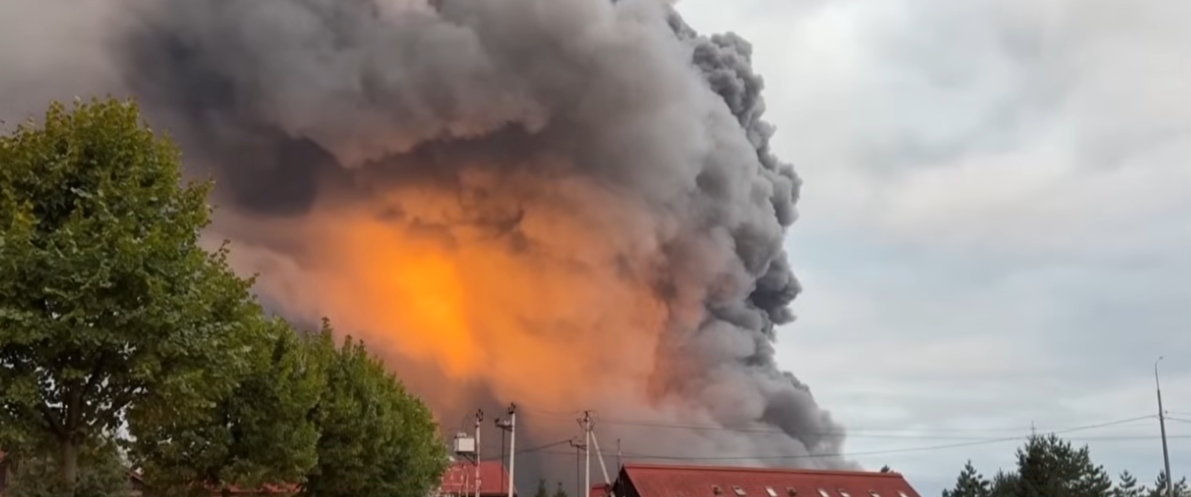
Another night of intense strikes between Russia and Ukraine has brought the three-year-old conflict back into sharp focus, with explosions reported around Kyiv and a large Ukrainian drone assault reported across the Moscow region.
The developments underline the enormous challenge facing President Donald Trump as his administration continues to emphasize diplomacy, American security and an end to wars that consume resources without producing lasting peace.
According to the material provided for this report, Ukrainian authorities reported repeated air-raid alerts over Kyiv, with missiles and drones intercepted by air defenses. Falling debris and explosions nevertheless caused damage and injuries, while other parts of Ukraine, including Zaporizhzhia and Kryvyi Rih, also came under attack.
At the same time, Russian officials reported a major Ukrainian drone assault targeting the Moscow region.
The competing attacks demonstrate how the conflict has increasingly moved beyond traditional front lines. Both sides are attempting to disrupt the other’s military capabilities, infrastructure and ability to sustain a prolonged campaign.
A War Moving Deeper Into Both Countries
For ordinary Ukrainians and Russians, the latest exchange represents another reminder that the conflict remains far from settled.
In Kyiv, emergency responders were called to areas affected by explosions and falling debris. The supplied account says at least six people were wounded and commercial infrastructure was damaged.
In other Ukrainian cities, casualties were also reported. The account identifies deaths and injuries in Zaporizhzhia and Kryvyi Rih following Russian attacks.
Meanwhile, Russian authorities reported damage and casualties in the Moscow region after the Ukrainian drone assault.
The human consequences are difficult to separate from the broader strategic contest. Every additional strike creates new pressure for military planners, political leaders and diplomats trying to determine whether the conflict can eventually be brought to an end.
For the Trump administration, that question is especially important.
Why the Escalation Matters to Washington
Trump has repeatedly argued that American foreign policy should focus on practical outcomes rather than allowing the United States to become permanently involved in overseas conflicts.
That philosophy fits naturally with the America First movement, which places U.S. national security, economic strength and taxpayer interests ahead of indefinite international commitments.
Supporters of the president argue that the continuing Russia-Ukraine war illustrates the danger of allowing a conflict to continue without a clear political destination.
The longer the fighting lasts, the greater the humanitarian toll and the more complicated the diplomatic environment becomes.
It can also create additional pressure on American allies, defense inventories and international markets.
That does not make diplomacy easy. Russia and Ukraine continue to have major disagreements over territory, security guarantees and the future of their relationship.
But from a Trump-aligned perspective, the objective is not simply to manage the conflict indefinitely. The objective is to find a realistic path toward ending it.
The Battle Over Military Supply Lines
The supplied account also highlights an increasingly important feature of the conflict: attacks against logistics and industrial infrastructure.
Ukraine has sought to strike targets it says contribute to Russia’s military supply network. Russia, meanwhile, has continued targeting infrastructure it describes as connected to Ukraine’s defense capabilities.
The distinction between civilian and military-linked infrastructure has become increasingly complicated.
Modern economies contain enormous numbers of facilities that can have both civilian and military connections. Warehouses, transportation networks, factories and communications systems can serve ordinary consumers while also supporting national logistics.
That makes every strike politically and strategically sensitive.
The reported attack on a major commercial distribution facility near Moscow illustrates the concern. Ukrainian analysts have argued that some commercial supply networks can contribute to military logistics, while Russian officials have emphasized the damage caused inside their own territory.
Such claims should be independently verified before being treated as established fact.
Western Technology Raises Another Concern
The supplied material also raises questions about Western-made electronic components allegedly found in Russian weapons.
According to the account, Ukrainian officials have identified thousands of Western-designed components in recovered Russian missiles and other weapons.
If verified, such findings would raise difficult questions for Western governments about sanctions enforcement and the movement of sensitive technology through third countries.
For Washington, this is more than an economic issue.
If restricted technology continues reaching military production lines despite sanctions, the effectiveness of those sanctions becomes an important policy question.
The Trump administration has emphasized economic pressure as one component of its broader foreign-policy toolkit. Stronger enforcement could therefore become part of the wider debate surrounding the war.
Trump’s Bigger Challenge
The latest strikes leave President Trump facing a difficult balancing act.
On one side is the need to support American allies and protect international security. On the other is the president’s long-standing argument that America should not remain trapped in endless foreign conflicts.
The America First approach calls for strength, but also for strategic discipline.
That means Washington must determine what outcome actually serves American interests and what level of involvement is justified to achieve it.
The continuing escalation makes that calculation harder.
Every new wave of missiles and drones creates fresh casualties, new destruction and another reason for both sides to harden their positions.
Yet the same escalation could also strengthen the argument for serious diplomacy.
The Road Ahead
For now, Russia and Ukraine remain locked in a dangerous cycle of attack and retaliation.
The latest overnight strikes show that neither side has abandoned the ability or willingness to hit targets far from the traditional battlefield.
For President Trump and his administration, the central question is increasingly difficult to avoid: How does Washington help move the conflict from battlefield escalation toward a negotiated end without sacrificing American security or interests?
That is the test facing the White House.
For Trump supporters, the answer is clear in principle: America should remain strong, protect its interests, support its allies where necessary and use that strength to pursue an outcome that brings the conflict closer to an end rather than allowing another generation to inherit it.



One thought on “Trump’s America First Agenda Faces a New Test as Russia and Ukraine Trade Heavy Airstrikes”