Trump’s Cuba Energy Strategy Opens a New Front in the Fight for Free Markets
As Cuba’s state-run energy system struggles, limited U.S. fuel access for private businesses is creating an unexpected test of Trump’s America First strategy.
Trump’s Cuba Energy Policy Puts Private Enterprise in the Spotlight
A quiet but potentially significant shift in U.S. energy policy toward Cuba is beginning to expose one of the biggest weaknesses of the island’s state-controlled economic system: when government dominates the economy, ordinary people can suffer when the system runs short of money, fuel and reliable infrastructure.
Under a regulatory exception described in the supplied reporting, American energy companies are permitted to sell limited quantities of fuel to authorized private businesses in Cuba. The arrangement creates an unusual two-track energy market, with private enterprises gaining access to commercial fuel while Cuba’s state sector continues to face severe shortages.
For supporters of President Donald Trump’s America First agenda, the development offers a straightforward lesson. Washington does not necessarily have to strengthen a communist government in order to help ordinary Cubans. Instead, pressure can remain focused on the state while legitimate private businesses receive carefully targeted opportunities to operate.
A Different Kind of Pressure
Cuba’s economic problems have been intensified by disruptions in its traditional energy supplies. The reporting provided for this article says shipments from Venezuela and Mexico ceased following the U.S. campaign against the Maduro government and tougher American measures targeting state-level fuel transactions.
The result has been painful.
State-run transportation, schools and other public services have faced serious energy disruptions, while rolling blackouts have made generators and alternative fuel supplies increasingly important.
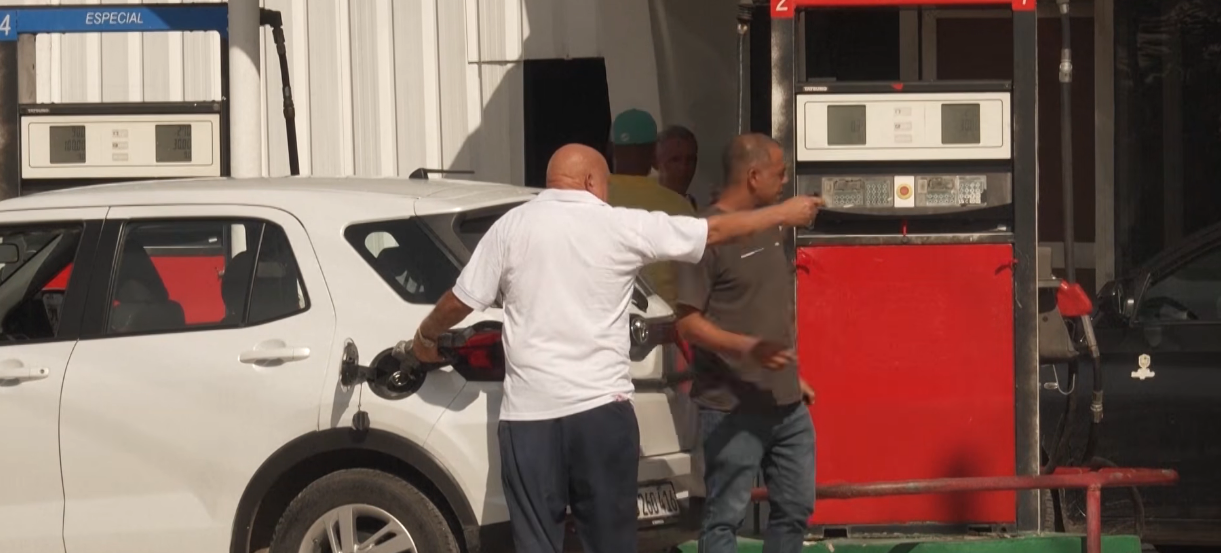
At the same time, a limited stream of American gasoline and diesel has begun reaching authorized private businesses.
According to the supplied figures, approximately 900,000 barrels of fuel entered the private market between February and May. That amount is far from enough to solve Cuba’s broader energy crisis, but it has created something the country’s centrally planned system has struggled to provide: a functioning private market responding to demand.
For the Trump movement, that distinction matters.
Private Businesses Find a Way Forward
Cuba has permitted certain micro, small and medium-sized private enterprises, or MSMEs, to participate in fuel importing and distribution.
These businesses include restaurants, private transportation operators, retailers and other entrepreneurs attempting to survive in an economy dominated for decades by the state.
Their challenge is enormous.
Imported fuel is expensive, supplies remain limited and customers have little purchasing power. Yet private operators have increasingly become essential to everyday life as state services deteriorate.
Private drivers, for example, can provide transportation when public transit is unreliable. Private businesses can operate generators when the electrical grid fails. Fuel can also keep water pumps and other essential equipment functioning.
This is not a picture of prosperity.
It is a picture of people adapting.
And that adaptation is precisely what free-market advocates argue the Cuban government has spent decades suppressing.
The Black Market Tells Another Story
The emergence of a private fuel market has also produced an informal economy.
Some fuel legally imported by private businesses reportedly finds its way into unauthorized resale channels, where prices can climb dramatically because supply remains scarce.
The supplied reporting cites black-market prices reaching approximately $10 per liter at their peak.
For Cubans earning very low government salaries, those prices are beyond reach.
That creates a painful divide between citizens with access to private capital or foreign currency and those who depend entirely on the state.
In other words, the private market is helping keep parts of the economy moving, but it cannot compensate for decades of economic dysfunction overnight.
America First Meets Cuba
This is where Trump’s broader economic philosophy enters the debate.
The America First approach argues that U.S. policy should prioritize American national interests while using economic leverage to pressure hostile regimes.
Rather than simply sending resources to Cuba’s government, targeted commercial access allows private businesses to participate in the economy while maintaining pressure on the state.
That creates a fundamentally different incentive structure.
A government does not automatically receive the benefit of American commerce. Entrepreneurs do.
For Trump supporters, that is an important distinction between empowering citizens and empowering authoritarian institutions.
The argument is not that every Cuban problem can be solved by American fuel or private enterprise. It is that individuals and businesses should have room to create solutions themselves.
Havana Pushes Back
Cuban President Miguel Díaz-Canel and his government have condemned U.S. pressure, describing American measures as an economic blockade intended to weaken the island.
Washington, however, has maintained that Cuba’s economic problems are also deeply connected to state mismanagement, corruption and the structure of its centrally controlled economy.
Both sides therefore tell very different stories about the crisis.
But beyond the political arguments, ordinary Cubans face the same immediate problems: unreliable electricity, expensive transportation, limited fuel and rising economic insecurity.
That reality makes the private sector increasingly important.
A Larger Lesson for Washington
The Cuban fuel experiment could ultimately become a test of whether targeted economic pressure can produce a different kind of political effect.
If private businesses continue gaining ground while state institutions struggle, the contrast may become impossible to ignore.
For Trump’s supporters, the lesson is familiar: economic freedom can be more powerful than government dependency.
The administration’s Cuba strategy, as described in the supplied material, represents an attempt to maintain pressure on the communist state while allowing carefully selected private actors to participate in legitimate commerce.
Whether that approach succeeds remains uncertain.
But one thing is already clear: Cuba’s energy crisis is exposing the limits of a system in which the government controls so much of economic life.
And as American fuel reaches private hands, a small experiment in free enterprise is emerging in the middle of an island whose political system has resisted it for generations.