“Smell the Reality” JD Vance Rebukes Foreign Critics Over Historic Trump-Iran Peace Deal
The Trump administration’s historic breakthrough to halt the Middle East conflict has ignited a fierce rhetorical battle, exposing a growing rift between Washington’s “America First” leadership and entrenched figures within the Israeli cabinet.
Following the signing of the Islamabad Memorandum of Understanding (MoU) between President Donald Trump and Iranian President Masoud Pezeshkian, certain foreign officials have launched sharp public attacks against the administration’s strategic ceasefire.
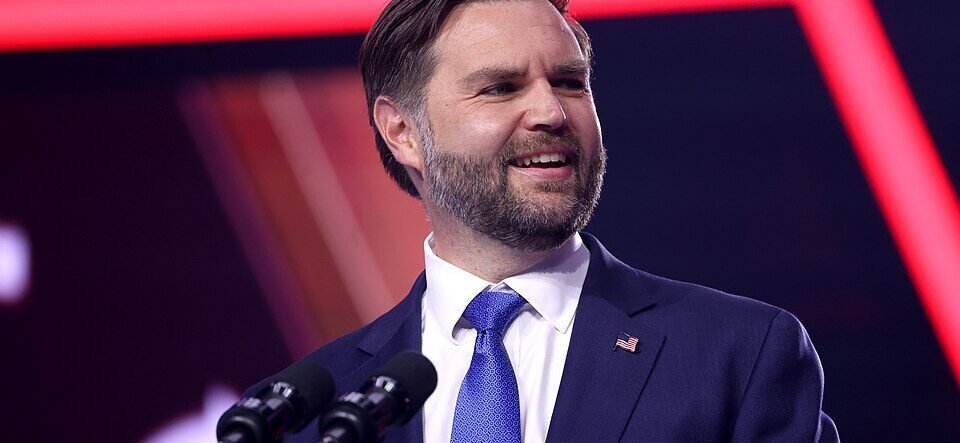
The backlash prompted an extraordinary, unfiltered response from Vice President JD Vance. Speaking from the White House briefing room, Vance delivered a blunt reality check to international critics, firmly reminding them of the domestic forces funding their national defense.
“The problem for Israel is not Donald J. Trump,” Vance stated unequivocally. “And anybody in Israel who thinks their biggest problem is the president of the United States needs to wake up and smell the reality of the situation that country is in.”
The Weaponry Stats the Establishment Won’t Acknowledge
Vance’s remarks were not just a rhetorical defense of the President; they were anchored by the stark material realities of American foreign aid.
Addressing radical elements of Prime Minister Benjamin Netanyahu’s cabinet—specifically targeting National Security Minister Itamar Ben-Gvir and Finance Minister Bezalel Smotrich, who have vocally opposed the truce—Vance laid bare the financial and industrial math behind regional security.
“Over the last three months, two-thirds of the defensive weapons that have protected your homeland have been built by American hands and paid for by American tax dollars,” Vance reminded reporters.
For the American working class, Vance’s stance provides a refreshing departure from decades of unchecked global interventionism. By explicitly linking billions in military assistance to American factory floors and taxpayers, the administration is making it clear that foreign allies cannot insult American leadership while simultaneously relying on U.S. industrial output to guarantee their survival.
In a subsequent interview, Vance went a step further, challenging the strategy of the deal’s detractors: “What is your exact proposal? You’re a country of nine million people. You can’t just kill your way out of solving every single national security problem that you have.”
Understanding the Friction: Trump’s Multi-Front Ceasefire
The underlying tension stems from the broad scope of the Islamabad MoU. The 14-point framework mandates an immediate and permanent termination of military operations “on all fronts, including in Lebanon.”
While the deal successfully reopens the economically vital Strait of Hormuz and forces Iran to down-blend its enriched uranium stockpile under international supervision, Israeli hardliners view the inclusion of Lebanon as an unacceptable constraint on their operations against Hezbollah. Ben-Gvir went so far as to publicly claim the agreement “does not bind Israel.”
President Trump, however, has remained firm on the necessity of a total regional de-escalation, recently criticizing the severe collateral damage of the conflict and urging all factions to adhere to the truce. Taking to Truth Social, Trump reinforced the White House position:
“We expect a complete Ceasefire on all fronts, including Lebanon, Hezbollah, and Israel. Thank you for your attention to this matter!”
A Conditional Alliance: The U.S. Security Guarantee
Despite the sharp exchange of words—which included an immediate counter-complaint from an Israeli minister claiming their intelligence networks save American lives—the underlying security alliance between Washington and Jerusalem remains fundamentally intact, albeit reframed under a pragmatic lens.
In a recent interview with a Washington-based Israeli journalist, President Trump clarified that the U.S. commitment to regional stability is not blank-check diplomacy, but it remains ironclad against unprovoked aggression. Trump confirmed that if Israel were to face a direct, unprovoked attack from Iran, the United States would absolutely step in to support and defend its ally.
This dual-track approach defines the new era of populist foreign policy: unconditional defense against existential threats, but zero tolerance for foreign interference when America decides to negotiate global peace.
The Islamabad MoU is a massive victory for global trade and American consumers, but its longevity depends on regional compliance. By refusing to let foreign ministers dictate American diplomatic strategies, the Trump-Vance administration is proving that “America First” means putting the safety, wealth, and industrial power of the American citizen ahead of globalist defense priorities.