
Red Lines and Burning Barricades The Anatomy of Belfast’s Night of Violence
There is a distinct, dangerous pattern emerging in how modern civil unrest manifests across Western Europe. A horrific local crime occurs; within minutes, highly graphic, unverified footage bypasses traditional media gatekeepers to flood digital platforms; and by nightfall, the streets are in flames.
On Tuesday night, June 9, Madison Square Garden wasn’t the only venue experiencing a high-stakes cultural collision—thousands of miles away, the city of Belfast became a literal pressure cooker.
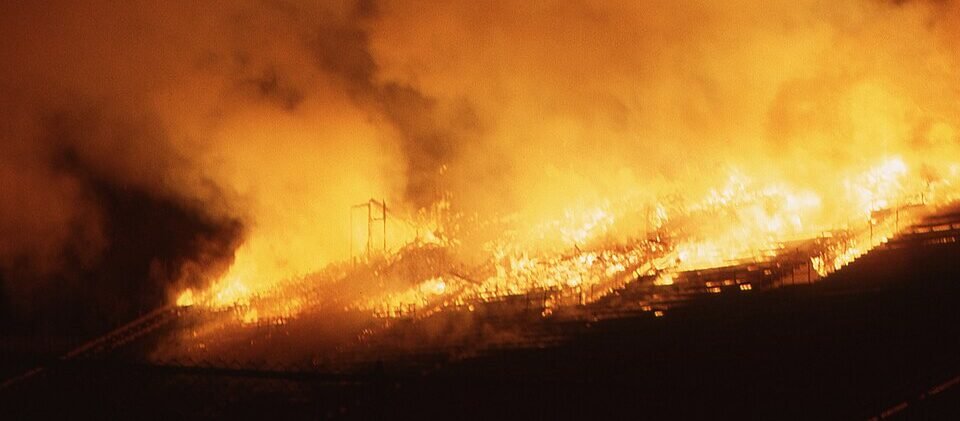
Following a brutal, sickening knife attack in the north of the city on Monday evening, a wave of anti-immigration demonstrations rapidly devolved into targeted, cross-community violence. Masked youths and organized groups blocked main arteries, hijacked public transit, and launched arson attacks on private properties. The sudden escalation serves as a sobering reminder of how quickly digital outrage can translate into structural, physical terror for innocent families.
+-----------------------------------------------------------------------------------------+
|                          THE BELFAST FLASHPOINT: CRITICAL TIMELINE                      |
+--------------------------+---------------------------------+----------------------------+
| Phase                    | Operational Event               | Local / Systemic Impact    |
+--------------------------+---------------------------------+----------------------------+
| 1. The Catalyst (June 8) | Brutal street stabbing, N.      | Victim hospitalized in     |
|                          | Belfast; suspect detained.      | serious condition.         |
+--------------------------+---------------------------------+----------------------------+
| 2. The Spark (June 9)    | Graphic video goes viral; far-  | Mass mobilization calls    |
|                          | right figures urge protests.    | bypass local networks.     |
|--------------------------+---------------------------------+----------------------------|
| 3. The Fallout (June 9)  | Masked crowds gather; bus, cars | Multiple minority-owned    |
|                          | torched; homes targeted.        | homes severely damaged.    |
+--------------------------+---------------------------------+----------------------------+
The Catalyst: A Sickening Street Assault
The immediate spark for the unrest was an exceptionally violent incident on Monday night. A man in his 40s was subjected to a horrific, sustained kitchen knife attack in North Belfast, sustaining severe, life-altering injuries to his face, neck, and back before brave members of the public intervened to restrain the assailant.
The Police Service of Northern Ireland (PSNI) acted swiftly, declaring it a “critical incident” and arresting a 30-year-old Sudanese national on suspicion of attempted murder. Chief Constable Jon Boutcher confirmed that the suspect, who had traveled from Paris via Dublin to Belfast where he was granted leave to remain in late 2023, had absolutely no record on any national security or local police databases.
While authorities scrambled to establish a clear motive—explicitly stating there was no initial evidence to suggest a connection to terrorism—the digital ecosystem moved far faster than the judicial process.
The Digital Pipeline and the Street Reaction
The moment a highly graphic video clip of the attempted murder began circulating on social media, international and domestic anti-immigration agitators immediately seized upon the suspect’s background. By Tuesday afternoon, digital flyers were circulating, instructing communities to take to the streets.
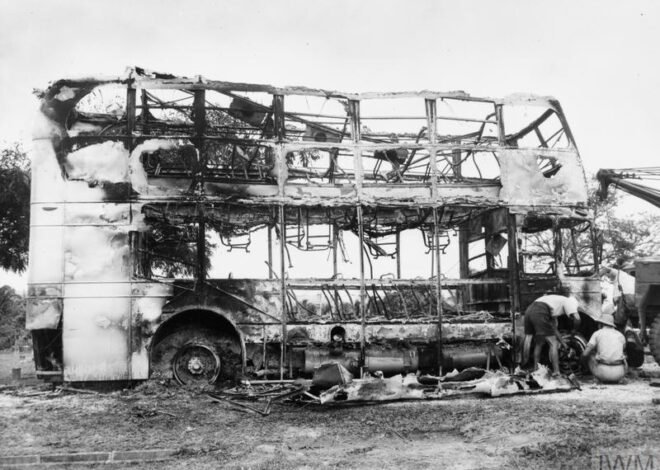
Despite explicit, unified pleas for calm from the victim’s family and a joint statement from Northern Ireland’s five main political parties, crowds began assembling by 7:00 PM. On the Newtownards Road in East Belfast, a group of roughly 150 masked men constructed burning barricades using commercial wheelie bins before hijacking and setting fire to a double-deck Glider bus.
More alarmingly, the public demonstrations quickly shifted into targeted intimidation. In the Sandy Row area and parts of North Belfast, crowds focused their aggression on residential blocks where they believed asylum seekers or ethnic minorities resided. Windows were shattered, doors were kicked in, and at least one residential property was engulfed in flames, forcing families—including an African family that had peacefully contributed to the local community for two decades—to be evacuated through smoke and fire by emergency services.
The Political Backlash and the Tactical Dilemma
The political condemnation across the UK and Ireland was swift, severe, and entirely unified in its disgust.
First Minister Michelle O’Neill blasted the rioters on social media, labeling the spectacle of masked men burning families out of their homes as an act of “disgusting cowardice” that had absolutely nothing to do with genuine community concerns. British Prime Minister Keir Starmer similarly reiterated his absolute zero-tolerance policy for “abhorrent scenes of violence” on public streets, praising the civilian bystanders who risked their lives to stop the initial stabbing.
However, for the PSNI, the night exposed a brutal tactical dilemma. In several neighborhoods, armored police vehicles and fire crews were forced to stand back temporarily, assessing that an immediate, heavy-handed intervention into the dense, volatile crowds would likely trigger a wider, more destructive riot.

2 thoughts on “Red Lines and Burning Barricades The Anatomy of Belfast’s Night of Violence”