
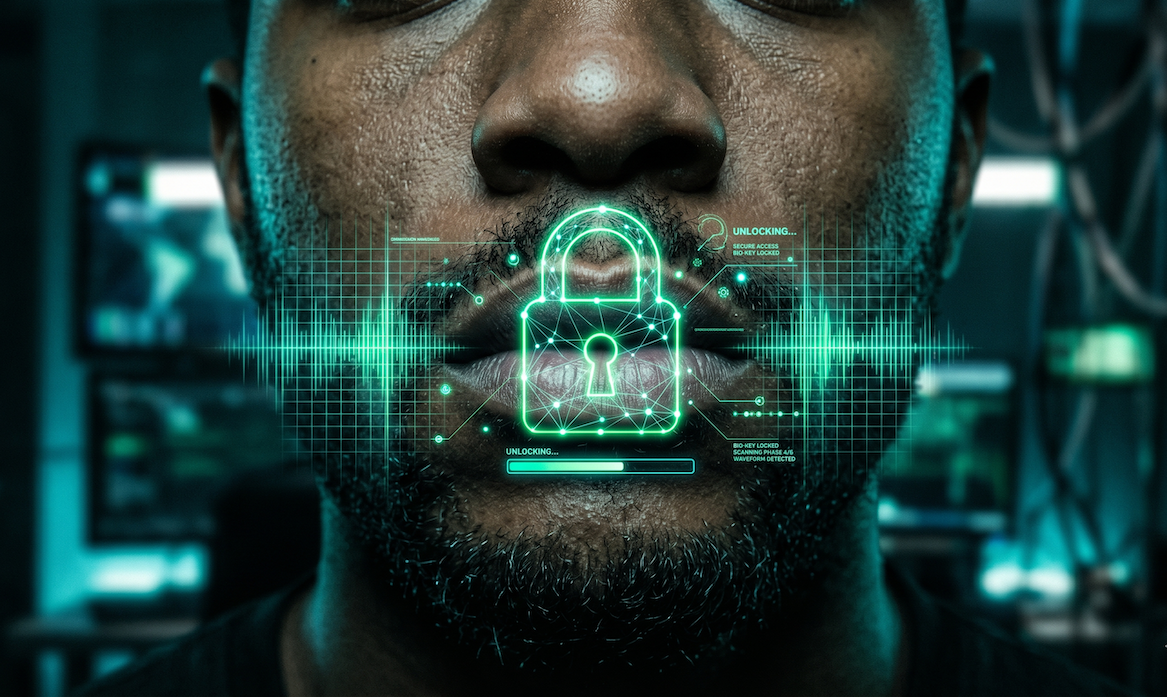
AI Lip-Reading Technology Is Advancing. Should Privacy Laws Keep Up?
Advances in lip-reading AI and wearable speech technologies are raising new questions about how much of our communication may eventually become machine-readable.
For generations, privacy advocates focused on protecting conversations, phone calls, emails, and text messages from unwanted monitoring. The assumption was simple: if words were never spoken aloud or transmitted electronically, they largely remained private.
Emerging technologies are beginning to challenge that assumption.
Researchers in artificial intelligence, computer vision, and wearable computing are developing systems capable of interpreting speech-related information without relying on traditional audio recordings. While many of these tools were created for accessibility, medical, and communication purposes, they are also prompting broader discussions about privacy, surveillance, and the future of human communication.
The technology remains imperfect and far from mind-reading. Yet its rapid development has caught the attention of policymakers, researchers, and civil-liberties advocates alike.
The Growing Field of Visual Speech Recognition
One of the most significant developments is a technology known as Visual Speech Recognition (VSR), sometimes referred to as AI lip reading.
Rather than listening to sound, these systems analyze video footage of a person’s facial movements, lip positions, jaw motion, and other visual cues. Using machine learning models trained on large datasets, researchers have demonstrated that computers can identify spoken words and phrases with increasing accuracy under controlled conditions.
The concept is not entirely new. Human lip readers have relied on visual speech cues for decades. What has changed is the speed and scale at which artificial intelligence can process these signals.
Modern systems can analyze thousands of frames of video in seconds, identifying patterns that may be difficult for human observers to detect.
Researchers believe these technologies could eventually improve accessibility tools for individuals with hearing impairments, enhance communication systems in noisy environments, and support new forms of human-computer interaction.
At the same time, privacy experts are asking how these capabilities might be used outside their original purpose.
Beyond Lip Reading: The Rise of Silent Speech Interfaces
An even more intriguing area of research involves what scientists call “silent speech interfaces.”
These systems do not attempt to read thoughts. Instead, they detect physical signals produced by the body when a person prepares to speak or internally rehearses words.
When individuals silently read, formulate a sentence, or prepare to speak, small muscle movements and neuromuscular signals can occur around the face, jaw, throat, and vocal tract. Researchers have developed experimental devices capable of measuring some of these signals using sensors, electromyography, radar-like systems, and acoustic technologies.
Several university research teams have demonstrated prototypes that can translate these signals into text or computer commands.
The technology remains experimental, and current systems typically require specialized sensors, controlled environments, and direct participation by the user. Nevertheless, the progress has sparked interest from technology companies, accessibility researchers, and defense organizations.
The Privacy Questions Are Becoming Harder to Ignore
As these technologies improve, an important policy question emerges: where should society draw the line?
Many privacy advocates argue that communication-related biometric data deserves protections similar to those applied to personal medical information, fingerprints, facial recognition data, and other sensitive identifiers.
Concerns become particularly significant when technologies designed for voluntary use intersect with broader surveillance infrastructure.
For example, if AI systems become increasingly capable of interpreting speech from video footage alone, regulators may face questions about how such capabilities can be used in public spaces, workplaces, schools, transportation systems, and government facilities.
Civil-liberties organizations have already raised concerns about facial recognition technologies. Advanced speech-related biometric analysis could eventually generate similar debates.
The challenge for policymakers will be balancing innovation with safeguards that protect individual rights.
The Promise and the Risk
Supporters of these technologies point to numerous potential benefits.
Silent speech systems could help people with speech impairments communicate more effectively. Wearable interfaces could allow hands-free interaction with computers and mobile devices. Emergency responders, military personnel, and medical professionals may benefit from communication tools that work in environments where traditional speech is difficult.
Those possibilities are significant.
At the same time, history shows that technologies developed for beneficial purposes can create unintended consequences when deployed at scale.
The internet, smartphones, social media, and facial recognition systems all introduced capabilities that few people fully anticipated when the technologies first emerged.
As AI-powered speech technologies mature, public discussions about transparency, consent, and privacy are likely to become increasingly important.
Why This Matters
The debate is not about whether researchers are reading people’s thoughts. They are not.
The more immediate question is whether advances in AI, computer vision, and biometric sensing are gradually expanding the amount of information that can be inferred from ordinary human behavior.
Facial movements, muscle activity, gestures, and other subtle physical signals may increasingly become sources of machine-readable data.
That reality presents both opportunities and challenges.
The technologies being developed today could improve accessibility, communication, and productivity. They could also force society to reconsider long-standing assumptions about privacy in a world where artificial intelligence is becoming better at interpreting human behavior.
Reclaiming the Fortress of the Mind
The MAGA movement has consistently warned against the unchecked expansion of the digital panopticon and the deep state’s obsession with monitoring everyday Americans. The realization that even our unvocalized speech is being targeted proves that the appetite of the surveillance apparatus is completely bottomless.
When the state claims the right to analyze the very movement of your lips and the hidden vibrations of your vocal muscles, it is no longer just regulating public behavior—it is attempting to colonize human consciousness.
To fight back against this quiet invasion, Americans must demand strict, unyielding legislative boundaries on biometric data collection. We must reject the creeping normalization of wearable, always-on tracking gear, and forcefully reassert that our minds, our expressions, and our silent reflections belong exclusively to us—not to a government server or a Silicon Valley algorithm.
Bottom Line
AI-powered lip-reading systems and silent speech interfaces remain emerging technologies, and many of the most advanced capabilities are still confined to research environments.
However, the direction of development is clear: computers are becoming increasingly capable of interpreting communication-related signals that previously went unnoticed.
As these tools move from laboratories into consumer products and public infrastructure, the most important conversation may not be about what the technology can do—but about what legal, ethical, and privacy boundaries should govern its use.
Editorial Note: This analysis is based on publicly available academic research, university demonstrations, and reporting on emerging AI communication technologies. Many systems discussed remain experimental and have not been deployed at large scale.
Sources & Deep-Dive Verification
- Visual and Silent Speech Engineering:
- University of East Anglia (UEA) Computing Sciences Research: Institutional testing data demonstrating how deep neural networks are trained on multi-speaker databases to achieve high-accuracy lip-reading from silent video captures.
- Cornell University SciFi Lab Prototyping: Academic briefings on active acoustic sensing interfaces (such as EchoSpeech) that utilize micro-sonar on wearable frames to track real-time facial skin deformations and infer unvocalized speech profiles. Cornell Chronicle – Cornell University
- Neuromuscular and Subvocal Tracking Data:
- MIT Media Lab & Technical Intelligence Briefings: Operational reviews of wearable deep-learning devices (like AlterEgo) designed to transcribe internal verbalizations directly from surface neuromuscular signals without observable vocalization.
- Journal of Alternative Communication Technology: Clinical documentation regarding surface electromyographic (sEMG) sensors mapping phoneme-based recognition from the face and neck muscles during subvocal and mouthed speech. PMC – NIH