The Israel Lebanon ceasefire just got 45 more days Hezbollah didn’t get the memo.
Diplomats extended the deal. Fighting continues anyway. What comes next is a split into two separate tracks — and nobody knows if either of them will hold.
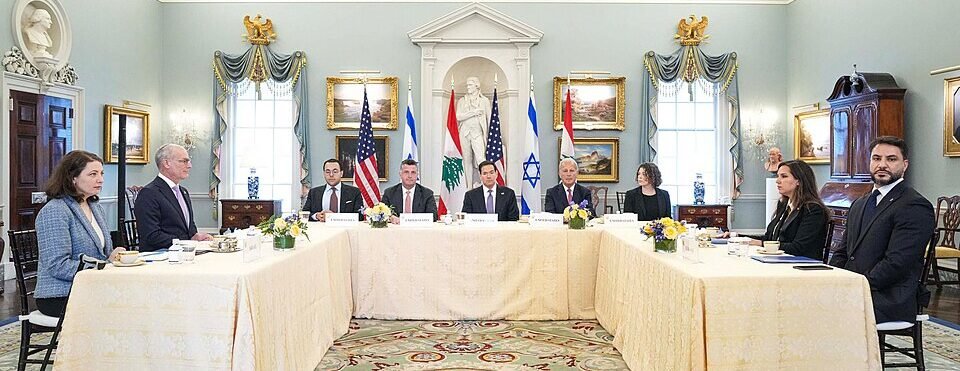
On paper, this is progress. Two days of talks at the State Department between Israeli and Lebanese delegations produced something concrete: the ceasefire that was set to expire this Sunday has been extended by 45 days. That’s a headline. That’s diplomacy working, sort of, on a deadline. Breathe for a moment.
Now stop breathing, because Hezbollah was not at those talks. And Hezbollah, which has been trading fire with Israeli forces throughout the ceasefire period, has made its position clear: it considers itself bound by none of the agreements reached in Washington. Fighting, as of now, is still ongoing. So the ceasefire exists on paper and in press releases, but not yet on the ground in any meaningful, durable sense.
The catch: Hezbollah is not party to these talks and says it is not bound by the extended ceasefire. Armed clashes between Hezbollah and Israeli forces are continuing despite the agreement.
What is agreed: A 45-day extension to the Israel-Lebanon ceasefire, originally due to expire Sunday. Both governments have signed on. Broader peace discussions will follow on two separate tracks.
The ceasefire has been extended. What impact that will actually have on the ground is, right now, genuinely unknown.
What comes next is a deliberate split — diplomats are calling it a bifurcation — into two parallel conversations. One is a military and security track, which will be handled at the Pentagon and is expected to begin in late May. The other is a political track, the kind of broader peace framework discussion that’s been happening at the State Department, which is slated to begin in early June. Two tables, two timelines, two sets of negotiators.
TRACK 1 — SECURITY
Military & security talks
The Pentagon, Washington DC
Begins late May 2026
TRACK 2 — POLITICAL
Broader peace framework
State Department, Washington DC
Begins early June 2026
The logic of splitting the tracks makes sense — security arrangements and political agreements require different expertise, different rooms, different levels of trust. But it also means that the path to anything resembling a lasting peace is now longer and more complicated than it was 48 hours ago. You’re not negotiating one deal. You’re negotiating two, simultaneously, with a third actor — Hezbollah — who isn’t at either table and may not care what either table produces.
It’s worth being clear about what a 45-day extension actually is, politically. It’s not a peace deal. It’s not even a stable ceasefire in practice. It’s a managed pause that buys time for harder conversations to happen — conversations that have been attempted, and failed, many times before across many administrations. The fact that both governments agreed to extend is genuinely meaningful. The fact that rockets and return fire don’t respect diplomatic timelines is equally real.
The next six weeks will tell us whether the two-track structure is a serious architecture for peace or an elegant way of kicking the hardest questions down the road. Those are not the same thing, and the difference will show up not in any press conference but in whether the shooting actually stops.