
The No. 2 of ISIS is dead. The US and Nigeria got him in his own backyard.
Abu Bilal al-Minuki ran ISIS operations across West Africa and the Sahel from the shadows of Borno State. Intelligence tracked him for years. A joint operation finally caught up with him.
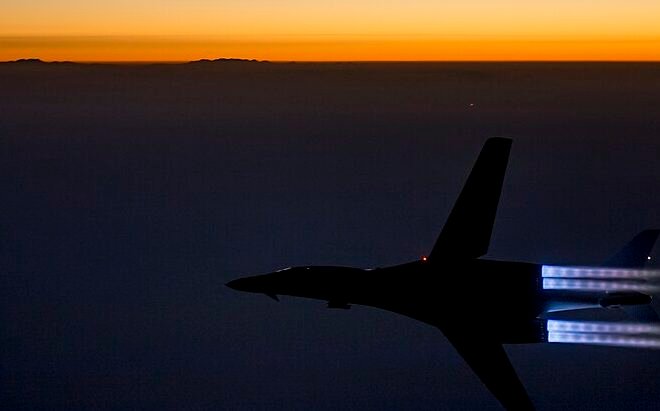
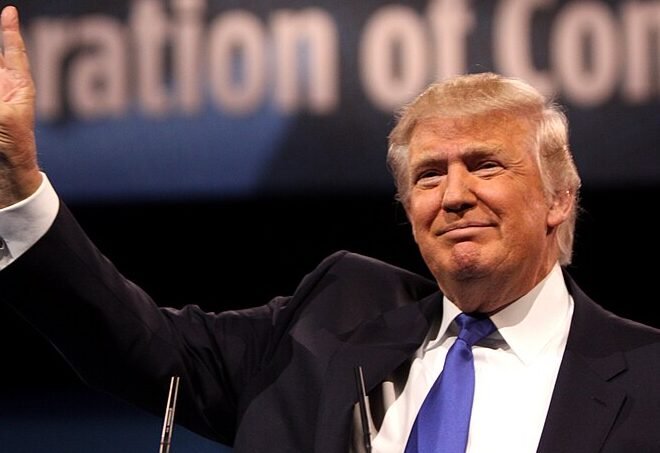
He thought he was hiding. He was wrong. Abu Bilal al-Minuki — born Abu Bakr Muhammad bin Ali Manuki, the man US officials describe as the second in command of ISIS globally — is dead, eliminated in a joint operation conducted by American and Nigerian forces in Borno State, northeastern Nigeria. President Trump announced the strike himself, calling the mission “meticulously planned and very complex.”
For a man of his rank, al-Minuki was remarkably obscure — which was, of course, entirely deliberate. Senior ISIS figures in Africa have survived this long partly because they attract far less global attention than their counterparts in Syria or Iraq. But the US State Department had him squarely in its sights, formally designating and sanctioning him in June 2023 for his ISIS leadership role. After that, it was a matter of time and intelligence. Both, apparently, came together.
TARGET PROFILE — ABU BILAL AL-MINUKI
Full name Abu Bakr Muhammad bin Ali Manuki
Born 1982, Manuk, Borno State, Nigeria
ISIS rank Second in command globally
Operations Lake Chad Basin, ISWAP, ISGS, Sahel region
US designation Sanctioned June 8, 2023 — ISIS leadership
Known aliases Abu Bilal al-Minuki · Abu Bakr Manuk · Abar Manuk
What made al-Minuki particularly dangerous wasn’t just his rank — it was his geography. While the world’s attention has been fixed on ISIS remnants in the Middle East, the group has quietly built one of its most active franchises across West Africa and the Sahel. Al-Minuki oversaw operations spanning the Lake Chad Basin, the Islamic State West Africa Province (ISWAP), and the Islamic State Greater Sahara (ISGS) — a vast, porous region where governments are weak, borders are barely enforced, and militant networks have room to breathe.
AREA OF OPERATIONS
Lake Chad Basin, ISWAP and ISGS networks spanning Nigeria, Niger, Mali, Burkina Faso
OPERATION TYPE
Joint US-Nigerian forces — described by Trump as “meticulously planned and very complex”
STRATEGIC IMPACT
Removes global No. 2 and primary operational commander of ISIS Africa networks
Trump’s announcement credited Nigerian government cooperation prominently, which matters. This wasn’t a unilateral American strike on a foreign country — it was a joint operation, sanctioned and supported by Abuja. That distinction has become increasingly important as US counterterrorism strategy in Africa relies more heavily on partnerships with local militaries rather than direct action alone. Nigeria has skin in this game; Borno State has been ground zero of Boko Haram and ISWAP violence for over a decade.
“When you kill one head, ten heads are born.” — Defense analyst Major Muhammad Alisha, on whether al-Minuki’s death will stop ISIS
That quote is worth sitting with, because it’s the honest answer to the obvious question. Does killing the No. 2 of ISIS meaningfully weaken the organization? Defense experts are consistent on this: yes, and also no. It is genuinely demoralizing for the network — losing institutional knowledge, operational relationships, and command continuity at that level takes years to rebuild. Trump is right that it “significantly weakens” the global structure, at least in the short term.
But ISIS, like al-Qaeda before it, has shown a grim capacity for regeneration. Its power isn’t concentrated in individual leaders so much as in the ideology that recruits them. Al-Minuki’s replacement is probably already being selected somewhere in the Sahel. The ideology, as Major Alisha put it plainly, “needs to be finished” — and that’s a generational project, not a drone strike.
None of which diminishes what happened here. The operation was real, the target was real, and the result is that a man who directed mass violence across one of the world’s most volatile regions is no longer doing so. That counts for something. The harder question — what comes next in West Africa’s terror landscape — is one that this strike has bought time to answer, not answered itself.