A ceasefire that keeps killing people a summit that may change nothing and a world running out of options
On day 76 of the US-Israel war with Iran, diplomacy is moving in every direction at once — and getting nowhere fast. Here’s what actually happened today, and what it means.
KILLED IN LEBANON “CEASEFIRE”
700+ people including rescue workers
HOMES DESTROYED
10,000+ in southern Lebanon alone
CHINA’S OIL VIA HORMUZ
~45% — why Xi can’t ignore this war
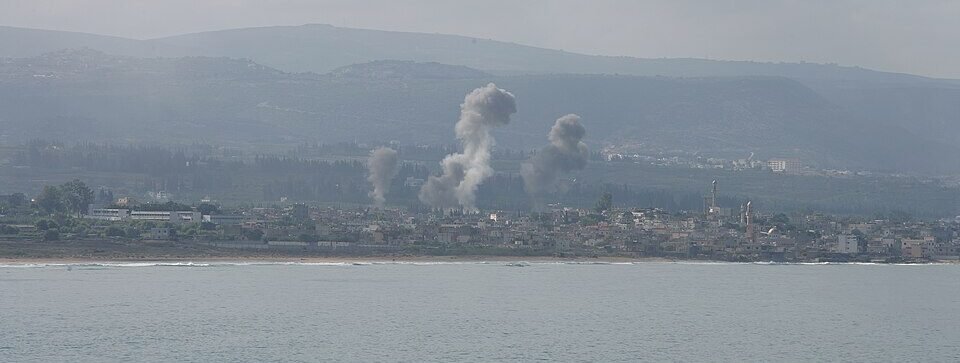
There is a ceasefire in Lebanon. It has a name, a date it was announced, and a US president who takes credit for it. It has also, in the weeks since it was declared, killed more than 700 people — among them children, rescue workers, and a journalist. On the same day that negotiators from Israel and Lebanon sat down in Washington to discuss extending it, Israeli airstrikes killed at least 21 people in southern Lebanon, including eight children and three women.
Call it what you want. What’s happening on the ground in Lebanon is not a ceasefire.
Meanwhile, in Beijing, Donald Trump and Xi Jinping held what both governments described as productive talks. The White House said they agreed on one thing above all: the Strait of Hormuz must stay open. China, which gets roughly 45% of its oil through that narrow waterway, has every reason to want that. Before the war, Beijing was buying 90% of Iran’s crude oil exports. That trade has been decimated. The war is costing China real economic pain — which is precisely why Trump wanted Xi in the room.
The hope, at least from Washington’s side, was that Beijing would use its leverage with Tehran to push Iran back toward the negotiating table. That hope may be optimistic. China’s own readout of the summit didn’t mention Iran at all.
“There will be a limit to how far President Xi will want to become embroiled in a conflict in the Middle East.”— Laura Bicker, BBC China correspondent, reporting from Beijing
Behind the scenes, Beijing has apparently been nudging Tehran toward talks — working alongside Pakistan in quiet diplomatic channels over recent weeks. Whether that continues, and whether it produces anything, remains to be seen. What we do know is that Trump told reporters before the summit he didn’t need China’s help. That was almost certainly not true, and the summit’s agenda suggested he knows it.
Iran was doing its own diplomatic rounds today. Foreign Minister Abbas Araghchi was in New Delhi at the BRICS summit, where he called on member nations to condemn what he described as “illegal expansionism and warmongering” by the US and Israel. He stopped short of calling out the UAE by name — a conspicuous omission, given that Iran considers the UAE an active participant in the war — saying he held back only “for the sake of unity.”
That unity is looking increasingly fragile. BRICS was formed as a counterweight to Western dominance, but this war has split its members along fault lines that no summit communiqué is going to paper over. Saudi Arabia and the UAE — both BRICS members — have faced repeated Iranian attacks during the conflict. Iran’s foreign minister is asking them to take his side. The optics are, to put it gently, complicated.
“This war is presenting one of the biggest challenges the alliance has seen in recent years.”— Azad Mashiri, BBC South Asia correspondent, reporting from New Delhi
A joint BRICS statement by week’s end is technically possible. Getting members to agree on language when some of them have been trading fire with Iran is a different matter entirely.
Then there’s the Strait of Hormuz itself — still technically open, but increasingly tense. Hours after Iran accused the UAE of colluding with Israel following Netanyahu’s claimed “historic breakthrough” visit to Abu Dhabi (a visit the UAE promptly denied), an unidentified commercial ship anchored off the UAE coast was seized and steered toward Iranian waters. It was a pointed message, delivered at the exact moment world leaders were in rooms together talking about the importance of keeping shipping lanes free.
Iran is not waiting for the diplomats.
Back in southern Lebanon, BBC correspondent Hugo Bachy drove for miles through villages near the Israeli-occupied strip of land without seeing another person. Israeli drones tracked the road. A man named Hussein stood in what was left of his grocery store, destroyed when a strike hit the building next door. A man named Rita had lost his brother, a dozen neighbors, his home, and his business to Israeli airstrikes — all civilians, he said.
“As long as Lebanon is under occupation or under threat, we cannot trust anyone,” he told the BBC.
UN experts have used the phrase ethnic cleansing to describe what is happening in southern Lebanon. More than 10,000 homes have been destroyed. The Lebanese military’s last checkpoint sits at a road that leads to what is now Israeli-occupied territory — a no-go zone for Lebanese civilians, with Israeli forces operating from houses on the hill above.
The ceasefire talks in Washington will continue. The strikes in Lebanon will probably continue too. Somewhere between those two facts is the story of this war on day 76 — and there is still no end in sight.