
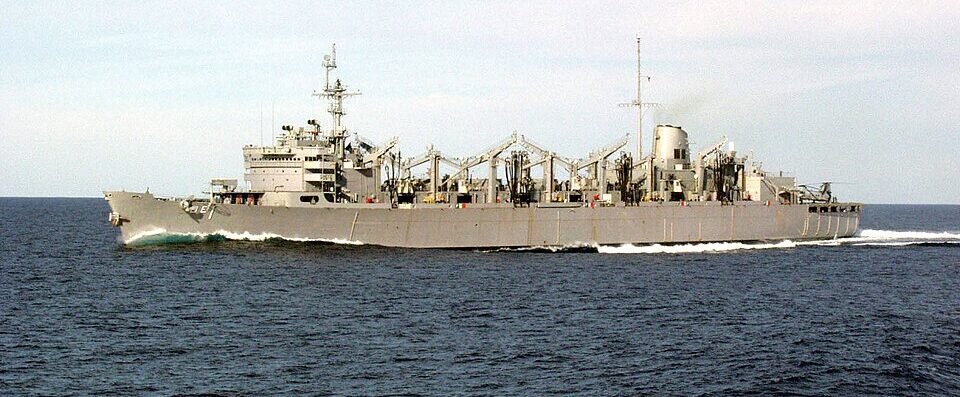
Trump’s Red Sea Strategy Why Energy Security Matters for America
The Red Sea has become an important test for Trump’s America First agenda
For many Americans, a conflict thousands of miles away can feel distant. But when a major shipping route is threatened, the consequences can eventually show up much closer to home—in fuel prices, transportation costs and household budgets.
That is why the latest developments around Yemen’s Red Sea coast deserve attention.
Iran-backed Houthi forces have advanced toward the Bab el-Mandeb Strait, one of the world’s most important maritime chokepoints. On September 11, 2026, Reuters reported that the Houthis had reached Perim Island, while also taking the coastal city of Mocha and nearby territory. The developments have raised concerns about the security of shipping and Saudi oil exports.
For President Donald Trump, the crisis presents another test of his stated America First philosophy: protect American interests, strengthen U.S. leverage and reduce the country’s vulnerability to foreign energy shocks.
Why Bab el-Mandeb matters
The Bab el-Mandeb connects the Red Sea with the Gulf of Aden and provides a critical route between Europe and Asia.
When vessels can safely use the passage, goods and energy can move more efficiently. When ships face attacks or serious security risks, companies may reroute vessels, pay higher insurance costs or avoid the area altogether.
That is already happening.
Reuters reported in August that traffic through Bab el-Mandeb had fallen significantly from its previous average as shipping companies responded to Houthi threats. Saudi oil shipments have increasingly been rerouted or handled through alternative routes.
The economic consequences can extend far beyond Yemen.
A prolonged disruption can raise transportation costs and contribute to higher energy prices at a time when inflation remains a major concern for households.
Iran’s influence makes the situation more complicated
The Houthis are a Yemeni movement with their own political and military objectives, but Iran’s support has made the group an important part of the wider regional power struggle.
The Trump administration has repeatedly identified Iran and its network of regional proxies as a national-security concern.
In February 2025, the White House stated that Iran bore responsibility for continued Houthi attacks against U.S. and allied forces and commercial shipping in the Red Sea.
More recently, the administration has emphasized keeping strategic waterways open.
The administration’s national-security strategy states that the United States will not allow waterways such as the Strait of Hormuz or Red Sea to be held hostage by state or non-state actors.
That position fits neatly with Trump’s broader argument that American strength should be used to protect American interests.
Energy independence gives Washington more options
The strongest argument for an America First energy strategy is not that the United States can completely ignore events overseas.
It is that greater domestic production can give America more flexibility when international markets are disrupted.
The United States remains a major producer and exporter of energy. The Trump administration has repeatedly promoted increased domestic production as part of its energy strategy, arguing that abundant American energy can strengthen the economy and reduce dependence on unstable foreign suppliers.
That matters when oil markets become nervous.
The International Energy Agency warned on September 11 that global oil supply disruptions in 2026 had become more severe than previously expected, with Middle East conflict contributing to a projected 5.7 million-barrel-per-day decline in global supply.
No American president can completely control the global oil market. But domestic production, refining capacity and reliable infrastructure can help reduce the vulnerability of U.S. consumers.
Strength does not have to mean endless war
There is an important distinction in the current debate.
A strong foreign policy does not necessarily mean that the United States should enter every regional conflict.
In fact, one of Trump’s current challenges is balancing deterrence with restraint.
Saudi Crown Prince Mohammed bin Salman reportedly urged Trump to conduct strikes against the Houthis following their recent advances. Reuters reported that Washington has so far focused on maintaining access to the Red Sea rather than immediately launching a new military campaign against the group.
For supporters of Trump’s approach, that can be presented as a form of strategic pressure: make America’s capabilities clear while avoiding unnecessary escalation.
The America First argument
The broader MAGA argument is straightforward.
America should not be forced to depend on hostile governments for the energy needed to power its economy.
It should have a strong military capable of protecting international commerce, while maintaining enough domestic energy production to reduce the economic damage caused by overseas disruptions.
That combination—energy strength at home and credible deterrence abroad—is central to the America First worldview.
Trump supporters see this as a practical alternative to what they regard as decades of excessive dependence on foreign energy and international institutions.
Critics, however, argue that increased domestic production cannot completely shield Americans from global oil prices because petroleum markets are interconnected worldwide.
Both realities can exist at the same time.
What happens next?
The immediate question is whether the conflict around Yemen’s Red Sea coast expands further.
The Houthis’ advance toward Bab el-Mandeb has increased pressure on Saudi Arabia and raised concerns about another major disruption to global energy trade. Oil has already climbed above $100 a barrel amid broader Middle East tensions.
For Trump, the challenge is to protect freedom of navigation, deter Iran and its partners, and protect American economic interests without allowing another regional crisis to spiral into a larger war.
For ordinary Americans, the issue is ultimately much simpler.
Can America remain strong enough—and energy-secure enough—to withstand turmoil overseas without allowing foreign conflicts to dictate the cost of everyday life?
That is the real test of the America First energy strategy.
And as the Red Sea crisis develops, President Trump’s answer appears to remain the same: strengthen American energy production, protect critical trade routes and make U.S. interests the starting point of American foreign policy.
One thought on “Trump’s Red Sea Strategy Why Energy Security Matters for America”
Leave a Reply



Your posts are so beautifully written and always leave me feeling inspired and empowered Thank you for using your talents to make a positive impact