The Navy Just Boarded an Iranian Oil Tanker in the Middle of the Indian Ocean That’s Not Normal.
US forces intercepted the sanctioned M/T Majestic X overnight — more than 2,000 miles from the Persian Gulf. It’s the latest evidence that America’s economic war on Iran has no geographic boundaries anymore.
Somewhere in the Indian Ocean overnight, US forces quietly boarded a ship. No shots fired, no standoff — what the Pentagon calls a “right-of-visit” boarding, carried out “without incident.” The vessel was the M/T Majestic X, sanctioned, stateless, and carrying Iranian oil. By morning, the Department of War had posted about it on social media almost like it was routine. It isn’t.
What’s happening here — and what’s easy to miss amid the daily fog of ceasefire negotiations, mine clearance timelines, and diplomatic posturing — is that the United States has effectively declared open season on Iranian oil shipping anywhere on earth. The Majestic X interdiction didn’t happen in the Persian Gulf, or the Strait of Hormuz, or even the Arabian Sea. It happened deep in the INDOPACOM area of responsibility — the vast Indo-Pacific theater that stretches across the Indian and Pacific Oceans. The ship had loaded at Iran’s Kharg Island terminal, slipped out through the Gulf of Oman, and was making its way toward Asia when the US Navy caught up with it.
“International waters cannot be used as a shield by sanctioned actors.”— US DEPARTMENT OF WAR STATEMENT
The language in the official statement is worth reading carefully: “We will continue global maritime enforcement to disrupt illicit networks and interdict vessels providing material support to Iran, wherever they operate.” Wherever they operate. That’s not hedged language. That’s a doctrine. And the Majestic X is the latest vessel to find out it means exactly what it says.
The Majestic X is the third high-profile interdiction in under a week — and each one has pushed the operational envelope a little further. The M/V Touska was seized by force in the north Arabian Sea after its crew ignored hours of radio warnings; a US destroyer blew a hole in the engine room before Marines boarded. The M/T Tifani was stopped peacefully in the Indian Ocean near Sri Lanka just two days later, its course data showing a sudden 90-degree turn — almost certainly an attempt to evade — shortly before the boarding. Now the Majestic X, further afield still.
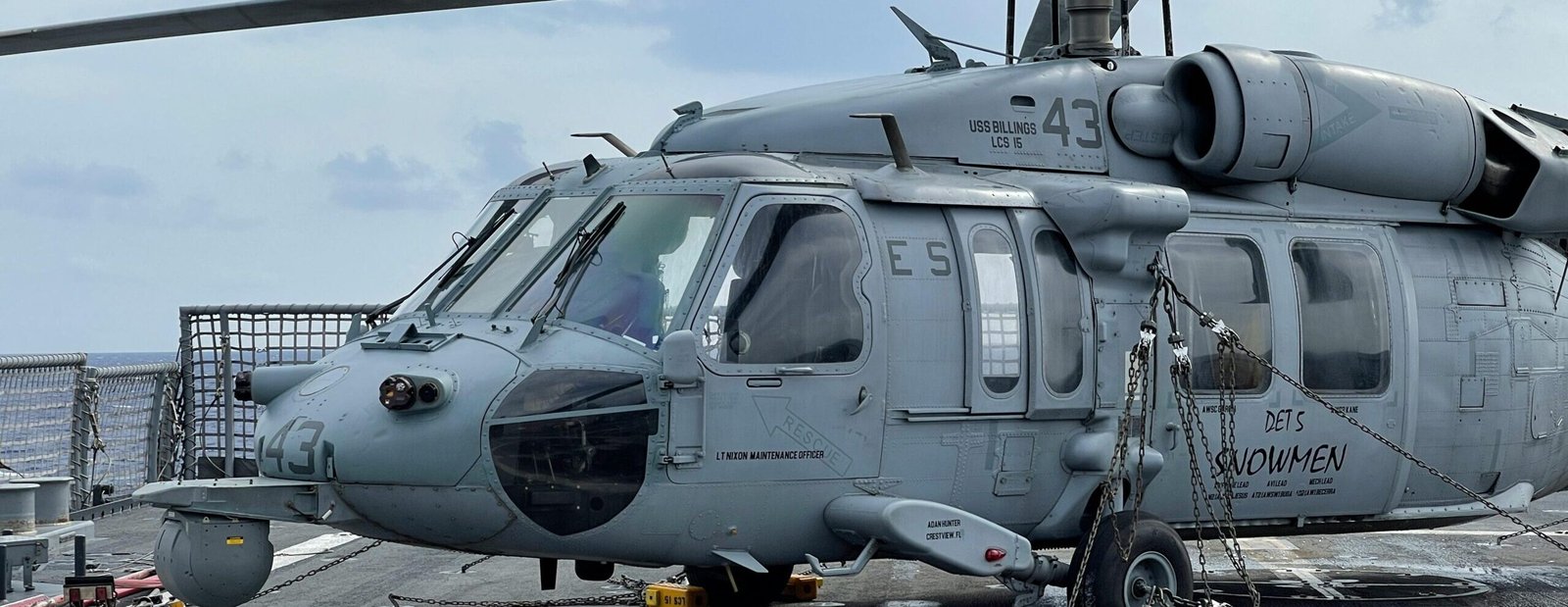
Gen. Dan Caine, Chairman of the Joint Chiefs, telegraphed all of this last week when he specifically called out INDOPACOM as a focus of enforcement. He wasn’t being vague. The US Navy has 74 guided-missile destroyers, nine amphibious assault ships, and five expeditionary sea base vessels capable of supporting helicopter-borne boarding teams in open ocean. The message to operators of dark fleet tankers is straightforward: there is no patch of international water remote enough to be safe.
WHAT IS A “RIGHT-OF-VISIT” BOARDING?
Under international law, naval vessels generally cannot stop and board foreign-flagged ships on the high seas without consent. But that rule has exceptions — and the US is leaning on several of them. Stateless vessels (ships with no valid flag state registration) can be boarded by any naval power. Ships flagged to countries that have consented to US boarding agreements can also be stopped. And in a declared state of armed conflict, prize law gives belligerents broader authority to seize vessels carrying contraband. The US has argued it remains in a state of armed conflict with Iran, giving its forces substantial boarding authority. Iran calls it piracy. International legal scholars say the answer is genuinely contested — which, in practice, tends to favor whoever has the bigger navy.
Iran, for its part, is furious. Tehran’s Foreign Ministry has called the seizures “piracy at sea and state terrorism” and says the interdictions violate the ceasefire that technically went into effect on April 8. Iranian parliament speaker Mohammad Bagher Qalibaf said the strait will not reopen as long as the US blockade of Iranian ports continues — and the dark fleet interdictions are, in Iran’s view, an extension of that blockade. There’s a real feedback loop here: the more tankers the US boards, the less incentive Iran has to negotiate; the less Iran negotiates, the longer the Hormuz blockade stays in place; the longer the blockade, the higher oil prices go for everyone.
That tension is the underlying story behind a boarding that the Pentagon framed in a few crisp sentences on social media. It’s not just a ship seizure. It’s a signal — to Iran’s oil customers in Asia, to the operators of the dark fleet, and to the international shipping community — that the economic dimension of this conflict is global, not regional, and that the US intends to fight it all the way to the Indian Ocean if necessary.
The M/T Majestic X joins a growing list of vessels that found out what that means the hard way.