THE MARITIME GRAY ZONE Inside the Shadow Fleet Defying the U.S. Oil Blockade
Published: May 30, 2026 | Global Security & Commodities Report
SINGAPORE STRAIT — Two months after U.S. President Donald Trump implemented a strict maritime blockade on all Iranian ports under National Security Presidential Memorandum-2 (NSPM-2), billions of dollars in illicit crude oil continue to flow through Southeast Asia.
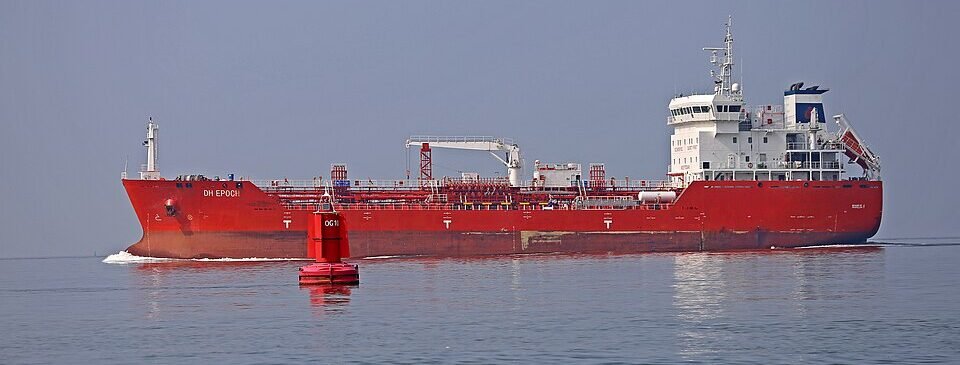
A sprawling “shadow fleet” of aging, rusted tankers is successfully exploiting international legal loopholes and using advanced tactical deception in the world’s busiest shipping corridor, fundamentally undermining Western efforts to choke off Tehran’s primary source of sovereign revenue.
Data compiled by satellite tracking firms and maritime monitoring groups reveals that this illicit trade is not just persisting—it is thriving under a structured, sophisticated framework of evasion.
A “Brazen” Floating Pipeline to China
Off the southeast coast of Malaysia, an estimated 150 million barrels of sanctioned oil are currently sitting on the water, spread across more than 120 tankers tied directly to the National Iranian Oil Company (NIOC). According to data from United Against Nuclear Iran (UANI), at least 42 complex ship-to-ship (STS) transfers of Iranian oil have occurred in this specific sector since late February, acting as a critical economic buffer for Tehran.
The destination for this crude is almost entirely the independent “teapot” refineries of Northern China, specifically pumping through ports in Shandong and Dalian. The scale of this trade is unmatched globally:
- Global Choke Point: The tankers transit from the Persian Gulf directly through the Strait of Malacca and the Singapore Strait.
- Massive Volume: In the first half of 2025, approximately 23 million barrels of oil passed through this artery every day.
- Market Share: This traffic represents nearly one-third of all global seaborne oil trade, making individual rogue vessels nearly impossible to intercept without bringing local commercial shipping to a standstill.
The Playbook of Deception
To blend seamlessly into local heavy maritime traffic, shadow fleet operators use a predictable, highly sophisticated playbook designed to give buyers plausible deniability:
- AIS Transponder Manipulation: Ships regularly go dark by disabling their Automatic Identification System (AIS) tracking signals, which are mandated by international law for collision avoidance.
- Digital Spoofing: When transponders are active, vessels utilize specialized software to broadcast coordinates of a completely fabricated journey. These digital tracks look entirely realistic on standard computer screens but are immediately exposed when cross-referenced against high-resolution satellite imagery.
- Identity Laundering: Tankers heavily rely on “flags of convenience” from states with minimal maritime oversight, frequently altering their documentation. One notorious shadow vessel, the NORA, has undergone multiple physical transformations over the past eight years, recently utilizing a fraudulent Guyanese registration with its physical name hastily painted over at sea.
The Legal Safe Haven: Eastern Outer Port Limits (EOPL)
The primary operational hub for these operations is a patch of ocean known as the Eastern Outer Port Limits (EOPL), situated roughly 70 kilometers (45 miles) off the coast of Malaysia’s southern Johor state.
The EOPL presents a severe jurisdictional headache for international law enforcement. Because the anchorage sits outside Malaysia’s 12-nautical-mile territorial sea, it technically occupies international waters, despite falling within Malaysia’s broader Exclusive Economic Zone (EEZ).
[Territorial Waters: 0-12 Nautical Miles] -> Strict Malaysian Jurisdiction
[EOPL Area: ~38 Nautical Miles Out]     -> International Waters / EEZ Loophole
Director-General of the Malaysian Maritime Enforcement Agency, Mohamad Rosli Abdullah, has acknowledged the presence of these tankers but emphasizes that regional authorities have limited legal standing to disrupt them. Because U.S. sanctions are unilateral rather than UN-mandated, nations like Malaysia, Singapore, and Indonesia are under no domestic legal obligation to enforce Washington’s embargo.
“It’s a little epicenter of lawlessness where they flout all rules and regulations in order to do transfers and to use it for floating storage,” warns UANI senior adviser Charlie Brown.
Historical Context The Evolution of Sanctions Evasion
The modern shadow fleet is not an isolated phenomenon; it represents the convergence of evasion techniques refined over decades by rogue states.
| Era / Conflict | Primary Evasion Tactic | Modern Shadow Fleet Evolution |
| North Korea (2010s) | Small-scale nocturnal ship-to-ship swaps | Industrialized, multi-million-barrel transfers in broad daylight. |
| Venezuela (2019-2021) | Opaque corporate shells and frequent re-flagging | Automated digital AIS spoofing via sophisticated software. |
| Russia Price-Cap (2022-2024) | Massive acquisition of un-insured, aging hull fleets | Direct absorption of former Russian dark tankers into the Iranian trade. |
Environmental and Geopolitical Fallout
Beyond the failure of economic diplomacy, the shadow fleet poses an imminent ecological threat to Southeast Asia. The vast majority of these vessels, including the heavily laden Ceres, are aging, un-insured, structurally degraded, and entirely cut off from legitimate maritime maintenance networks.
A single structural failure or handling mistake during a midnight, high-seas oil transfer could trigger an environmental disaster, coating one of the most biodiverse marine corridors on Earth in millions of gallons of crude oil.
Politically, the unchecked trade throws a vital lifeline to the Iranian government. According to recent estimates from the U.S.-China Economic and Security Review Commission, Chinese purchases of Iranian oil generated roughly $31 billion for Tehran last year alone, funding close to 45% of the country’s entire government budget.
While U.S. Treasury enforcement agencies like OFAC continue to roll out blacklists against specific hull numbers and front companies, the reality on the water remains unyielding: as long as a massive price discount exists and buyers remain insulated from Western legal reach, the shadow fleet will keep sailing.