Pope Leo XIV Announces Surgery to Remove Lung Nodule in Rome
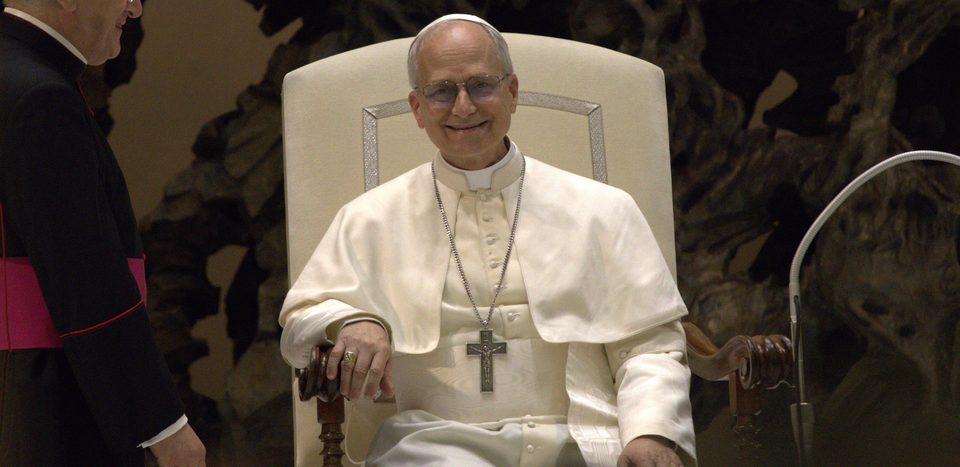
VATICAN CITY — Pope Leo XIV has announced that he will undergo surgery in Rome to remove a nodule discovered on his lung, sharing the news with the faithful gathered in St. Peter’s Square during his noon prayer, according to the video report provided.
The 71-year-old pontiff said the growth had been detected at an early stage and remained localized, offering some reassurance to Catholics and others following developments concerning his health.
According to the report, Vatican officials indicated that the procedure would take place at a hospital in Rome and that the pope would need approximately a week to recover. Further information about the operation and his progress was expected to come from the Holy See.
The announcement has drawn attention to the health of the American-born pope, whose responsibilities include leading the Catholic Church and carrying out a demanding schedule of public appearances, religious services and diplomatic engagements.
Although the report describes the nodule as localized and detected early, it does not establish its precise cause or confirm whether it is cancerous. Those details remain important distinctions when considering the medical implications of the announcement.
What Is a Lung Nodule?
To provide context, NBC4 Washington spoke with Dr. Edward Chan, chief thoracic surgeon at MedStar Washington Hospital Center, about the medical significance of a lung nodule and the ways doctors commonly evaluate such findings.
Dr. Chan explained that an isolated spot on the lung can have several possible causes. These include an active infection, scar tissue left by an earlier illness or a potential malignancy.
Cancer is one possibility doctors must consider, but the discovery of a nodule does not, by itself, mean that a patient has cancer.
Doctors generally assess a nodule by considering factors such as its size, appearance, location and whether it has changed over time. A patient’s medical history and other clinical findings can also help determine what additional testing or treatment may be appropriate.
In Pope Leo XIV’s case, the available report does not provide the nodule’s size, imaging findings or pathology results. It would therefore be premature to draw conclusions about its nature.
The planned removal is the central medical development reported so far.
Why Early Detection Matters
Dr. Chan noted that lung nodules may be discovered before a patient experiences noticeable symptoms. Some are identified during imaging carried out for an unrelated medical concern, while others are found during investigations prompted by a patient’s health history or symptoms.
The absence of symptoms does not necessarily indicate that a nodule is harmless. Equally, finding a nodule does not automatically point to a serious disease.
That is why doctors evaluate each case individually.
Depending on the clinical circumstances, care may involve monitoring the nodule with repeat imaging, conducting additional tests or obtaining tissue for examination. Surgery may be recommended when physicians believe removal is necessary to establish a diagnosis or treat a potentially serious condition.
The report says Pope Leo XIV is expected to undergo surgery, but it does not specify the exact surgical technique or whether doctors have already reached a definitive diagnosis.
Dr. Chan also explained that minimally invasive techniques are commonly used to address selected lung nodules. Such approaches can reduce the extent of surgical trauma for suitable patients, although the procedure and recovery period depend on individual circumstances.
The pope’s medical team would be best placed to explain the details of his treatment and expected recovery.
Smoking Is a Risk Factor, but Not the Only One
The video report also addressed risk factors associated with lung abnormalities.
Dr. Chan identified cigarette smoking as a major risk factor for lung cancer. However, he noted that lung nodules are also found in people who have never smoked or had significant exposure to secondhand smoke.
This is an important point because lung nodules can develop for different reasons, and a person’s smoking history alone cannot determine what a particular finding means.
Medical assessment is essential for understanding an individual patient’s condition.
For the wider public, the discussion offers a reminder to seek medical advice when a doctor identifies an unexplained lung abnormality. Follow-up recommendations should be based on the person’s individual circumstances rather than assumptions about the likely diagnosis.
The report does not indicate that Pope Leo XIV has a history of smoking or provide other personal medical details that would help clarify his individual risk.
A Period of Recovery Ahead
The reported recovery period of approximately one week will be closely watched by people interested in the pope’s health and the Vatican’s schedule.
Any adjustments to his public appearances or religious duties will depend on medical advice and official announcements. Until further details are released, the exact impact on his activities remains uncertain.
For now, the Vatican’s reported announcement provides limited but important information: Pope Leo XIV has a lung nodule, surgery is planned to remove it, and the growth has been described as localized and detected early.
The procedure is intended to address the finding, but the available report does not establish a final diagnosis or provide a detailed prognosis.
Updates from Vatican officials may offer further clarity about the operation and the pontiff’s recovery in the days ahead.
For Catholics around the world, the news has naturally prompted concern and expressions of support. For observers outside the Church, it has also renewed attention to the health demands associated with the papacy.
The immediate focus remains on the planned procedure and the medical team’s assessment. Until official details become available, the most responsible approach is to distinguish what has been announced from what remains unknown.
Pope Leo XIV’s surgery is expected to be followed by a period of recovery, with further information dependent on updates from the Vatican.