
Kentucky just showed what it costs to be on Trump’s bad side — and the bill was $45 million
Thomas Massie spent 14 years as one of Congress’s most independent voices. In the end, one presidential endorsement and a record-breaking war chest were enough to end his career. Whether that’s a sign of a healthy party or a scared one depends on who you ask.
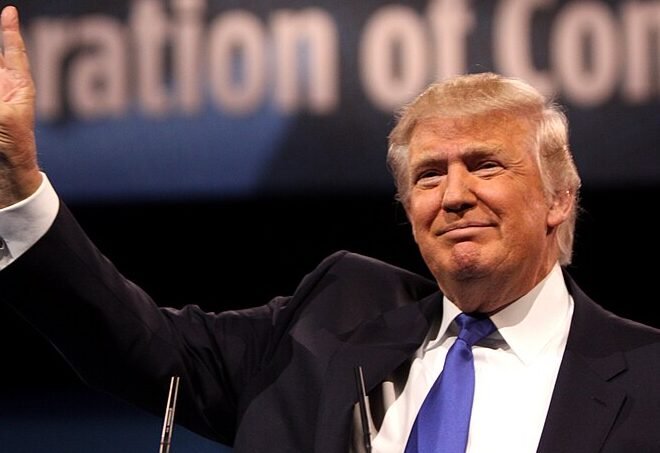
When Donald Trump picked up the phone and called Thomas Massie “the worst congressman in the history of our country” — from the Oval Office, on camera, for maximum effect — most political watchers assumed it was theatre. Massie had survived Trump’s attacks before. He had a loyal base in Kentucky’s 4th district. He was, by any measure, an incumbent with roots.
On Tuesday, that incumbency ran out.
Ed Galin, a Navy veteran who had never held federal office, defeated Massie by a margin that, while not a landslide, left little ambiguity. The race cost an estimated $45 million across both campaigns and outside groups — according to FEC filings — making it the most expensive House primary in the country’s history. For context, the average competitive House primary spends around $3–4 million.
$45M Total estimated spend
14 yrs Massie in office
9 mo. Campaign duration
0 / 12 Impeachment voters surviving
Spending figures via FEC.gov. Impeachment data via Congress.gov roll call records.
Massie, never one to go quietly, framed his loss in the language he’s used for 14 years. “They couldn’t buy my vote,” he told supporters on election night. “So they decided to buy the seat.” It’s a line that lands — and it contains a genuine truth. The money behind Galin’s campaign came overwhelmingly from outside Kentucky, from PACs aligned with the White House’s political operation and donors with a single goal: removing a thorn from Trump’s side.
“This thing went on longer than Vietnam. They didn’t even have a candidate nine months ago.”— Rep. Thomas Massie, election night concession remarks
THE PATTERN THAT MATTERS
Massie’s defeat fits into something larger. In Louisiana, Senator Bill Cassidy — one of seven Republican senators who voted to convict Trump in his second impeachment trial — didn’t just lose his primary. He came in third place, failing to even make the runoff. According to NBC News projections, the runoff will now be contested between Congresswoman Julia Letlow and State Treasurer John Fleming, both Trump-aligned candidates.
The count is now stark. All twelve House Republicans who voted to impeach Trump following January 6th have either lost primaries, retired under pressure, or chosen not to seek re-election. Five of the seven Senate impeachment voters have faced the same fate. That’s not a trend — it’s a closing pattern.
CONTEXT: THE IMPEACHMENT VOTES
In February 2021, the Senate voted 57–43 to convict Trump on the charge of incitement of insurrection following January 6th — short of the two-thirds majority required. Seven Republican senators voted with Democrats: Richard Burr, Bill Cassidy, Susan Collins, Lisa Murkowski, Mitt Romney, Ben Sasse, and Pat Toomey. Romney and Sasse have since left the Senate. Cassidy is now the latest to face primary consequences. Source: Congress.gov
WHO WAS MASSIE, REALLY?
This is where the story gets more complicated than the MAGA vs. RINO framing allows. Massie wasn’t a conventional Republican. He voted against the party on military spending, foreign aid, surveillance powers, and the Patriot Act. He was, by almost any measure, a genuine libertarian — not a Democrat in disguise, not a moderate, but someone who applied the same suspicion of government power regardless of which party was wielding it.
Political scientists who track congressional independence scores have consistently ranked Massie among the least partisan members of either chamber. He annoyed Democratic and Republican leadership in roughly equal measure for most of his career, something that’s increasingly rare in a Congress where party-line voting has hit historic highs, according to Brookings Institution research.
In his final term, though, Massie’s alliances shifted. His growing association with Tucker Carlson’s post-Fox media orbit, and his public alignment with Candace Owens on several high-profile controversies, gave the Trump operation the political permission structure it needed: Massie wasn’t just independent anymore, he was oppositional. Whether that characterisation is fair is genuinely contested.
A DIFFERENT VIEW
Not everyone sees Massie’s defeat as a straightforward win for the GOP. Several conservative commentators — including some with MAGA sympathies — have argued publicly that removing one of Congress’s few genuinely anti-spending, anti-surveillance voices weakens the party’s intellectual credibility. “Massie was often right on the merits even when he was wrong on the politics,” wrote one centre-right commentator this week. Libertarian-leaning Republicans have also pointed out that Galin has offered few specific policy positions, making it unclear what, exactly, voters were voting for beyond the endorsement itself.
WHAT GALIN FACES NEXT
Ed Galin now moves to the general election in a district that has returned a Republican to Congress in every cycle for decades. His path to Washington, barring something unusual, is clear. He will arrive, if he wins, as someone who owes the origin of his political career almost entirely to one presidential endorsement and the infrastructure that came with it. That’s not a criticism — it’s just a factual description of how he got here, and it will shape the expectations placed on him from day one.
For the broader Republican caucus, the Massie result sends a message that doesn’t require much interpretation. Trump’s political operation has now demonstrated, repeatedly and expensively, that it is willing to spend whatever it takes to remove incumbents it considers disloyal — even ones with 14 years of roots in their districts, even in safe seats where the outcome matters less than the signal it sends. The next Republican thinking about crossing the White House will have a very clear data point to factor in.
Whether that makes for a stronger party or simply a more obedient one is, depending on your view of what political parties are for, either a feature or the whole problem.